
Why Choose Home Composting?
Home composting turns kitchen scraps and yard waste into rich soil for gardens and potted plants. It reduces landfill waste and lowers household carbon impact.
This guide explains how to start a home compost bin, what materials work best, and how to avoid common problems. Follow these practical steps to get reliable compost at home.
How to Start a Home Compost Bin
Choose a location that is convenient, level, and partially shaded to maintain moisture and avoid overheating. A spot near your kitchen or garden makes adding scraps easier.
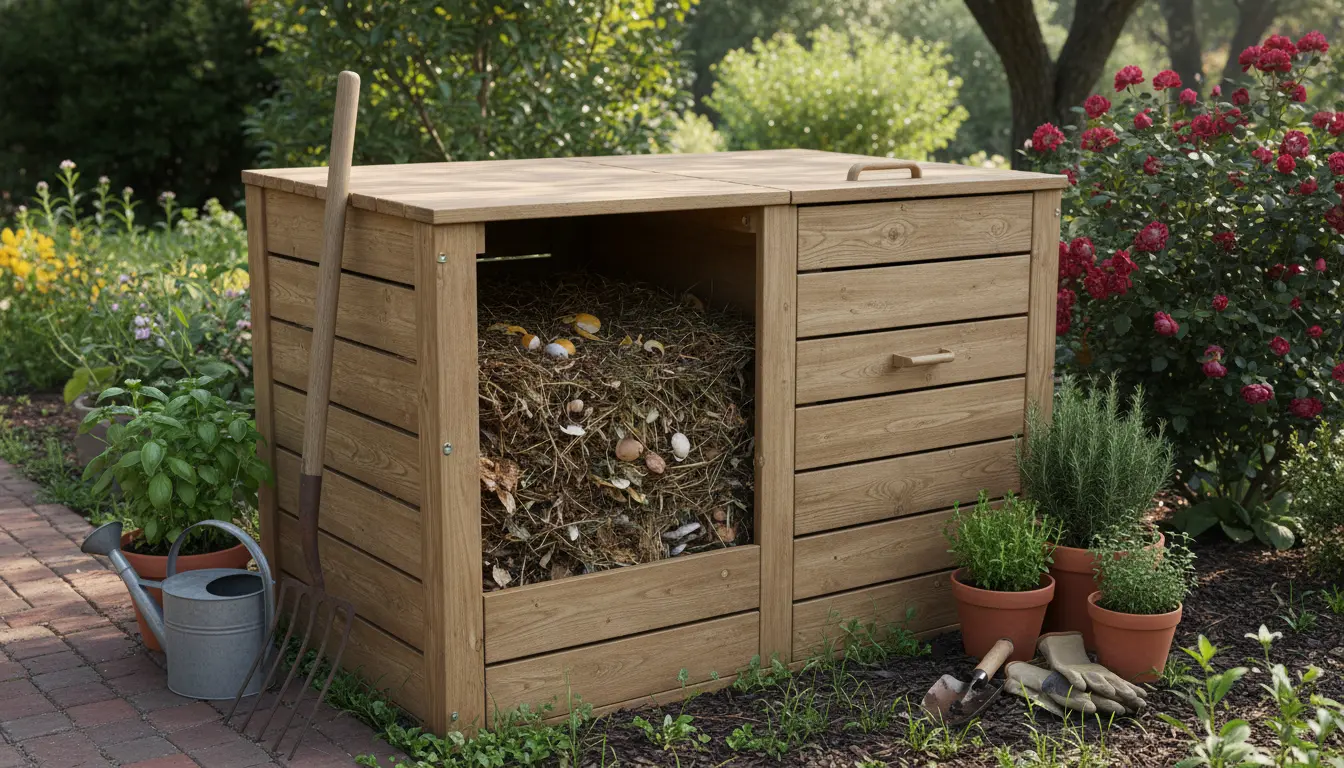
Decide on a bin type. Options include tumblers, stationary bins, and homemade wooden or wire enclosures. Each works well if you follow basic balance and maintenance rules.
Materials for Your Home Compost Bin
Collect a mix of brown and green materials to keep the compost active and odor-free. Aim for roughly a 3:1 ratio of browns to greens by volume.
- Greens: vegetable scraps, coffee grounds, fresh grass clippings, tea bags
- Browns: dry leaves, shredded paper, cardboard, straw
- Avoid: meat, dairy, oily foods, diseased plants, pet waste
Tools and Extras
Simple tools speed the process: a pitchfork or garden fork for turning, a thermometer to check temperature, and a watering can to adjust moisture.
- Optional: compost thermometer, kitchen scrap caddy, mesh screen for finished compost
- Wear gloves when turning to protect from sharp material and insects
Step-by-Step Composting Process
Starting a home compost bin is a cycle of layering, monitoring, and turning. Follow these basic steps to build and maintain a healthy pile.
- Begin with a 4–6 inch layer of coarse browns (twigs or straw) to help airflow at the base.
- Add alternating layers of greens and browns. Chop large pieces to speed breakdown.
- Keep the pile moist like a wrung-out sponge. Add water in dry weather and cover in heavy rain.
- Turn the pile every 1–2 weeks to supply oxygen and distribute heat. More frequent turning speeds composting.
- Harvest finished compost when it is dark, crumbly, and smells earthy (usually 2–6 months depending on conditions).
Speeding Up Composting
To accelerate decomposition, maintain higher temperatures by increasing pile size and ensuring a good green-to-brown ratio. Chopping materials and frequent turning also help.
- Smaller particle size = faster breakdown
- Higher moisture and regular turning = quicker results
- Adding finished compost or garden soil can introduce microbes
Properly managed home compost piles can reach temperatures above 130°F (54°C), which helps kill weed seeds and many pathogens. However, small backyard piles often operate at lower temperatures and still produce excellent compost over a longer time.
Troubleshooting Home Composting Problems
Common issues are usually easy to fix by adjusting moisture, aeration, or material balance. Identify the problem first, then apply one of the simple solutions below.
Problem: Bad Odor
Cause: Too much wet green material or poor aeration. Solution: Mix in dry browns, turn the pile, and add bulky materials to improve airflow.
Problem: Pile Too Dry
Cause: Insufficient moisture slows decomposition. Solution: Add water while turning; cover the bin during dry spells and add moist greens.
Problem: Slow Decomposition
Cause: Too large materials, incorrect balance, or low temperature. Solution: Chop materials, increase greens (or add nitrogen), and turn more often.
Practical Tips for Everyday Home Composting
- Keep a small countertop caddy for scraps and empty it daily to the outdoor bin.
- Shred paper and cardboard to add carbon and avoid bulky layers.
- Layer kitchen scraps under browns to reduce flies and odors.
- Use finished compost as a soil amendment, mulch, or potting mix component.
Real-World Example: A Small Urban Garden Case Study
Maria, a city apartment dweller with a balcony garden, started a 40-gallon compost tumbler. She used kitchen scraps and shredded cardboard and turned the tumbler twice a week.
Within four months she had enough dark compost to top-dress three balcony planters and boost tomato yields. The tumbler kept odors contained and fit the limited space well.
When to Use Your Home Compost
Use finished compost to improve garden soil structure, add nutrients, and increase water retention. Mix it into planting holes or use it as a thin mulch around established plants.
Store finished compost in a covered container to keep it ready for gardening tasks and avoid contamination with fresh waste.
Final Checklist to Start Your Home Compost Bin
- Choose bin type and location
- Gather a balanced supply of browns and greens
- Establish layers and maintain moisture
- Turn regularly and monitor temperature and smell
- Harvest and use finished compost in your garden
Starting a home compost bin is a low-cost, high-impact way to recycle organic waste and enrich your soil. With basic materials and routine care, most households can produce usable compost in a few months.