
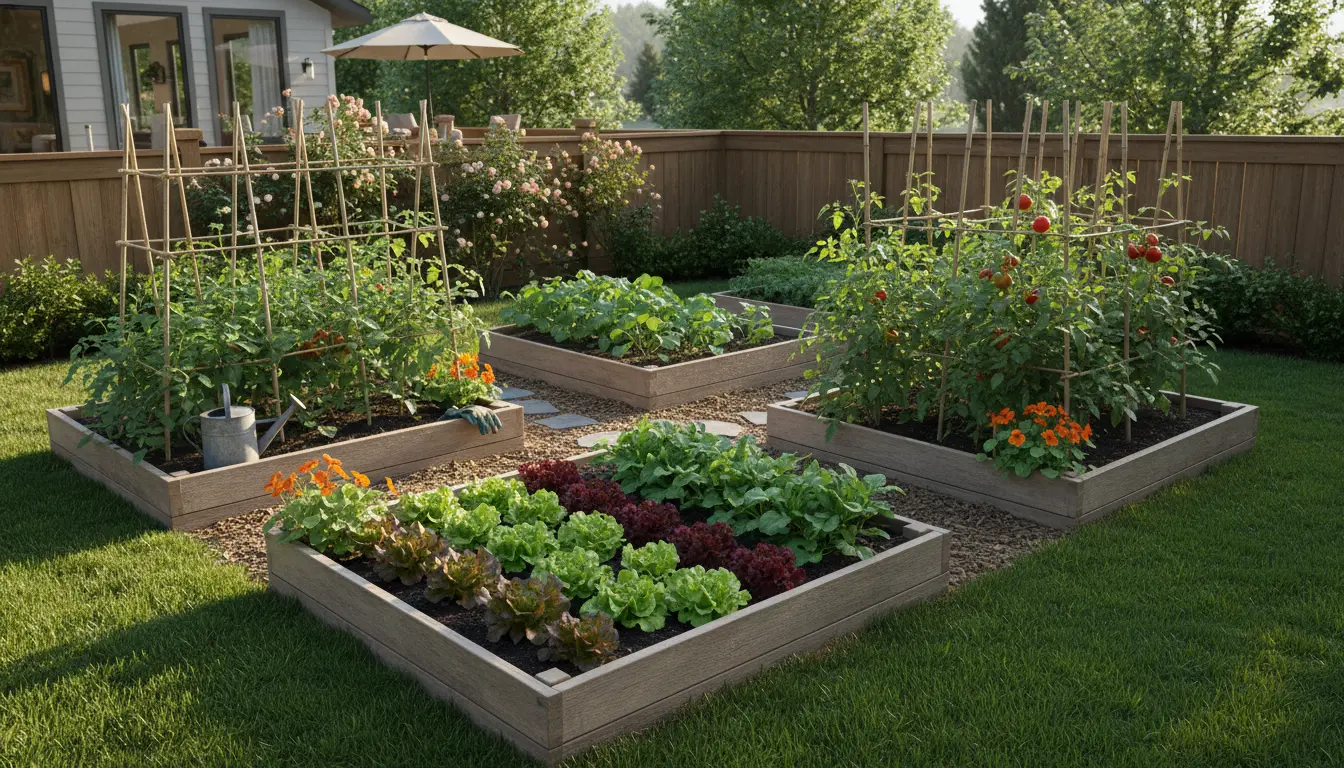
Why start a vegetable garden
Growing vegetables gives you fresh produce, saves money, and connects you to seasonal food. A small, well-planned garden can supply salad greens and herbs for weeks and some staples through the season.
Plan your vegetable garden: site and size
Choose a location that gets at least 6 hours of sun a day for most vegetables. Note shade patterns across the day and pick a sunny spot if possible.
Decide on garden size based on time, budget, and space. A 4×8 raised bed or a few containers work well for beginners.
Key planning steps for a vegetable garden
- Map sun exposure and water access.
- Choose 2–6 crops to start with; keep it manageable.
- Plan spacing so plants get light and airflow.
Prepare soil for a successful vegetable garden
Good soil is the foundation of a productive garden. Test soil pH if possible; most vegetables prefer pH 6.0–7.0.
Improve soil with organic matter: compost, well-rotted manure, or leaf mold. Aim for a loose, crumbly texture and good drainage.
Soil improvement checklist
- Add 2–3 inches of compost and work it into the top 6–8 inches of soil.
- For heavy clay, add coarse sand and organic matter to improve structure.
- For raised beds, use a mix of topsoil, compost, and coconut coir or peat for water retention.
Choose the right vegetables for your garden
Start with easy, fast-growing crops like lettuce, radishes, spinach, cherry tomatoes, and bush beans. These give quick rewards and teach you basics.
Consider your climate and season. Use seed packets or plant tags to check days to maturity and frost tolerance.
Planting and spacing in a vegetable garden
Follow spacing guides on seed packets or plant labels to avoid overcrowding. Proper spacing reduces disease and improves yields.
Use succession planting to keep harvests steady: plant quick crops every 2–3 weeks in available space.
Simple planting plan example
- Row 1: Lettuce (harvest in 4–6 weeks)
- Row 2: Radishes between lettuce rows
- Row 3: Bush beans after soil warms
Watering and feeding your vegetable garden
Water deeply and less often to encourage strong roots. Aim for about 1 inch of water per week, more in hot weather.
Mulch around plants to keep soil moist and suppress weeds. Use straw, shredded leaves, or grass clippings.
Fertilizing tips for vegetable garden health
- Use balanced organic fertilizer or compost tea at planting and mid-season.
- Leafy greens benefit from higher nitrogen; fruiting crops benefit from balanced N-P-K.
Common pests and disease management
Monitor plants weekly for pests and early disease signs. Handpick large pests and use row covers to protect young crops.
Practice crop rotation and remove diseased plants to lower disease pressure year to year. Encourage beneficial insects with flowering herbs.
Harvesting and storage
Harvest vegetables at peak ripeness for best flavor and nutrition. Many crops, like beans and zucchini, taste best when picked small and frequent.
Store harvests properly: cool leafy greens, dry onions and garlic before long-term storage, and blanch then freeze surplus vegetables.
Some vegetables, like radishes and lettuce, can be grown in as little as 4 inches of soil in containers. Deep-rooted crops need more depth and space.
Small real-world example: 4×8 raised bed vegetable garden
Case study: A 4×8 raised bed planted by a beginner produced reliable harvests in a single season. The gardener prepared soil with two wheelbarrows of compost and added mulch to retain moisture.
They planted staggered rows: lettuce and radishes in spring, tomatoes and peppers in late spring, and bush beans midseason. Regular watering and weekly checks kept pest problems low.
Result: Weekly salad harvests for two people and extra tomatoes frozen for winter use. The bed required about 2 hours per week of care during peak season.
Quick tools and supplies list for a vegetable garden
- Hand trowel, garden fork, and hoe
- Soil test kit or pH strips
- Mulch material and garden twine
- Watering can or soaker hose
Final tips to keep your vegetable garden productive
Start small and expand as you gain confidence. Record what works and what doesn’t to improve next season.
Join a local gardening group or online forum to get regional advice and seed swap opportunities. Small changes each season lead to better yields and less work over time.