
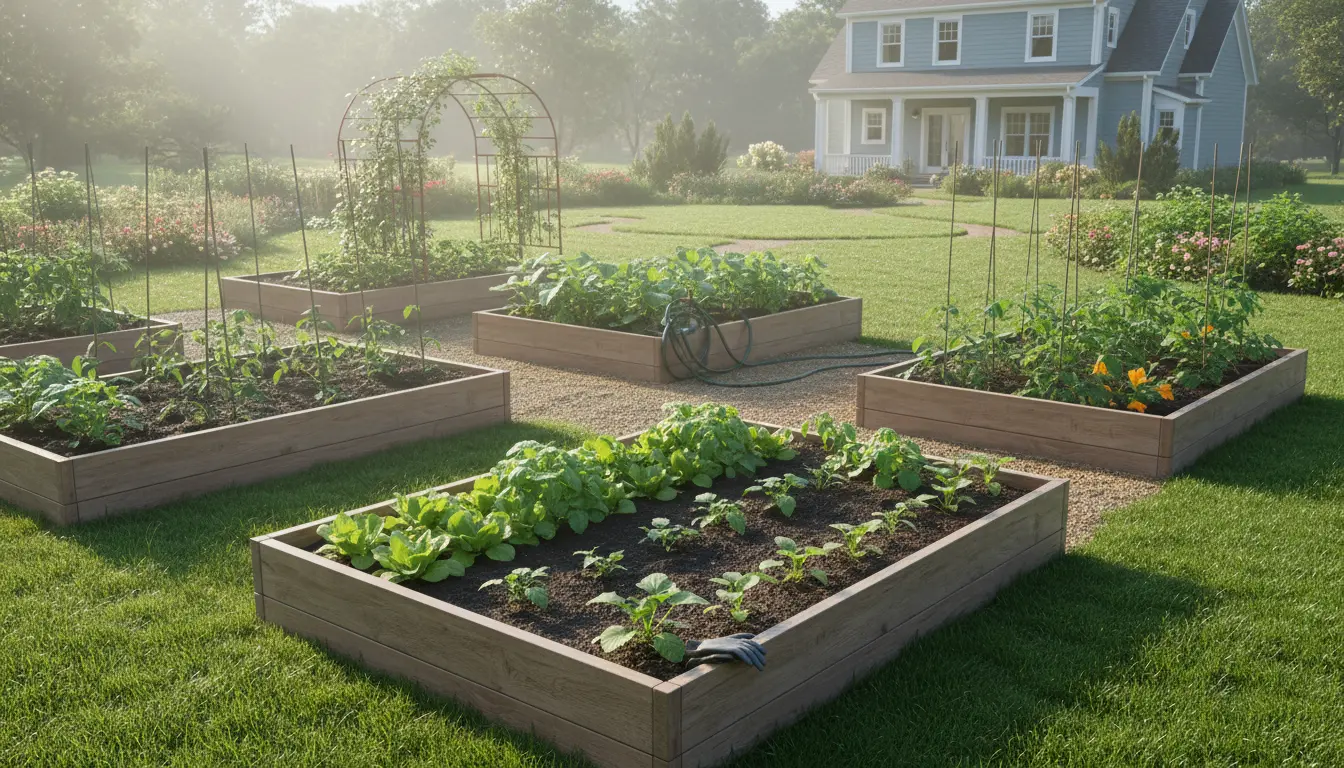
Starting a small vegetable garden is a practical way to grow fresh food at home, even with limited space. This guide shows clear steps for planning, soil preparation, planting, and care so you can get steady harvests without unnecessary work.
Planning Your Small Vegetable Garden
Good planning makes a small vegetable garden productive and low maintenance. Begin by assessing space, sun, and your time commitment.
Choose the right location for a small vegetable garden
Most vegetables need at least 6 hours of direct sun each day. Pick a spot that gets morning and midday sun and is close to a water source.
Consider accessibility and shelter from strong winds. For patios or balconies, use containers or vertical supports to maximize sun exposure.
Pick vegetables suited to small gardens
Select compact, high-yield plants that do well in small spaces. Good choices include:
- Leafy greens: lettuce, spinach, chard
- Compact fruiting plants: determinate tomatoes, pepper varieties
- Root crops: radishes, baby carrots
- Vertical growers: pole beans, cucumbers on trellises
Start with 4–6 types of vegetables to keep management simple and ensure diversity without overcrowding.
Soil, Containers, and Raised Beds for a Small Vegetable Garden
Healthy soil is the foundation of a productive small vegetable garden. If space is limited, containers and raised beds are often the best option.
Soil mix and testing
Use a loose, well-draining soil mix with organic matter. For containers, a good potting mix with compost works well. For raised beds, blend garden soil with compost and coarse sand for drainage.
Test soil pH and nutrients with a simple kit. Most vegetables prefer a pH of 6.0–7.0. Amend according to test results using lime to raise pH or sulfur to lower it.
Choosing containers and bed size
Container size affects plant health. Use at least 5–10 gallon containers for tomatoes and peppers, and 1–3 gallon pots for greens and herbs.
Raised beds can be 3–4 feet wide so you can reach the center easily. A depth of 12–18 inches suits most vegetables.
Planting Schedule and Care for a Small Vegetable Garden
Follow a planting schedule based on your local frost dates. Stagger plantings to extend harvests and keep the garden productive.
Watering and fertilizing
Water deeply and less often to encourage strong root systems. Aim for consistent moisture; avoid letting soil dry out completely.
Fertilize with a balanced organic fertilizer or compost tea every 3–4 weeks during the growing season. Watch plants for signs of nutrient deficiency like yellowing leaves.
Pest and disease management
Use prevention first: crop rotation, proper spacing, and healthy soil reduce most problems. Inspect plants weekly for pests and remove them by hand when practical.
- Use row covers to protect young plants from insects.
- Encourage beneficial insects with flowers such as calendula or marigold.
- For stubborn issues, use targeted organic controls like insecticidal soap or neem oil.
Maintenance, Harvesting, and Record Keeping in a Small Vegetable Garden
Daily or weekly, spend 15–30 minutes on basic tasks: watering, weeding, and checking plant health. Small consistent efforts prevent larger problems.
Harvest regularly to encourage continued production. Pick leafy greens before they bolt and harvest tomatoes when fully colored for best flavor.
Keep simple records
Track planting dates, varieties, and harvest volumes. A short notebook entry after each visit helps you refine timing and variety choices each season.
Many common vegetables like lettuce and radishes mature in under 30 days. Fast crops let you test varieties and get quick rewards in a small vegetable garden.
Simple Case Study: One Raised Bed, Two Seasons
Maria had a 4 x 4 foot raised bed on her apartment patio. In spring she planted lettuce, radishes, and dwarf tomatoes. She used a quality potting mix and a compost layer before planting.
By following a watering schedule and harvesting lettuce every two weeks, Maria had continuous greens for eight weeks. In summer she rotated in bush beans and basil, which thrived in the container setup.
The result was fresh produce that cut her grocery lettuce purchases by half and gave her practical experience for expanding next year.
Quick Checklist to Start a Small Vegetable Garden
- Choose a sunny spot with water access.
- Decide between containers or a raised bed; prepare soil mix.
- Select compact varieties suitable for your space.
- Plant according to local frost dates and stagger sowings.
- Water consistently and feed with organic fertilizer monthly.
- Monitor pests and use prevention-first methods.
- Record dates and harvests to improve each season.
A small vegetable garden can fit almost any home and yield satisfying results with modest effort. Start simple, learn from each season, and expand as you gain confidence.