
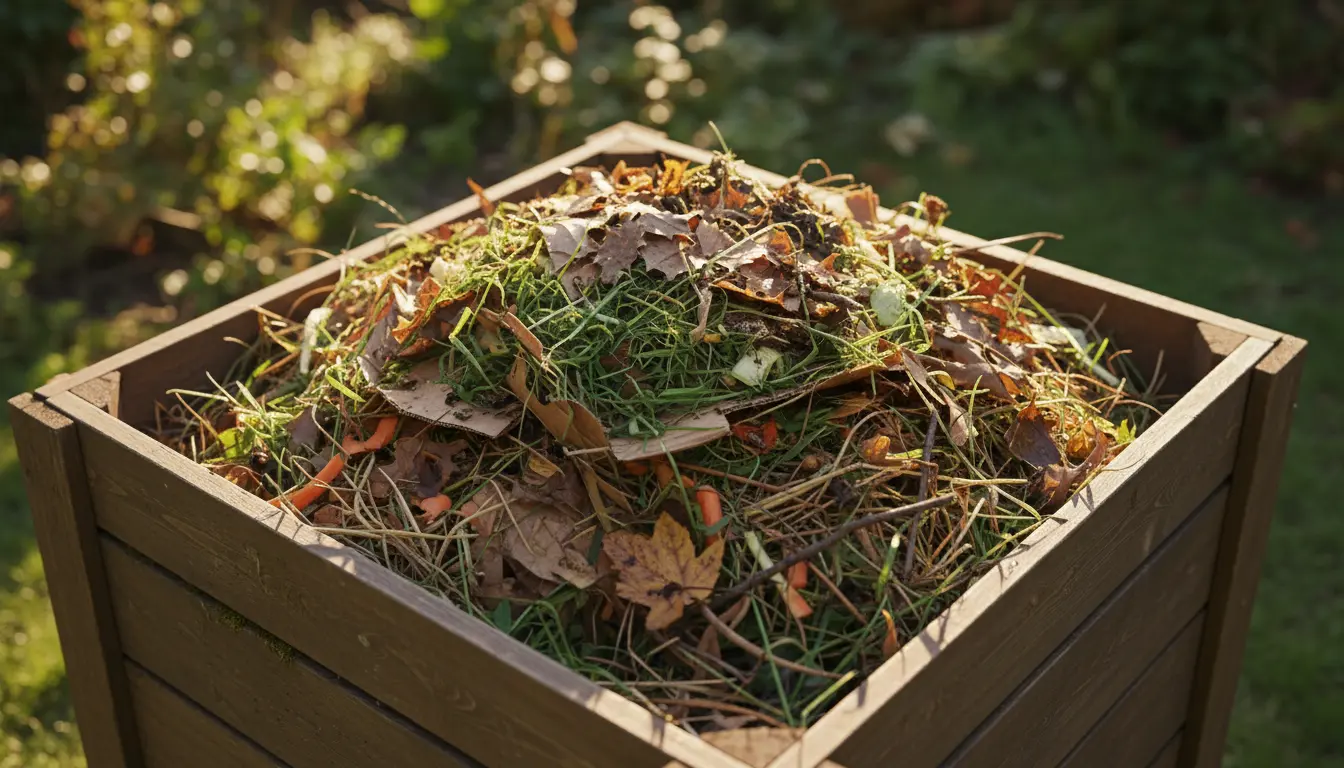
Composting at home turns kitchen scraps and yard waste into rich soil for gardens and potted plants. This guide gives step-by-step instructions, realistic tips, and common fixes so you can start a successful home composting system with minimal fuss.
Why Home Composting Matters
Home composting reduces household waste and lowers your carbon footprint. The finished compost improves soil structure, increases water retention, and adds nutrients for healthier plants.
Composting also saves money on fertilizer and reduces the volume of trash sent to landfills. It is a simple, practical way to close the loop on organic waste.
How to Start Home Composting
Choose a Compost Bin or Method
Select a bin that fits your space and needs. Options include tumble bins for faster turning, stationary plastic or wooden bins, or a simple compost pile if you have room outdoors.
For small apartments, use a worm bin (vermicompost) or a sealed countertop compost container and transfer to a community or outdoor bin.
What to Compost
Balance ‘greens’ (nitrogen-rich) and ‘browns’ (carbon-rich) for healthy decomposition. Aim for a mix close to 2:1 or 3:1 browns to greens by volume.
- Greens: fruit and vegetable scraps, coffee grounds, fresh grass clippings.
- Browns: dry leaves, straw, shredded cardboard, paper towel rolls.
- Avoid: meat, dairy, oils, diseased plants, and pet waste from carnivores.
How to Layer and Start
Build your pile with a base layer of coarse browns to aid airflow. Alternate greens and browns in 4–6 inch layers. Keep the pile moist like a wrung-out sponge.
Turn or mix the pile regularly to introduce oxygen and speed up decomposition. For a slow, low-effort system, occasional turning every few weeks works fine.
Maintaining Your Home Composting System
Monitor three main factors: moisture, airflow, and particle size. Too wet or compacted piles become smelly; too dry piles slow down.
- Moisture: Add water if dry; add more browns if soggy.
- Airflow: Turn or add bulky materials like twigs to keep air pockets.
- Particle size: Shred large items to speed decomposition.
Troubleshooting Common Home Composting Problems
Smell and Pests
A strong rotten smell usually means too much green material or poor aeration. Add browns and turn the pile more often.
If pests are a problem, avoid adding meat and dairy and use a closed bin or secure lid. Bury new food scraps under browns.
Slow Decomposition
Slow breakdown often indicates the pile is too dry, too cold, or lacks nitrogen. Increase greens, add water, and chop materials smaller to accelerate the process.
Pile Not Heating
Large bins heat faster; small piles may stay cool but still decompose slowly. Combine smaller piles or use a compost thermometer to check internal temperature.
Compost can reduce garden watering needs by up to 25% due to improved soil moisture retention. Adding 1 inch of compost across a garden can supply nutrients and boost soil life.
Real-World Example: A Small Urban Compost Case Study
Jane, a renter with a small balcony, started a 10-liter worm bin. She collected fruit and vegetable scraps and shredded paper from her home office.
After three months, Jane harvested dark, crumbly worm castings. She used the castings to feed two balcony planters and noticed better plant growth and fewer watering needs.
Key takeaways: consistent feeding, avoiding citrus overload, and keeping the bin in a shaded spot helped maintain a healthy worm system.
Practical Tips and Checklist for Home Composting
Use this quick checklist when you start or troubleshoot your compost:
- Choose a bin that suits your space and budget.
- Keep a balance of browns and greens; store a bin for dry browns nearby.
- Chop or shred large items to speed breakdown.
- Turn the pile periodically to add oxygen.
- Monitor moisture and cover the pile in heavy rain.
- Keep out meat, dairy, and pet waste to avoid pests.
Final Notes on Home Composting
Home composting is flexible: you can choose a low-effort system or a high-turnover approach depending on your goals. Start small, observe your pile, and adjust the mix and care routine.
Over time you will learn local rhythms—what composts fast in your climate and what needs more attention. The result is nutrient-rich compost that benefits both your plants and the environment.