
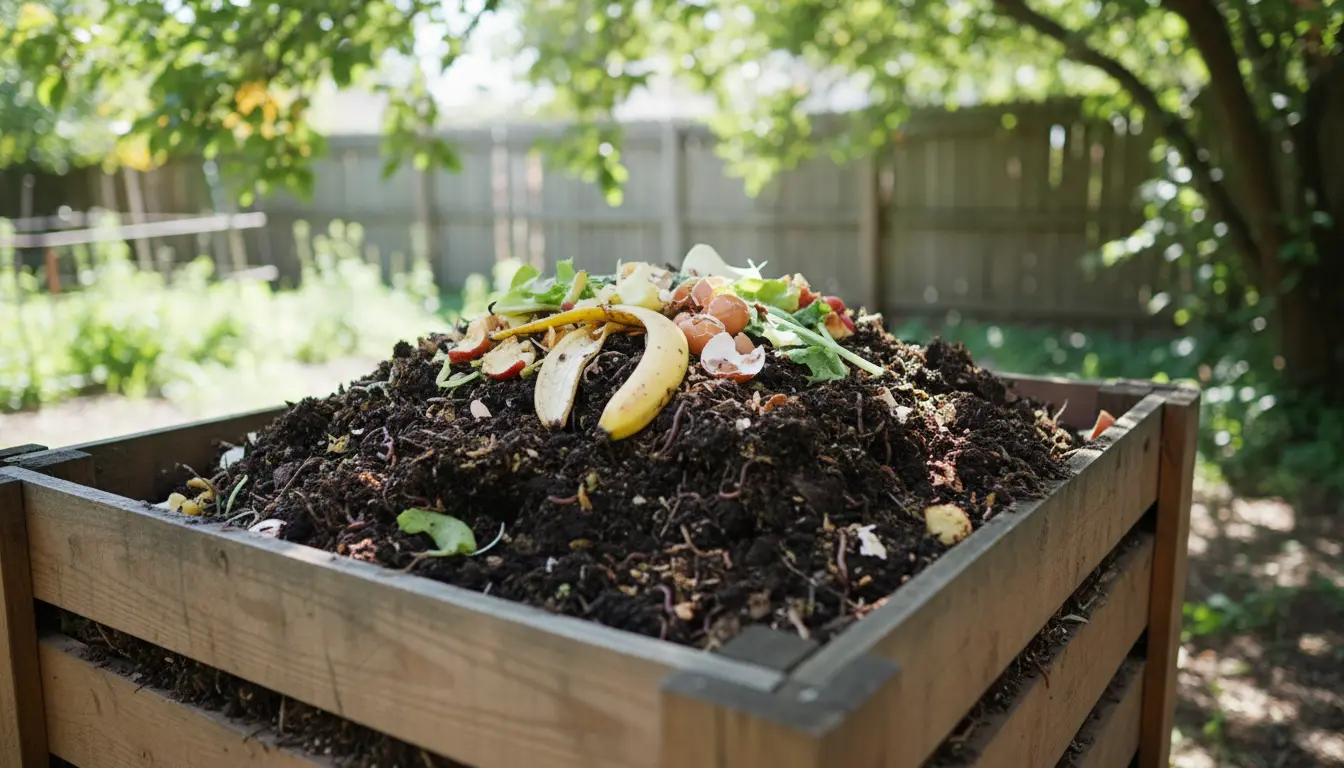
What Is Home Composting?
Home composting is the controlled breakdown of kitchen and garden waste into a nutrient-rich soil amendment. It uses microbes, moisture, air, and a balance of materials to turn scraps into usable compost.
This guide focuses on simple, reliable methods you can use in a backyard, balcony, or even a small urban plot.
Why Start Home Composting?
Home composting reduces household waste and returns nutrients to your soil. It improves plant health and reduces the need for synthetic fertilizers.
It also lowers your carbon footprint by keeping organic matter out of landfills where it would produce methane.
Benefits of Home Composting
- Less waste sent to landfill
- Improved soil structure and water retention
- Free, slow-release nutrients for plants
- Reduced need for chemical fertilizers
How to Start Home Composting: Step-by-Step
Starting home composting is straightforward if you plan a little up front. This section walks through choice of method, the right materials, and basic management.
Choose a Method for Home Composting
- Compost bin: Good for small backyards and cleaner appearance.
- Compost tumbler: Faster turning, less effort to aerate.
- Open pile: Cheapest for larger spaces but can be messier.
- Vermicomposting: Uses worms indoors or in a small bin for kitchen scraps.
Pick the method that matches your space, budget, and how quickly you want compost.
What to Compost and What to Avoid
Balancing green and brown materials is key to a healthy compost pile. Greens provide nitrogen and browns provide carbon.
- Greens: vegetable scraps, fruit peels, coffee grounds, fresh grass clippings
- Browns: dry leaves, shredded paper, cardboard, straw
- Avoid: meat, dairy, oils, diseased plants, and pet waste
Maintaining Your Home Composting System
Regular checks and small actions keep compost active and odor-free. Focus on aeration, moisture, and particle size.
Practical Maintenance Tips
- Turn or mix every 1–2 weeks to add oxygen.
- Keep moisture similar to a wrung-out sponge; add water or dry browns as needed.
- Chop or shred large items to speed decomposition.
- Cover food scraps with browns to prevent flies and smells.
Watch temperature: a hot pile (40–60°C or 104–140°F) indicates active decomposition and will kill many weed seeds.
Composting can reduce household waste volume by up to 30 percent. Finished compost can improve water retention in soil by 20 percent or more.
Common Problems and Fixes for Home Composting
Problems are often easy to diagnose and fix with simple adjustments. A few common issues include bad smells, slow decomposition, and pests.
- Smell: Add more browns and turn the pile to add air.
- Slow breakdown: Increase surface area by shredding materials and add nitrogen-rich greens.
- Pests: Avoid meat and dairy, and use a closed bin or bury food scraps in the pile.
Real-World Example: Small Urban Household
Case: A two-person apartment household used a 60-liter tumbling composter on a balcony. They added kitchen scraps and dry leaves from a community garden.
After six months of weekly tumbling and occasional dry leaves, they produced usable compost for potted herbs. Their landfill bin volume dropped by half during that period.
Using Finished Compost
Finished compost looks dark, crumbly, and earthy-smelling. It should not be recognizable as the original materials.
Ways to Use Home Composting Output
- Mix into potting mixes or top-dress potted plants
- Work into garden beds before planting
- Use as mulch around shrubs and trees
Apply at a rate of about 1–3 inches on top of soil or mix 10–20% compost into potting soil for a nutrient boost.
Final Tips for Successful Home Composting
Start small and learn by doing. Keep a simple log or checklist of what you add to the compost and any problems you fix.
Balance greens and browns, maintain moisture and air, and choose a method that fits your space. With basic care, home composting becomes a low-effort way to turn waste into a valuable garden resource.