
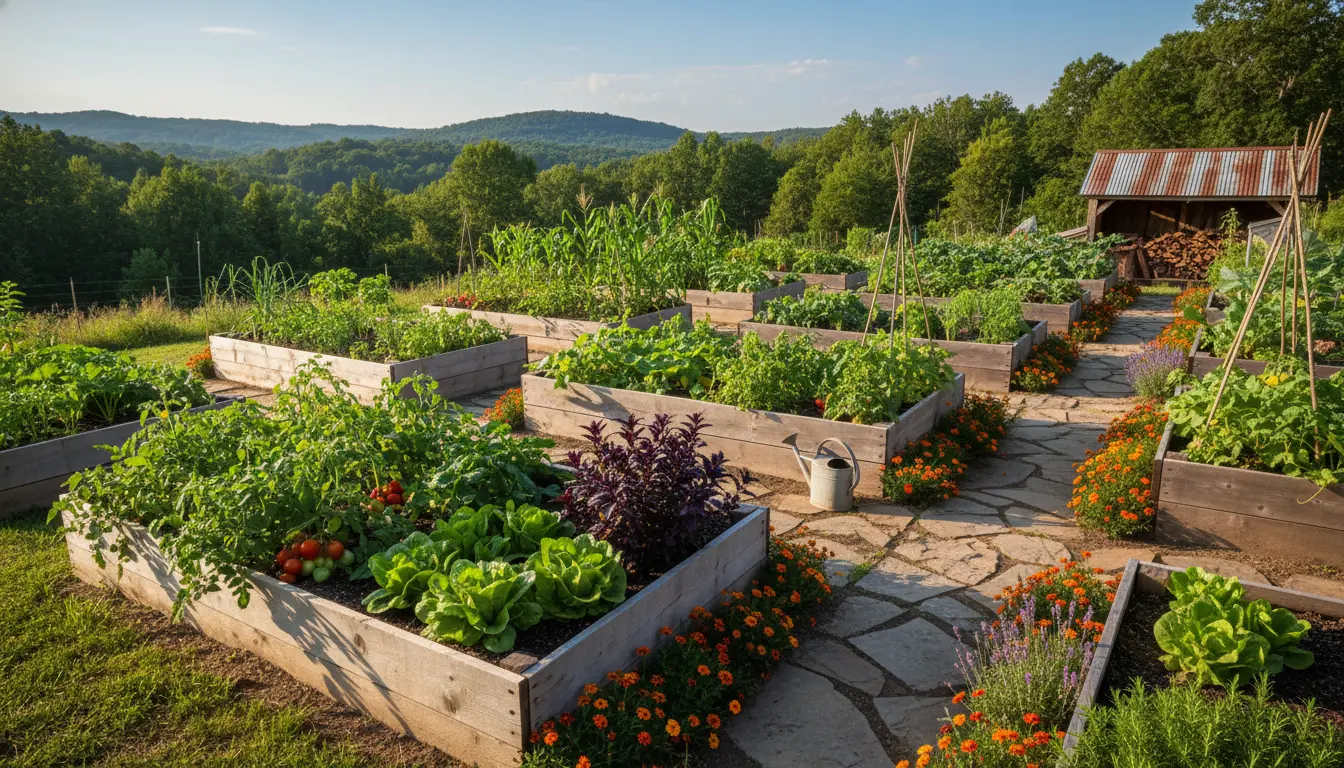
Starting a vegetable garden is a practical way to grow fresh food, save money, and learn basic horticulture. This guide gives clear steps you can follow, whether you have a small patio or a backyard space.
How to Start a Vegetable Garden: Plan Your Space
Decide where to place your garden before buying tools or seeds. Most vegetables need 6 to 8 hours of direct sunlight daily.
Consider accessibility. Choose a spot near water and with good drainage. If ground space is limited, use containers or raised beds.
Start a Vegetable Garden: Size and Layout
Match the garden size to your time and needs. Beginners often start with one or two 4×8 raised beds or four to six containers.
- Small family: One 4×8 raised bed or 10–12 containers.
- Couple or small household: Two 4×8 beds or 20–30 containers.
- Space-saving: Vertical planters for beans, cucumbers, and herbs.
Soil and Compost: Foundation for Success
Good soil is the most important factor when you start a vegetable garden. Vegetables prefer loose, fertile soil with good drainage and organic matter.
Test your soil with a basic kit to check pH and nutrient levels. Most vegetables grow well in slightly acidic to neutral soil (pH 6.0–7.0).
How to Improve Soil When You Start a Vegetable Garden
Amend heavy clay or sandy soils by adding compost and aged manure. Mix in 2 to 4 inches of organic matter into the top 6–12 inches of soil.
Mulch after planting to retain moisture and reduce weeds. Use straw, shredded leaves, or compost as mulch.
Choose Vegetables: Easy Picks for Beginners
Select crops that fit your growing season and cooking habits. Plant vegetables you will eat and can manage with available time.
- Quick and forgiving: Lettuce, radishes, spinach.
- Low-maintenance: Beans, zucchini, cherry tomatoes.
- Longer-term: Peppers, eggplants, winter squash.
Stagger plantings every 2–3 weeks for a steady harvest. Use succession planting for lettuces, radishes, and greens.
Planting Schedule and Seed vs. Transplants
Decide whether to start from seed or buy transplants. Seeds are cheaper and offer more variety, while transplants give a head start for longer-season crops.
Check your local frost dates and seed packet instructions before planting outdoors. Start cool-season crops 2–4 weeks before the last frost and warm-season crops after frost risk passes.
Example Planting Timeline
- Early spring: Peas, spinach, radishes, lettuce.
- After last frost: Tomatoes, peppers, cucumbers, beans.
- Late summer: Fall greens, carrots, beets for autumn harvest.
Watering and Routine Care
Consistent watering matters more than frequent shallow watering. Aim for deep, infrequent watering to encourage strong roots.
- Water early morning when possible.
- Use drip irrigation or soaker hoses to reduce disease risk.
- Monitor for pests and disease weekly and act early.
Fertilize lightly with balanced organic fertilizer or side-dress with compost during the growing season.
Pest Management and Common Problems
Start with prevention: clean tools, crop rotation, and healthy soil reduce many problems. Use row covers to keep insects away from young plants.
Identify pests before applying treatments. Remove pests by hand, use traps, or apply targeted organic controls when necessary.
Common Issues When You Start a Vegetable Garden
- Yellowing leaves: Check soil moisture and nutrients.
- Stunted growth: Test soil and ensure adequate sun.
- Powdery mildew: Improve air circulation and remove affected leaves.
Companion planting can reduce pests and improve yields. For example, basil planted near tomatoes may improve flavor and repel certain pests.
Small Case Study: A Beginner’s First Season
Maria, a busy teacher in Portland, started a single 4×8 raised bed in spring. She tested her soil, added compost, and planted lettuce, cherry tomatoes, bush beans, and radishes.
She watered three times a week with a soaker hose and mulched to conserve moisture. By midsummer she harvested weekly salads and canned eight jars of tomato sauce.
Lessons learned: Start small, keep a planting calendar, and choose crops that match your cooking habits.
Harvesting and Storage Tips
Harvest vegetables at peak ripeness for best flavor. Many greens taste best when picked young, while tomatoes and peppers should be fully colored.
Store produce properly: cool root crops in a refrigerator, and dry beans before storage. Share surplus with neighbors or preserve by canning, freezing, or pickling.
Final Steps to Sustain Your Garden
Keep notes on what worked and what did not. Rotate crops each season to reduce disease pressure.
Build soil each year by adding compost and cover crops in fall. With simple routine care, your vegetable garden will become more productive over time.
Start small, plan well, and adjust as you learn. The practical steps above will help you start a vegetable garden that provides fresh food and satisfaction.