
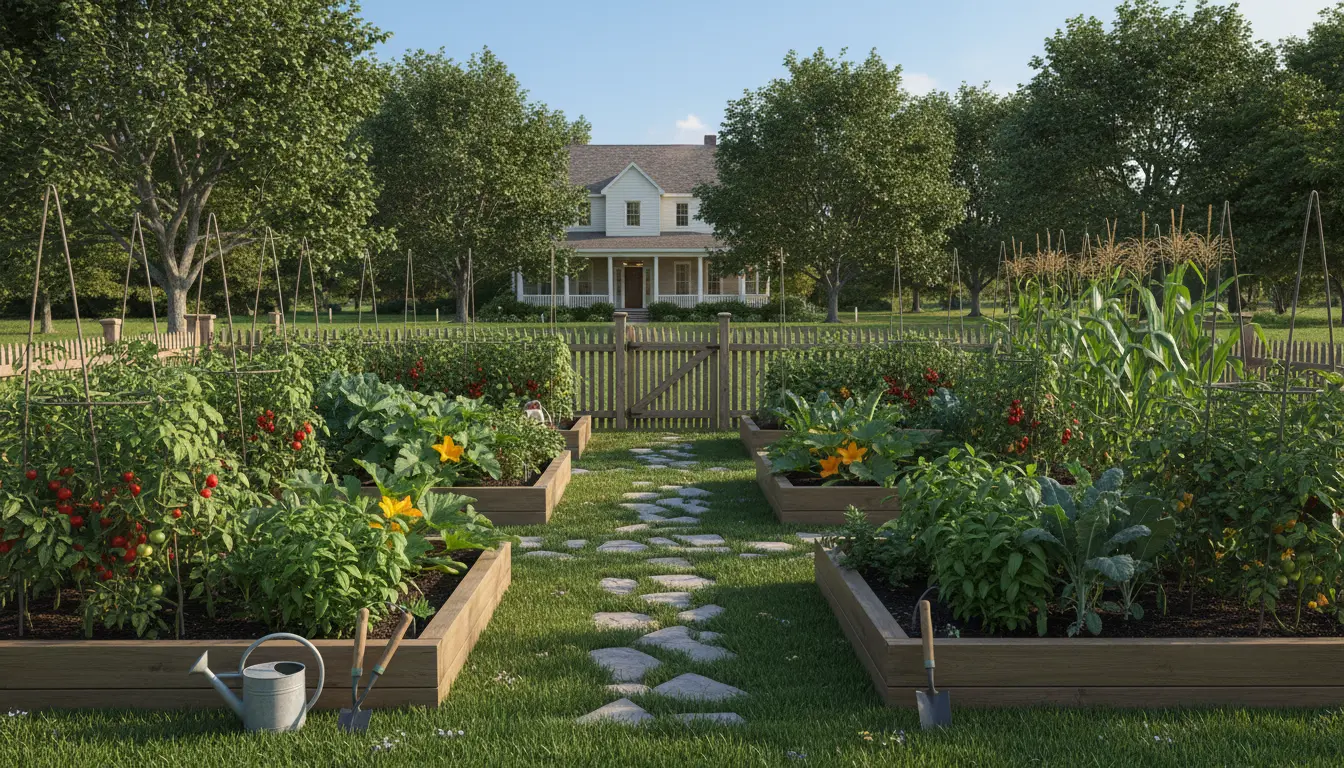
Starting a vegetable garden is practical and rewarding. This guide gives clear, step-by-step instructions to start a vegetable garden and keep plants healthy.
How to Start a Vegetable Garden: Plan Your Garden
Begin by deciding what you want to grow. Pick 3–6 vegetables you and your family will eat. Fewer crops make management easier for new gardeners.
Consider the local climate and your growing season. Use a simple calendar to mark last frost and first frost dates for your area.
Choose a Site to Start a Vegetable Garden
Vegetables need at least 6 hours of direct sunlight. Choose a flat, well-drained site near a water source to reduce daily effort.
Avoid low spots that collect water and areas under large tree roots. If space is limited, consider containers or raised beds.
How to Start a Vegetable Garden: Prepare the Soil
Healthy soil is the foundation of a productive garden. Test your soil pH and nutrients with a home kit or local extension service.
Most vegetables prefer a slightly acidic to neutral pH (6.0–7.0). Amend soil based on test results rather than guessing.
Improve Soil Structure and Fertility
Add organic matter such as compost or well-rotted manure to improve drainage and nutrient content. Work 2–4 inches into the top 6–8 inches of soil.
For heavy clay, add coarse sand and lots of compost. For very sandy soil, use compost and a slow-release organic fertilizer.
How to Start a Vegetable Garden: Choose Plants and Layout
Select crops suited to your season and space. Fast-growing plants like lettuce and radishes are good for beginners. Tomatoes, peppers, and beans are reliable choices too.
Plan spacing to avoid crowding. Overcrowded plants reduce air flow and increase disease risk.
Use Companion Planting and Succession Planting
Place complementary plants together to deter pests and improve yields, such as basil with tomatoes. Practice succession planting to maximize harvests by planting new seeds as you harvest earlier crops.
How to Start a Vegetable Garden: Planting and Early Care
Follow seed packet or plant tag directions for depth and spacing. Planting at the correct time ensures better germination and growth.
Mulch beds with straw or shredded leaves to conserve moisture and suppress weeds. Mulch also helps regulate soil temperature.
Watering Best Practices
Water early in the morning to reduce evaporation and fungal issues. Aim for deep, infrequent watering to encourage strong root systems.
Use drip irrigation or a soaker hose for consistent moisture. Check soil moisture by feeling the top 2 inches—water when it feels dry.
How to Start a Vegetable Garden: Pest and Disease Management
Monitor plants weekly for signs of pests or disease. Early detection makes control easier and reduces losses.
Use cultural controls first: remove affected leaves, rotate crops yearly, and avoid overhead watering to limit fungal spread.
Nonchemical Options
- Handpick large pests like caterpillars and beetles.
- Use row covers to protect seedlings from insects.
- Introduce beneficial insects such as ladybugs and lacewings.
How to Start a Vegetable Garden: Seasonal Care and Harvest
Adjust care as seasons change. In hot months, add extra mulch and shade young plants during heat spikes. In cool months, protect against frost with covers.
Harvest regularly to encourage continuous production. Pick ripe tomatoes, beans, and greens often to promote new growth.
Storing and Preserving Produce
Plan for fresh use, freezing, or canning. Most leafy greens last a week refrigerated, while root vegetables can store for months in a cool, dry place.
Planting marigolds near tomatoes can reduce certain nematode populations and deter pests. Companion planting is a low-cost pest strategy used by gardeners for centuries.
Small Case Study: A Beginner’s Raised Bed Success
Jessica, a first-time gardener in Ohio, started a 4×8 raised bed in spring. She chose lettuce, cherry tomatoes, and bush beans for easy care.
She improved local clay soil with 3 inches of compost, mulched, and used drip irrigation. By the second month she harvested weekly salads and a steady crop of beans.
Lessons learned: start small, amend soil, and water consistently. These simple steps produced reliable yields and kept maintenance manageable.
How to Start a Vegetable Garden: Quick Checklist
- Pick 3–6 easy crops for your first season.
- Choose a sunny, well-drained site near water.
- Test soil and add compost as needed.
- Space plants correctly and mulch beds.
- Water deeply in the morning and monitor pests weekly.
Starting a vegetable garden is straightforward when you follow a basic plan. Focus on site selection, soil health, correct planting, and consistent care. With patience and observation, you will gain confidence and better harvests each season.