
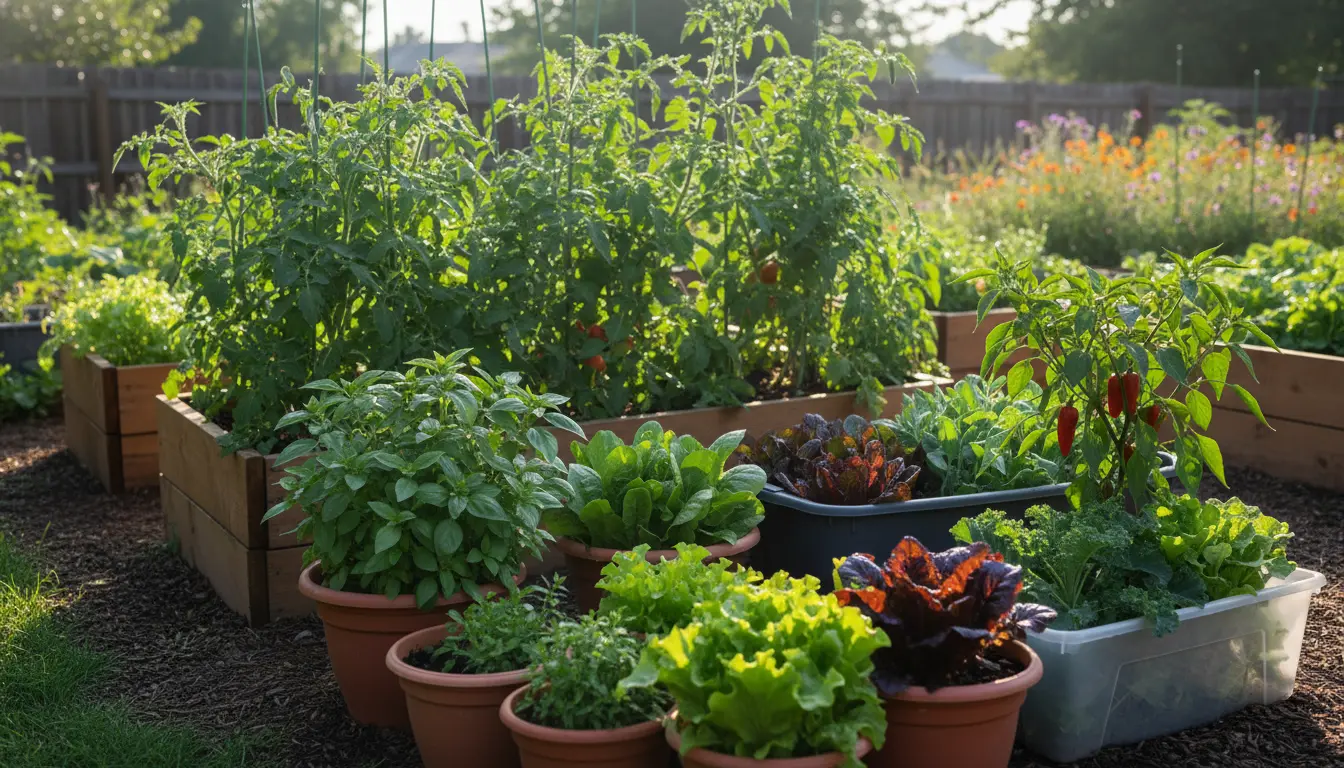
Plan Your Small Vegetable Garden
Starting a small vegetable garden begins with a simple plan. Decide whether you will use a backyard bed, raised beds, or containers on a balcony.
Consider sunlight, space, and the time you can commit each week. A clear plan reduces mistakes and sets realistic expectations.
Choose the Right Location for a Small Vegetable Garden
Most vegetables need at least 6 hours of direct sun daily. Check sunlight patterns over a few days before placing beds.
Avoid low spots that collect water and areas with heavy tree root competition. Close access to water is helpful for regular watering.
Pick Vegetables Suited to Small Spaces
Select compact or high-yield plants suited to containers if you have limited ground area. Choose varieties labeled “bush”, “compact”, or “patio”.
- Leafy greens: lettuce, spinach, Swiss chard
- Root crops: radishes, baby carrots
- Compact fruiting plants: dwarf tomatoes, peppers
- Climbing options for vertical space: pole beans, peas
Prepare Soil and Containers for a Small Vegetable Garden
Good soil is the foundation of a productive small vegetable garden. If using the ground, improve soil with compost and a balanced amendment if needed.
For containers, use a quality potting mix that drains well and retains moisture. Avoid using straight garden soil in pots.
Soil Mix and Amendments
Mixes for containers: one part compost, one part peat substitute or coconut coir, one part perlite or coarse sand. This balances nutrients and drainage.
In-ground beds benefit from a 2–4 inch layer of compost worked into the top 6–8 inches. Test pH if you suspect imbalances; most vegetables prefer pH 6.0–7.0.
Planting and Daily Care in a Small Vegetable Garden
Plant at the right time for your climate. Consult local frost dates and seed packet guidance for spacing and depth.
Use succession planting for continuous harvests: sow small batches of lettuce or radish every 2–3 weeks.
Watering, Mulching, and Fertilizing
Water deeply and less frequently to encourage roots to grow down. Aim to keep soil consistently moist, not waterlogged.
- Mulch with straw or shredded leaves to reduce evaporation and suppress weeds.
- Fertilize with a balanced organic feed every 3–4 weeks for heavy feeders like tomatoes.
- Reduce fertilizer for leafy greens; they need less phosphorus than fruiting plants.
Pest and Disease Basics for a Small Vegetable Garden
Monitor plants weekly for signs of pests or disease. Early action prevents small issues from becoming large problems.
Use these low-impact controls first: handpicking, insecticidal soap, row covers, and encouraging beneficial insects.
Harvesting and Seasonal Tips for a Small Vegetable Garden
Harvest regularly to encourage more production. Pick leafy greens when young for best flavor. Remove spent plants to free space for fall crops.
Plan a fall planting of cool-season vegetables like kale or carrots to extend productivity into cooler months.
Small Vegetable Garden Case Study
Case: Maria, a city renter, created a 6-container kitchen garden on a narrow balcony. She used five 12-inch pots and one deep container for tomatoes.
She chose compact basil, leaf lettuce, bush beans, radishes, and a dwarf tomato. By following a watering schedule and rotating crops, she harvested fresh salad greens almost every week for five months.
Key wins: vertical trellis for beans, regular fertilizing of the tomato, and weekly pest checks. Maria’s garden produced a steady supply of fresh vegetables with about 30 minutes of maintenance weekly.
Many common vegetables like lettuce and radishes can mature in under 30 days, making them ideal for quick harvests in a small vegetable garden.
Practical Tips and Common Mistakes
Keep these practical tips in mind when you start a small vegetable garden:
- Start small: avoid overcrowding and expand after initial success.
- Label plants to track varieties and harvest times.
- Rotate plant families between seasons to reduce disease build-up.
- Use stakes or cages for support to save space and improve airflow.
Simple Weekly Checklist for Your Small Vegetable Garden
- Check soil moisture and water deeply if the top inch is dry.
- Scout for pests and remove any damaged leaves.
- Harvest mature produce and thin crowded seedlings.
- Add compost tea or light fertilizer if plants show slow growth.
Conclusion
Starting a small vegetable garden at home is manageable with basic planning, good soil, proper watering, and simple pest control. Small, consistent actions deliver reliable harvests.
Use the case study and checklist above to build your first season and learn from each crop to improve next year.