
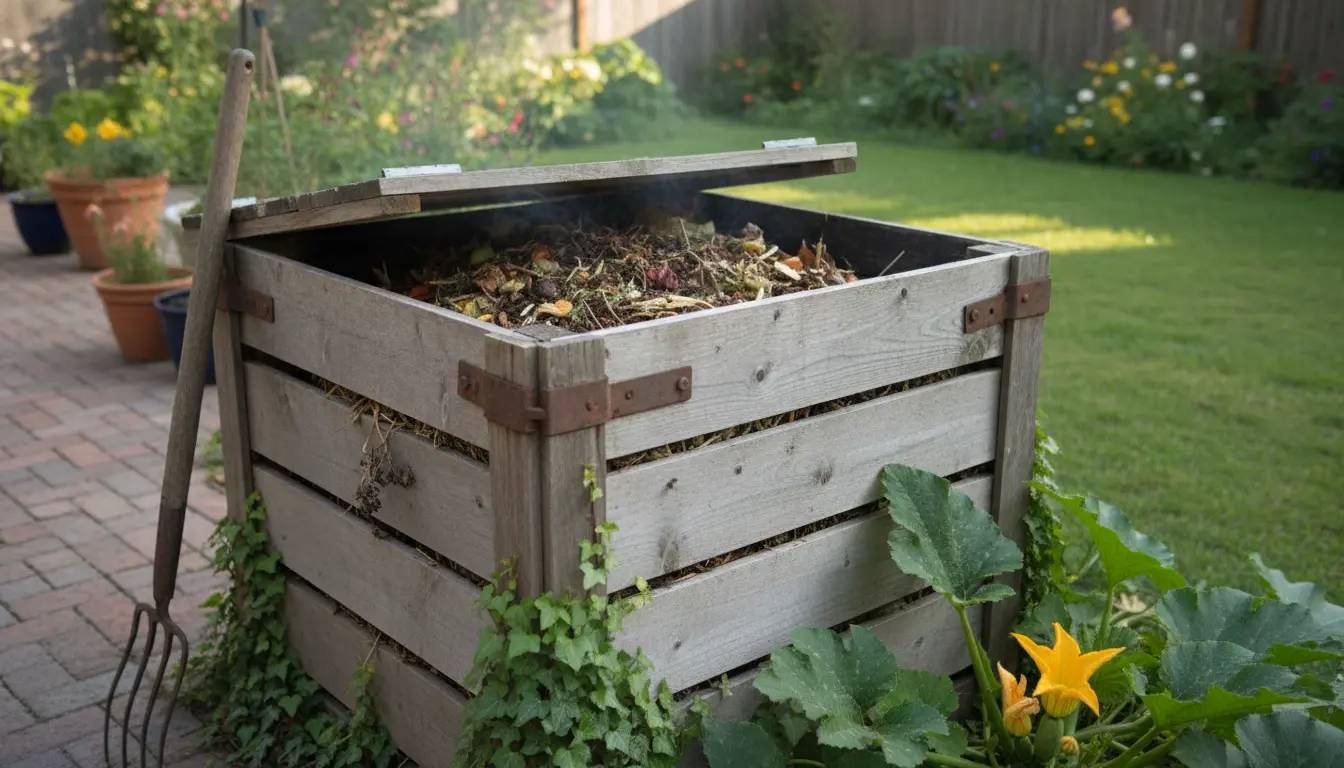
Composting at home turns kitchen and yard waste into a useful soil amendment. This guide walks Home Composting for Beginners through the basics, setup, and maintenance steps you can follow this week.
Basics of Home Composting for Beginners
Compost is the result of breaking down organic material by microbes and detritivores. Properly balanced compost reduces waste sent to landfill and improves soil structure.
Beginners should focus on three elements: carbon, nitrogen, and oxygen. Balancing these helps microbes do the work efficiently.
What Home Composting for Beginners Need
You don’t need fancy tools. Start with a container, a mix of browns and greens, and a place outdoors or in a ventilated area.
- Container options: plastic bin, tumbler, or a simple open pile.
- Brown materials: dry leaves, shredded paper, straw (carbon).
- Green materials: vegetable scraps, coffee grounds, grass clippings (nitrogen).
How Composting Works
Microorganisms break down organic matter, producing heat, water vapor, and rich compost. A good mix and occasional turning keep oxygen available and odors low.
Temperature and moisture are key. Aim for a damp sponge feel and moderate heat for active composting.
Step by Step: How to Start a Compost Bin
Follow these steps to set up an effective compost system that suits your space and needs.
- Choose a location. Pick a level spot with partial shade and easy access. Good drainage matters.
- Select a container. For beginners, a simple bin or tumbler works well. Small households may prefer a 50–100 liter bin.
- Layer materials. Start with coarse browns to aid airflow, then alternate greens and browns in 2–6 inch layers.
- Maintain moisture. Water each layer lightly; the pile should be as damp as a wrung-out sponge.
- Turn regularly. Turn the pile every 1–2 weeks to reintroduce oxygen and mix materials.
Maintaining Your Bin for Home Composting for Beginners
Maintenance keeps compost active and prevents pests or odors. Regular checks and small adjustments do most of the work.
Troubleshooting Common Problems
Here are practical fixes for typical beginner issues.
- Bad smell: Add more browns and turn the pile. Smells usually mean too much nitrogen or poor aeration.
- Pests: Avoid putting meat, dairy, or oily foods in the bin. Bury food scraps under a layer of browns.
- Too dry: Add water and green materials to restore moisture and microbial activity.
- Slow breakdown: Chop materials smaller and increase turning frequency to speed decomposition.
Tips and Best Practices for Home Composting for Beginners
Follow a few simple rules to simplify the process and get consistent results.
- Keep a small bucket for kitchen scraps and empty it into the bin daily.
- Shred or chop bulky items to speed decomposition.
- Maintain a 3:1 to 4:1 ratio of browns to greens by volume for stable composting.
- Use finished compost as a top dressing, potting mix ingredient, or soil amendment.
Composting reduces methane emissions from landfills. Proper home composting can divert up to 30% of household waste by weight from the garbage bin.
Small Real-World Case Study
Emma, an apartment dweller, started a simple balcony compost with a sealed tumbler. She added kitchen scraps and shredded cardboard, turned it weekly, and kept moisture balanced.
After four months she had enough compost to feed balcony herbs and houseplants. The tumbler kept pests away and eliminated odors, proving composting works in small spaces.
Example Weekly Routine for Home Composting for Beginners
Here’s a simple routine you can follow to keep your bin healthy without spending a lot of time.
- Daily: Empty a small kitchen pail into the compost and cover with a handful of browns.
- Weekly: Turn the pile or rotate the tumbler once to aerate materials.
- Monthly: Check moisture and add water or browns as needed. Chop any large pieces.
- Every 3–6 months: Harvest finished compost from the bottom or side of the bin.
Getting Started Today
Pick a container, gather mixed browns and greens, and begin layering. Keep observations simple: monitor smell, moisture, and temperature.
Home Composting for Beginners is mostly about consistency rather than perfection. Start small, learn from the pile, and scale up as you get comfortable.