
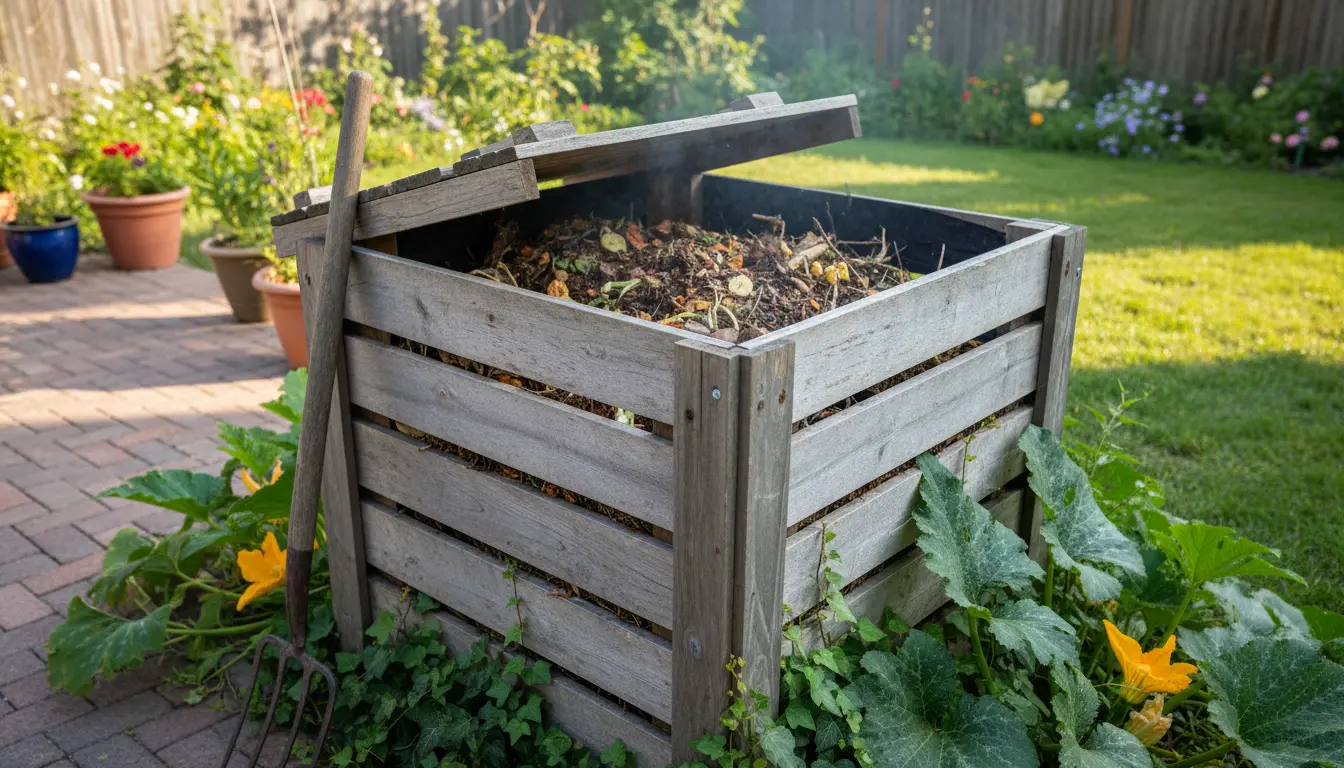
Why Home Composting for Beginners Is Practical
Home composting turns kitchen and yard waste into a useful soil amendment. It reduces trash, saves money on soil conditioners, and improves garden health.
This guide focuses on simple, reliable steps for home composting for beginners. No jargon, just practical tasks you can follow this week.
Choose the Right Compost System for Your Home Composting for Beginners
Pick a system that matches your space and commitment level. Small apartments and larger yards need different approaches.
- Counter top or Bokashi bucket — for indoor spaces and food scraps, fast and compact.
- Tumbler bin — easy turning and faster breakdown, good for small yards.
- Open pile or bin — low cost and good for larger volumes of yard waste.
Ensure your chosen system allows drainage and airflow. That prevents odors and pest problems.
Materials to Use in Home Composting for Beginners
Compost needs a balance of carbon (brown) and nitrogen (green) materials. Use common household and garden waste.
- Greens (nitrogen): fruit and vegetable scraps, coffee grounds, fresh grass clippings.
- Browns (carbon): dry leaves, shredded paper, straw, cardboard pieces.
- Avoid: meat, dairy, oils, diseased plants, and pet waste for most home systems.
A simple ratio to aim for is 2–3 parts browns to 1 part greens by volume. Adjust as you observe the pile.
Step-by-Step: How to Start Home Composting for Beginners
Follow these steps for a consistent compost routine that works for new composters.
- Choose your container and location: shaded, level ground with good drainage.
- Start the base: place coarse materials like twigs or straw to aid airflow.
- Add layers: alternate greens and browns, aim for loose layers about 4–6 inches thick.
- Moisten: keep the pile damp like a wrung-out sponge, not soaking wet.
- Turn or mix: for tumblers, rotate every few days; for piles, turn every 1–2 weeks.
Troubleshooting Common Home Composting for Beginners Issues
New composters often run into odors, slow decomposition, or pests. These problems have simple fixes.
- Bad smell: add more browns and turn the pile to add oxygen.
- Pile too dry: add water and some greens or cover to retain moisture.
- Slow breakdown: chop materials smaller and check moisture and airflow.
- Pests: avoid meat and dairy, use a closed bin, and bury fresh food under browns.
How Long Before Compost Is Ready?
Time varies by method. A well-managed hot compost can be ready in 2–3 months. Cold composting in a bin or pile can take 6–12 months.
Finished compost is dark, crumbly, and smells earthy. If you can still recognize food scraps, it needs more time.
Practical Tips for Successful Home Composting for Beginners
- Keep a small kitchen caddy to collect scraps and reduce trips outside.
- Chop larger items to speed decomposition.
- Use a garden fork or compost aerator to mix and avoid compacting the pile.
- Save shredded paper and dry leaves during fall to balance wet greens year-round.
Composting reduces household waste by up to 30 percent by volume. Properly finished compost can improve soil water retention by up to 15 percent.
Using Finished Compost from Home Composting for Beginners
Apply finished compost to gardens, potted plants, or as a top dressing for lawns. It improves soil structure and supplies slow-release nutrients.
Typical uses:
- Mix 1 part compost to 3 parts potting mix for container plants.
- Spread 1/2 to 1 inch of compost over garden beds and lightly work into the topsoil.
- Use as a seed starting amendment at low rates to avoid nitrogen lock.
Small Real-World Case Study
Sarah, an apartment dweller, started a small Bokashi system and a city compost pickup service. Over six months she diverted about 120 liters of kitchen waste from landfill.
Her process: collect scraps in a counter caddy, add them to the Bokashi bucket, and then transfer fermented material into a community garden compost bin. Her houseplants needed less fertilizer and her community garden reported visibly improved soil in one growing season.
Simple Checklist to Start Home Composting for Beginners
- Choose a container (Bokashi, tumbler, or bin).
- Gather browns: shredded paper, dry leaves, cardboard.
- Collect greens: kitchen scraps, coffee grounds, fresh clippings.
- Set a routine for adding materials, moisture checks, and turning.
- Monitor and adjust based on smell, moisture, and decomposition speed.
Home composting for beginners is low cost, scalable, and practical. Start small, observe, and refine your method. With a little attention you can turn everyday waste into valuable soil and reduce your environmental footprint.