
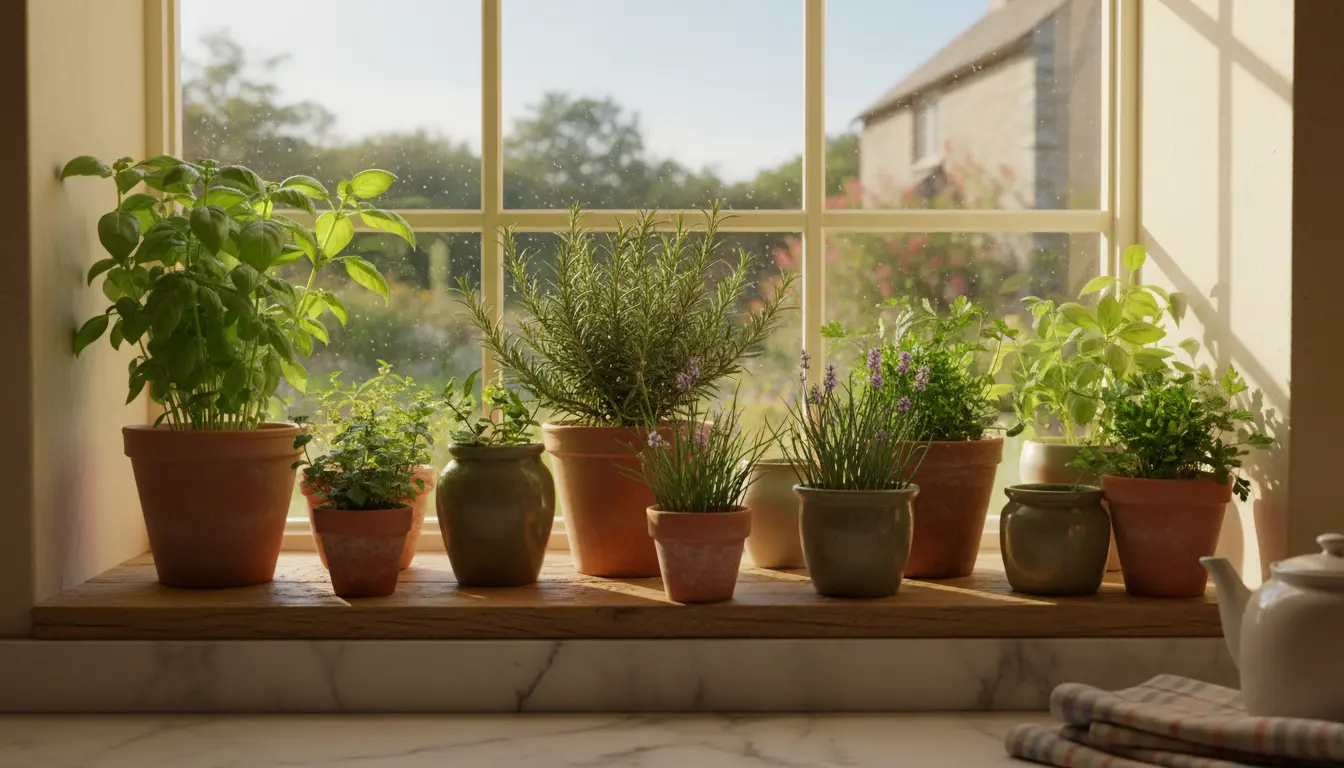
Growing herbs indoors is an easy way to add fresh flavor to meals and brighten a small space. This guide gives practical steps for setting up and maintaining an indoor herb garden you can use year-round.
Choose the Right Herbs for an Indoor Herb Garden
Select herbs that do well in containers and low to medium light. Good starter herbs include basil, parsley, chives, mint, thyme, and rosemary.
Consider growth habit and use. Fast-growers like basil and cilantro need frequent harvesting, while woody herbs like rosemary grow slowly and prefer drier soil.
Herb selection tips for an indoor herb garden
- Beginner-friendly: basil, chives, mint, parsley.
- Low-light tolerant: mint, parsley, cilantro.
- Bright light required: rosemary, thyme, sage.
Pick Containers and Soil
Choose containers with drainage holes to prevent root rot. Size matters: 4–6 inch pots work for single herbs, while a 10–12 inch pot suits mixed plantings.
Use a light, well-draining potting mix formulated for containers. Avoid garden soil which compacts and holds too much water inside pots.
Container and soil checklist
- Drainage holes or a layer of pebbles for airflow.
- Quality potting mix with perlite or vermiculite.
- Neutral to slightly acidic pH (6.0–7.0) suits most herbs.
Provide Proper Light for an Indoor Herb Garden
Light is the most important factor for healthy herbs. Most culinary herbs need 6–8 hours of bright light daily.
If a sunny south- or west-facing window is unavailable, supplement with a full-spectrum LED grow light placed 6–12 inches above the plants.
Light guidelines
- South-facing windows: best for sun-loving herbs.
- East/west windows: suitable with a few extra hours of light.
- Low-light rooms: choose tolerant herbs or use grow lights.
Watering and Feeding Your Indoor Herb Garden
Watering needs vary by herb and container size. Check soil moisture by sticking a finger an inch into the mix; water when it feels dry at that depth.
Overwatering is the main mistake. Ensure pots drain well, and avoid letting plants sit in standing water.
Feeding schedule for healthy herbs
- Use a balanced liquid fertilizer every 4–6 weeks during the growing season.
- Reduce feeding in winter when growth slows.
- For herbs grown in small pots, consider a half-strength fertilizer to avoid salt buildup.
Pruning and Harvesting Tips
Regular pruning encourages bushier growth and prevents herbs from becoming leggy. Pinch back tips and harvest stems just above a leaf node.
Harvest in the morning after dew evaporates for the best flavor. Avoid removing more than one-third of the plant at a time.
Pruning do’s and don’ts
- Do pinch basil regularly to encourage new shoots.
- Do remove flowering buds on basil and cilantro to prolong leaf production.
- Don’t strip more than one-third of foliage at once.
Pest Management and Common Problems
Indoor herb gardens are less prone to pests, but issues like aphids, whiteflies, and fungus can appear. Inspect leaves weekly for signs of trouble.
Control small infestations with insecticidal soap, neem oil, or by rinsing leaves under lukewarm water. Improve air circulation to reduce fungal disease.
Quick troubleshooting
- Yellow leaves: often overwatering or poor drainage.
- Leggy growth: insufficient light.
- Sticky residue or distorted leaves: check for aphids or scale.
Case Study: Small Kitchen Windowsill Indoor Herb Garden
Anna, a city apartment renter, started an indoor herb garden on a narrow south-facing windowsill. She used three 6-inch pots for basil, parsley, and chives.
Within six weeks, regular pruning and a 10-hour daily supplement from an LED light produced a steady supply of herbs for cooking. She avoided overwatering by checking soil moisture before each water.
Her key takeaways were: choose compact varieties, use quality potting mix, and supplement light in winter months.
Weekly Care Routine for an Indoor Herb Garden
A simple weekly routine keeps plants healthy and productive. Spend 10–15 minutes per week checking light, moisture, pests, and removing dead leaves.
- Monday: Rotate pots for even light exposure.
- Wednesday: Check soil moisture and water if needed.
- Saturday: Prune, harvest, and inspect for pests.
Final Tips for a Successful Indoor Herb Garden
Start small and learn each herb’s needs. Keep a notebook of watering frequency, light hours, and fertilizing dates to refine care over time.
With the right light, soil, and a short weekly routine, an indoor herb garden becomes a reliable source of fresh flavors and a pleasant green addition to your home.