
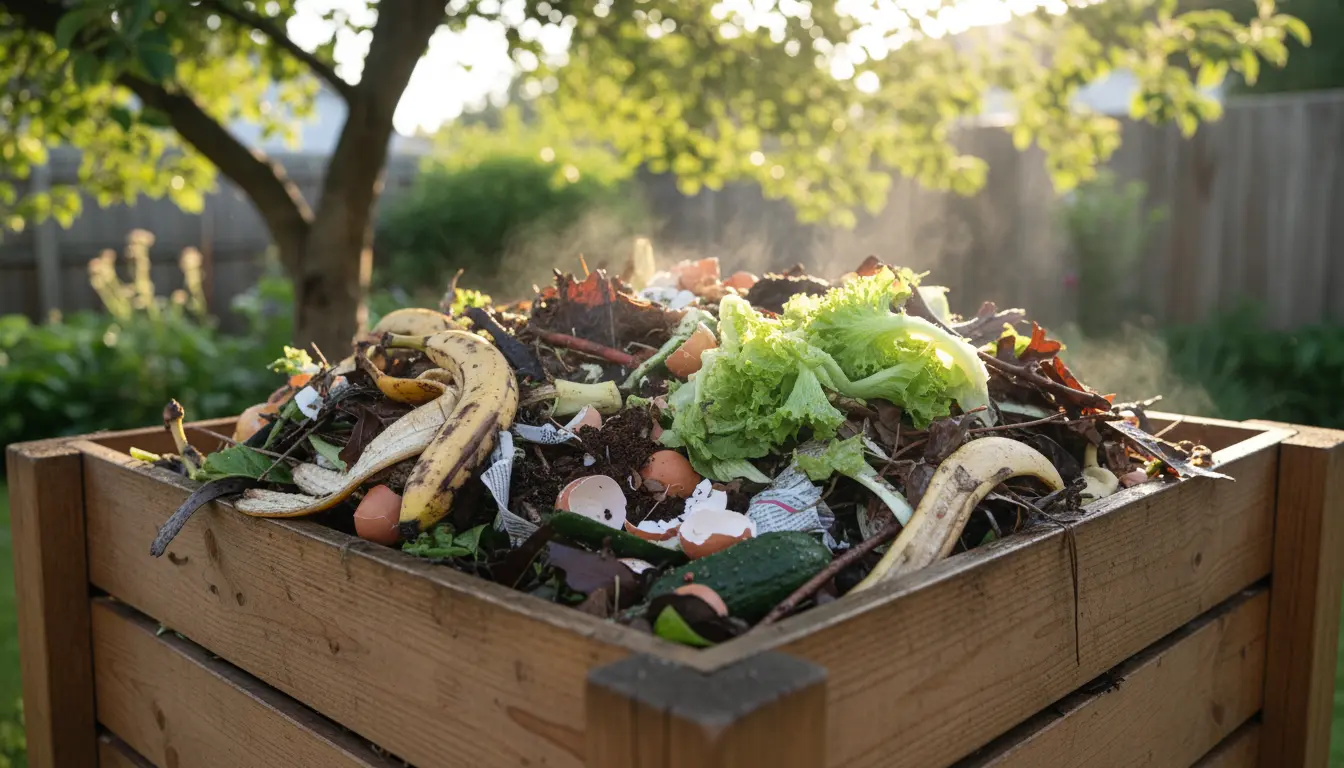
Home Composting Basics
Home composting turns kitchen and garden waste into nutrient-rich soil amendment. It reduces trash, improves garden health, and saves money on fertilizer.
This guide covers simple, actionable steps to start composting at home, choose a compost system, avoid common mistakes, and use finished compost.
Why Home Composting Matters
Composting keeps organic material out of landfills where it produces methane, a potent greenhouse gas. It also recycles nutrients into your garden soil.
Even small-scale composting — a bin on a balcony or a backyard pile — makes a measurable difference over time.
How to Start Home Composting
Follow these basic steps to begin composting quickly and reliably.
1. Choose the Right Compost System
Select a method that fits your space and time. Options include a simple compost pile, a sealed tumbler, or a countertop bokashi system for small kitchens.
- Backyard bin or pile: Low cost, works for large volumes.
- Compost tumbler: Faster turning, cleaner, good for small yards.
- Bokashi bucket: Fermentation method for kitchens and apartments.
2. Balance Greens and Browns
Compost needs a mix of nitrogen-rich “greens” and carbon-rich “browns.” Aim for a rough 1:2 ratio by volume (greens to browns).
- Greens: vegetable scraps, coffee grounds, fresh grass clippings.
- Browns: dry leaves, straw, shredded paper, cardboard.
Mix materials in layers and keep the pile moist like a wrung-out sponge.
3. Maintain Air and Moisture
Turn the pile every 1–2 weeks to add oxygen or use a tumbler to rotate. Proper aeration prevents bad smells and speeds decomposition.
If the pile is too dry, add water and more greens. If it smells like ammonia, add extra browns and turn it more often.
What Not to Compost
Some items slow composting or attract pests. Avoid adding dairy, raw meat, fatty foods, and diseased plants.
Also skip treated wood, charcoal ash, and large woody branches unless chipped first.
Speeding Up Home Composting
If you want finished compost faster, follow these tips to accelerate breakdown.
- Shred or chop materials into smaller pieces before adding.
- Maintain a balanced green-to-brown ratio and keep the pile moist.
- Increase surface area by turning the pile frequently.
- Use a compost starter or finished compost to inoculate the pile with microbes.
Harvesting and Using Finished Compost
Compost is ready when it is dark, crumbly, and smells earthy. This usually takes 2–12 months depending on method and conditions.
Use finished compost as a top dressing, mix into potting soil, or add to planting holes to improve soil structure and nutrient content.
Compost can increase soil water retention by up to 20 percent, which helps plants survive dry spells and reduces the need for frequent watering.
Troubleshooting Common Problems
Here are quick fixes for typical composting issues you may encounter.
- Bad odor: Add more dry browns, turn the pile, and reduce wet food scraps.
- Slow decomposition: Chop materials smaller and increase aeration and moisture.
- Pests: Avoid meat and dairy, use a closed bin or bury food deep, and secure the lid.
- Too dry: Add water and greens, or cover the pile to retain moisture.
Case Study: Small-Space Home Composting
Emily’s Balcony Compost Setup
Emily lives in a one-bedroom apartment and uses a 20-liter indoor bokashi bucket plus a small outdoor tumbler. She collects kitchen scraps in the bokashi bucket and ferments them for two weeks.
After fermentation, she buries the pre-compost in a planter with aged potting mix. Within three months, the mix had visibly improved texture and her tomato seedlings grew stronger with fewer waterings.
Her system produced about 5 liters of usable compost per season and eliminated weekly food waste from her garbage.
Practical Tips and Examples
Use these short practices to keep composting simple and effective.
- Keep a small countertop container with a tight lid to collect scraps and prevent odors.
- Store dry browns in a plastic bin to have material ready year-round.
- Record what you add for the first few months to find the best mix and schedule for turning.
Final Checklist for Home Composting Success
- Choose a compost system that fits your space and lifestyle.
- Balance greens and browns and keep moisture even.
- Turn or aerate regularly and monitor for pests or smells.
- Harvest and use finished compost to improve garden soil.
Starting a home compost system is a low-cost, high-impact way to reduce waste and enrich your soil. With a simple routine, even small households can produce useful compost and contribute to a healthier environment.