
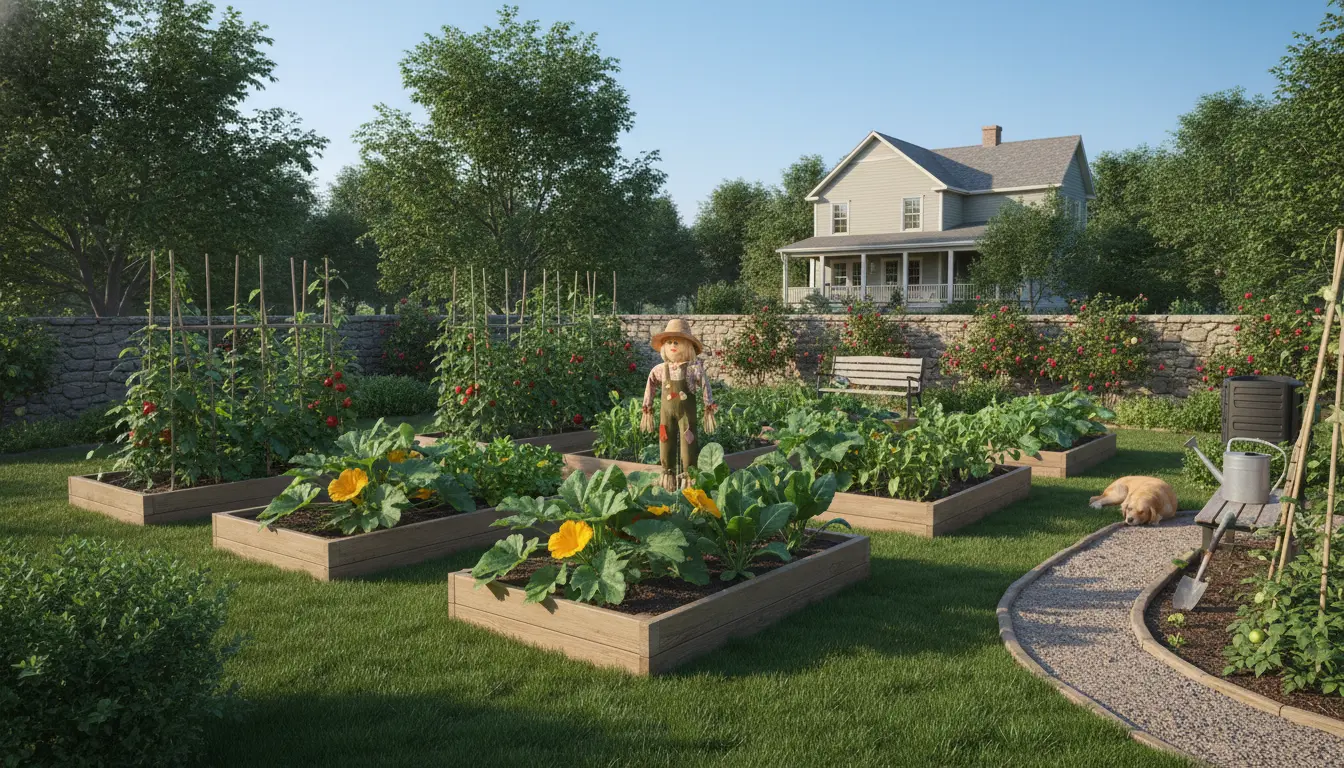
How to Start a Vegetable Garden: First Steps
Starting a vegetable garden is practical and rewarding. This guide gives clear steps to help beginners set up a productive garden without overwhelm.
Choose a simple plan to start a vegetable garden
Pick a small, manageable area rather than a large plot. A 4×6 foot raised bed or a few containers is enough for first-time gardeners.
Decide which vegetables you want to grow based on your climate and what you like to eat. Focus on 3–6 easy crops for the first season.
Site Selection When You Start a Vegetable Garden
Good light, access to water, and level ground matter most. Most vegetables need 6–8 hours of direct sunlight.
Avoid low spots that collect water and places too shaded by trees or buildings. Close proximity to a water source makes regular watering simpler.
Checklist for choosing a garden site
- At least 6 hours of sun daily
- Level or gently sloped soil for drainage
- Within 20–30 feet of a hose or water source
- Protected from strong winds if possible
Soil Preparation to Start a Vegetable Garden
Healthy soil gives plants nutrients and structure. Test soil texture and pH if possible, but you can also build good soil with organic matter.
Mix compost into existing soil at a ratio of about 25–30% compost to native soil for raised beds or amendments in-ground.
Simple soil improvement steps
- Clear weeds and grass from the chosen area.
- Loosen soil with a fork or tiller to 8–12 inches deep.
- Add 2–3 inches of compost and mix thoroughly.
- For heavy clay, add coarse sand and extra organic matter to improve drainage.
Choose Plants and Planting When You Start a Vegetable Garden
Select varieties labeled “easy” or “beginner friendly.” Many leafy greens, radishes, beans, and cherry tomatoes are forgiving and quick to harvest.
Sow seeds or transplant seedlings following spacing and depth instructions on seed packets. Crowding plants reduces yield and increases disease risk.
Starter plant ideas
- Leafy greens: lettuce, spinach, arugula
- Root crops: radish, carrot (short varieties)
- Nightshades: cherry tomatoes, peppers (start from seedlings)
- Legumes: bush beans (easy and high-yield)
Watering and Maintenance
Consistent moisture is more important than frequent shallow watering. Early morning deep watering encourages healthy roots.
Mulch with straw or wood chips to retain moisture and suppress weeds. Check soil moisture twice a week by feeling 1–2 inches below the surface.
Basic care routine
- Water deeply 1–3 times per week depending on weather
- Remove weeds weekly to lower competition
- Check for pests and remove by hand or with soapy water spray
- Side-dress with compost or balanced fertilizer mid-season
Pest and Disease Tips for a New Vegetable Garden
Inspect plants regularly to catch issues early. Many problems are simpler to manage when noticed quickly.
Use physical controls first: row covers, hand-picking, and good spacing. Reserve chemical treatments as a last resort and follow label directions.
Common quick responses
- Aphids: spray with a strong stream of water or use insecticidal soap
- Slugs: set beer traps or use diatomaceous earth around plants
- Fungal leaf spots: remove affected leaves and improve air circulation
Adding a 2–3 inch layer of compost in spring can increase garden yield and improve soil moisture retention for months.
Harvesting and Storing Your Vegetables
Harvest regularly to encourage more production. Many plants, like lettuce and beans, produce over a longer period if picked often.
Store harvested produce properly: cool leafy greens quickly, keep root crops in a cool, dark place, and refrigerate tomatoes only if very ripe.
Small Real-World Case Study
Case: Jane in Ohio started a 4×6 raised bed in May with lettuce, cherry tomatoes, bush beans, and radishes.
She amended the bed with compost, chose sunny location, and watered deeply twice a week. By late summer she harvested enough salad greens for her family twice a week and harvested 8 pounds of tomatoes.
Key wins: small bed size, focus on easy vegetables, and consistent watering.
Common Mistakes to Avoid When You Start a Vegetable Garden
- Starting too large — begin small and expand next season.
- Overwatering or underwatering — follow deep, infrequent watering.
- Ignoring soil health — invest in compost and organic matter early.
- Planting without a plan — track spacing and succession planting for continuous harvest.
Simple Season Plan
Spring: prepare soil, plant cool-season crops and some transplants.
Summer: maintain, harvest, and plant warm-season crops. Keep watering consistent.
Fall: harvest remaining crops, add compost, and cover the bed to protect soil and suppress weeds.
Starting a vegetable garden is about making steady, simple choices. With the right site, good soil, and a small set of easy crops, you can grow fresh produce and gain gardening confidence in your first season.