
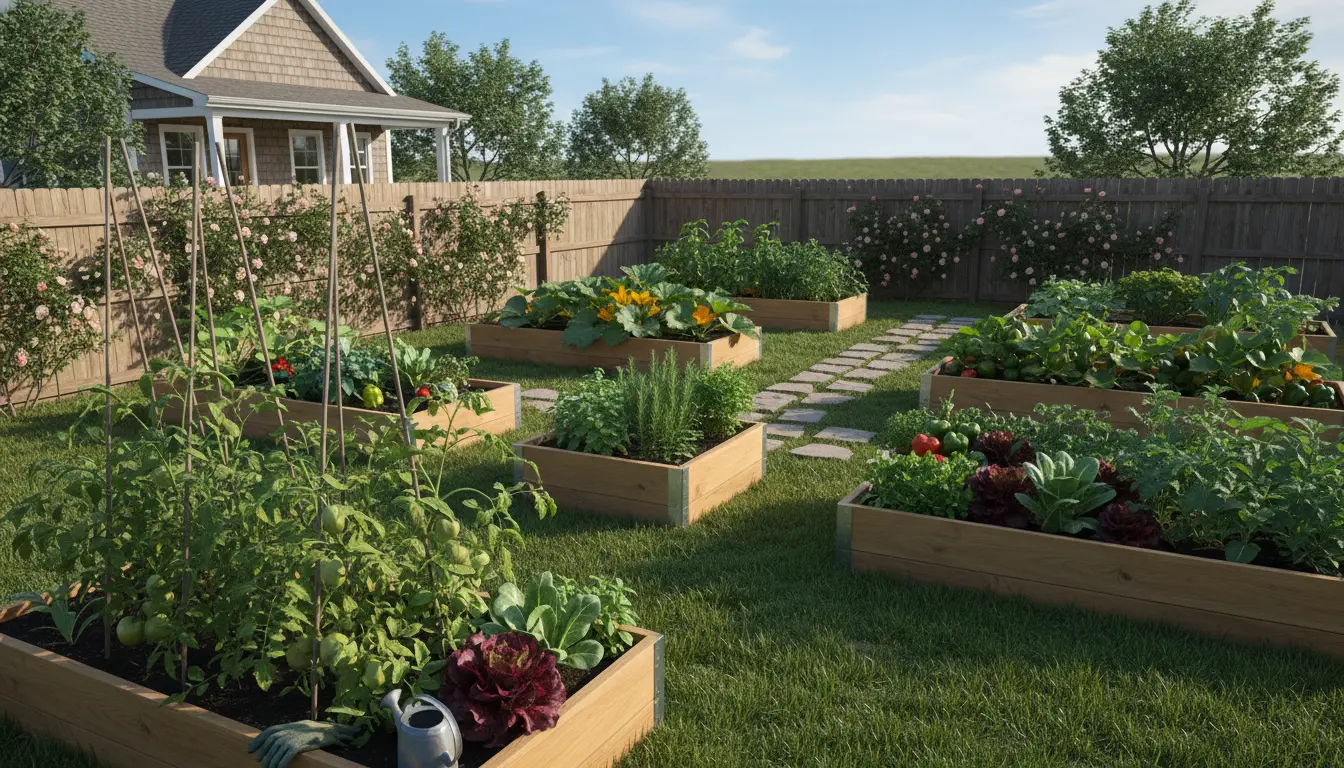
Why start a simple vegetable garden
Growing your own vegetables saves money and improves access to fresh produce. A simple garden can fit a small yard, balcony, or even a set of containers.
This guide gives practical steps to help beginners set up and maintain a productive, low-stress garden.
Plan before you start a simple vegetable garden
Planning keeps work realistic and limits wasted time. Begin by assessing space, sunlight, and how much time you can commit each week.
Decide whether you want in-ground beds, raised beds, or containers. Each option changes soil needs and watering frequency.
Choose the right location
Most vegetables need 6–8 hours of direct sun daily. Observe your space through the day to find the sunniest spot.
Consider proximity to water and how easy it is to access for routine care.
Select containers or beds
Containers are great for patios and balconies and are easier for beginners to manage. Raised beds warm faster in spring and drain well.
In-ground gardens require soil testing but are less costly if you have space and good soil.
Prepare soil for a simple vegetable garden
Healthy soil is the foundation of a successful garden. Test pH and basic nutrients with an inexpensive kit or local extension service.
Improve poor soil with compost and well-rotted organic matter to boost structure and nutrition.
Soil mix for containers and raised beds
- Use a mix of compost, peat-free medium or coconut coir, and a quality topsoil or loam.
- Aim for loose, well-draining soil that holds moisture but does not become waterlogged.
- Add a slow-release organic fertilizer if your compost is older or low in nutrients.
Choose easy vegetables to start a simple vegetable garden
Begin with low-maintenance, high-yield crops that tolerate beginner mistakes. This builds confidence and produces food quickly.
Best starter vegetables
- Leafy greens: lettuce, spinach, Swiss chard — fast and forgiving.
- Root vegetables: radishes and carrots — simple if soil is loose.
- Cucumbers and bush beans — productive in a small area.
- Tomatoes (determinate varieties) — great for containers with staking.
Planting and spacing tips
Follow seed packet or plant tag spacing to avoid overcrowding and disease. Thinning young seedlings helps roots and leaves develop better.
Stagger plantings of quick crops like lettuce and radishes every 2–3 weeks to extend harvests through the season.
Watering and feeding a simple vegetable garden
Consistent moisture is more important than frequent shallow watering. Aim for deep, infrequent soakings that reach root zones.
Use mulch to retain moisture and suppress weeds. Organic mulches like straw or shredded leaves also add nutrients as they break down.
Fertilizing basics
Apply a balanced organic fertilizer every 4–6 weeks for heavy feeders like tomatoes and cucumbers. Light feeders usually do fine with compost alone.
Observe plants: yellowing lower leaves may indicate nitrogen needs, while poor fruit set could signal potassium or phosphorus shortages.
Pest and disease management in a simple vegetable garden
Preventive practices reduce most pest and disease problems. Rotate crops yearly and remove plant debris in fall to lower overwintering pests.
Use row covers for young plants and hand-pick larger pests like slugs or caterpillars. Introduce beneficial insects by planting flowers like calendula or dill nearby.
Seasonal care and harvesting
Harvest regularly to encourage more production. Pick lettuce outer leaves or harvest beans when young for continuous yields.
Prune indeterminate tomatoes lightly to improve airflow and ripening. End-of-season cleanup prevents disease next year.
Companion planting, such as growing basil near tomatoes, can improve flavor and reduce some pests. Simple pairings are effective without complicating your garden layout.
Small case study: A corner bed turned productive
On a 10-foot suburban patio, Maria converted a corner into a raised bed 4 feet by 2 feet. She added a 50/50 mix of compost and loam and planted determinate tomatoes, basil, and leaf lettuce.
With twice-weekly deep watering and a monthly organic feed, the bed produced salad greens through summer and four tomato harvests. Maria spent about 30 minutes per week maintaining the bed.
Common mistakes and quick fixes
- Overwatering: Check soil moisture before watering and reduce frequency if soggy.
- Overcrowding: Thin seedlings early or transplant to new containers to improve airflow.
- Ignoring sunlight: Move containers to a sunnier spot or choose shade-tolerant greens.
Final checklist to start a simple vegetable garden
- Pick a sunny location and decide on containers or beds.
- Test and amend soil with compost and organic matter.
- Choose 3–6 beginner-friendly crops and schedule staggered plantings.
- Set up consistent watering, mulching, and a simple fertilizing routine.
- Monitor pests and harvest regularly.
Starting a simple vegetable garden is mainly about planning, consistent care, and choosing the right plants. Keep expectations realistic and learn from each season to improve yield and enjoyment.