
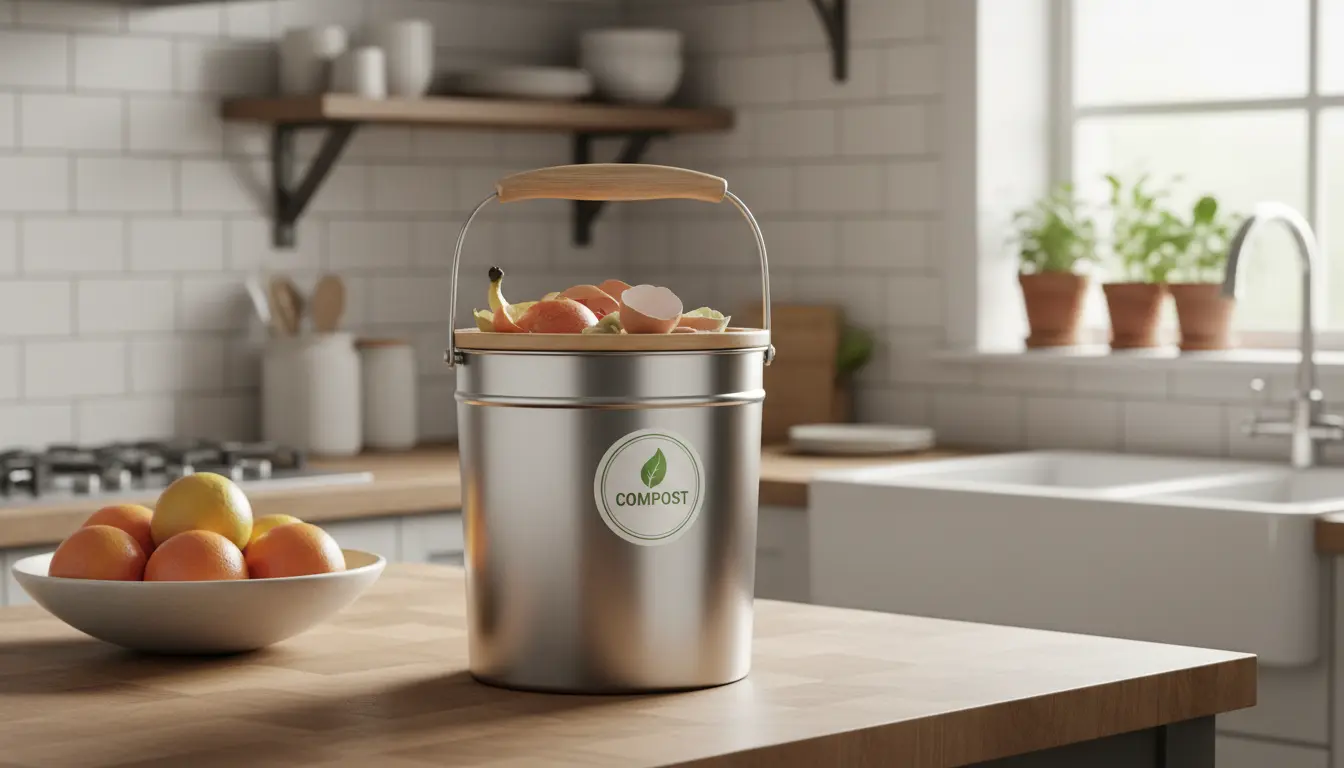
Why Choose Home Composting for Beginners
Home composting is a low-cost way to reduce household waste and create nutrient-rich soil for plants. It is practical for small yards, balconies, and kitchen setups.
For beginners, composting teaches simple biology and waste management that saves money and improves garden health. You do not need a large space or special skills to start.
Basic Concepts: What Is Home Composting for Beginners
Composting is the natural breakdown of organic matter by microbes, worms, and insects into humus. That humus improves soil structure, water retention, and plant nutrition.
Two material types are essential: nitrogen-rich ‘greens’ and carbon-rich ‘browns.’ Balancing these helps compost heat up and break down efficiently.
Common Greens and Browns
- Greens: vegetable scraps, coffee grounds, fresh grass clippings, tea bags.
- Browns: dry leaves, shredded paper, cardboard, straw.
- Aim for a rough carbon to nitrogen ratio of 25–30:1 for steady decomposition.
How to Start Home Composting for Beginners
Choose a compost method that fits your space and lifestyle. Options include a simple bin, a tumbler, or vermicomposting (worm composting).
Place the bin on soil or a stable surface to allow organisms and drainage. Start with a base of coarse material like small branches or straw for airflow.
Step-by-Step Startup
- Add alternating layers of greens and browns, aiming for even moisture like a wrung-out sponge.
- Turn the pile every 1–2 weeks to add oxygen and speed decomposition.
- Monitor temperature; a warm pile (40–60°C or 104–140°F) breaks down faster, but cool piles still work more slowly.
- Harvest finished compost when it is dark, crumbly, and smells earthy—usually 2–6 months depending on conditions.
Tools and Containers for Home Composting for Beginners
Tools can be minimal. A pitchfork or garden fork and a bucket for kitchen scraps are enough to begin.
Container options:
- Open pile: cheapest, needs space and more turning.
- Bin or tumbler: neater, faster, and good for small yards.
- Worm bin: ideal for apartments and kitchens, produces castings quickly.
Common Problems and Fixes
Beginners often face a few recurring issues. Most are easy to fix with adjustments to moisture, balance, or aeration.
- Bad smell: add browns and turn the pile to add oxygen.
- Too dry: add water and some greens to increase moisture.
- Slow decomposition: chop materials smaller, increase turning, or add more greens.
- Pests: avoid meat, dairy, and oily foods; use a closed bin or bury scraps in the pile.
Safety Tips
Wear gloves when handling compost and keep bins away from vegetable beds until compost is fully finished. Finished compost is safe and valuable for soil.
Composting can reduce household waste by up to 30 percent. Many cities accept finished compost for community gardens, creating local circular systems.
How to Use Finished Compost
Finished compost mixes into potting soil, improves garden beds, and works as a slow-release fertilizer. Use a 1:3 mix with existing soil for planting.
Top-dress lawns or add a thin layer around shrubs and trees to improve soil structure and retain moisture.
Small Real-World Example: A Simple Case Study
Case: A two-person household started a 60-liter tumbling composter on their balcony. They collected kitchen scraps in a small container with a lid and added shredded newspaper as browns.
Within four months they produced about 30 liters of finished compost. They used it in container tomatoes, which showed improved growth and fewer watering needs. The household reported cutting trash volume by one bag weekly.
Advanced Tips for Home Composting for Beginners Who Want More
Once comfortable, try these upgrades: add a layer of finished compost to jump-start new piles, use a compost thermometer to monitor progress, or try bokashi pre-composting for fermented food waste.
Consider community composting schemes if you produce more green waste than your setup handles.
Summary and First Steps
Home composting for beginners is accessible, inexpensive, and rewarding. Start with a simple bin, balance greens and browns, keep the pile moist, and turn it regularly.
Begin this week: choose a container, collect a week of kitchen scraps, and layer with browns. Small, consistent actions lead to steady compost and better soil.