
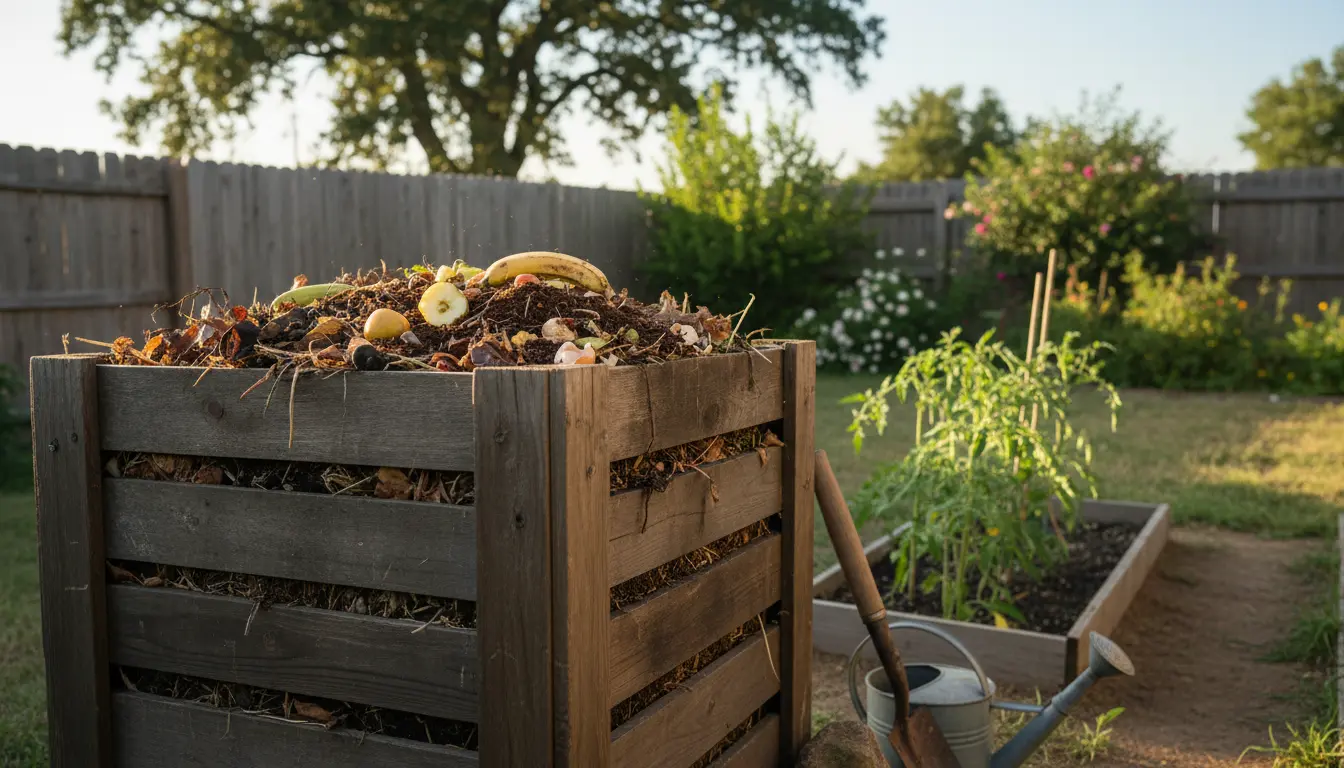
Why start composting at home
Home composting reduces household waste and creates valuable soil for gardens and potted plants. It is a low-cost, low-effort way to improve soil structure and retain moisture.
This guide explains how to start composting at home with clear steps, common materials, and simple troubleshooting.
Choose a composting method for home composting
Selecting a method depends on space, time, and how much waste you generate. Common options work well for most homes.
Compost bin (recommended for beginners)
A closed or open bin is easy to manage and keeps pests away. Bins can be purchased or made from pallets or wire mesh.
Compost pile
A simple pile works for larger yards. It requires turning and a bit more space but is flexible and inexpensive.
Worm composting (vermicomposting)
Worm bins are ideal for apartments or kitchens. Red wigglers process food scraps quickly and produce nutrient-rich castings.
What to put in a home compost bin
Use a balance of green (nitrogen) and brown (carbon) materials to keep the process active and odor-free.
- Greens (Nitrogen): Vegetable scraps, fruit peels, coffee grounds, fresh grass clippings.
- Browns (Carbon): Dry leaves, straw, shredded paper, cardboard, wood chips.
- Water: Keep the pile as damp as a wrung-out sponge.
Aim for a ratio near 2–3 parts brown to 1 part green by volume. Adjust based on smell and moisture.
How to start composting at home: step-by-step
Follow these steps to establish a healthy compost system that breaks down materials efficiently.
- Pick your location: Choose a spot with partial shade and good drainage. Keep it convenient to your kitchen and garden.
- Prepare the base: Lay coarse materials like straw or small branches to improve airflow at the bottom.
- Add layers: Alternate greens and browns in 4–6 inch layers. Cover fresh food scraps with browns to prevent odors.
- Maintain moisture: Water lightly if the pile becomes dry. Avoid waterlogging.
- Turn the pile: Every 1–2 weeks for hot composting, or monthly for slower decomposition. Turning adds oxygen.
- Harvest finished compost: After 2–6 months, dark, crumbly compost is ready. Use it in garden beds or as potting mix additive.
Tip: Small indoor bucket for kitchen scraps
Keep a small lidded container for daily scraps and empty it into the main bin every 2–3 days. This reduces smell in the kitchen.
Composting can reduce household waste by up to 30 percent and cut methane emissions from landfills. Finished compost can retain moisture, reducing garden water needs by up to 20 percent.
Troubleshooting common home composting issues
Problems are usually easy to fix by adjusting balance, moisture, or airflow.
- Smelly compost: Add more brown materials and turn the pile to add oxygen.
- Pests or rodents: Use a closed bin, avoid adding meat or dairy, and bury food scraps under browns.
- Slow decomposition: Chop materials smaller, increase greens, or turn more often.
- Too dry: Add water evenly and mix in greens to increase moisture retention.
How to use finished compost from home composting
Finished compost is dark and crumbly with an earthy smell. Use it in several practical ways around your home and garden.
- Top-dress vegetable beds with a 1–2 inch layer in spring or fall.
- Mix into potting soil at 10–20 percent by volume for potted plants.
- Work into flower beds to improve soil structure and nutrient content.
Small case study: Backyard compost success
A two-person household in a townhouse started a 60-gallon compost bin. They collected kitchen scraps and yard waste, using shredded cardboard as brown material.
Within four months they had rich compost and used it to fill a raised vegetable bed. Their tomatoes and herbs showed improved growth and the household reduced trash output by nearly one bag per week.
Quick checklist to start composting at home
- Choose a bin or method
- Collect greens and browns
- Layer materials and maintain moisture
- Turn regularly for oxygen
- Harvest and use finished compost
Starting composting at home is straightforward and scalable. With basic materials and brief weekly maintenance, most households can turn kitchen and garden waste into a valuable soil amendment.