
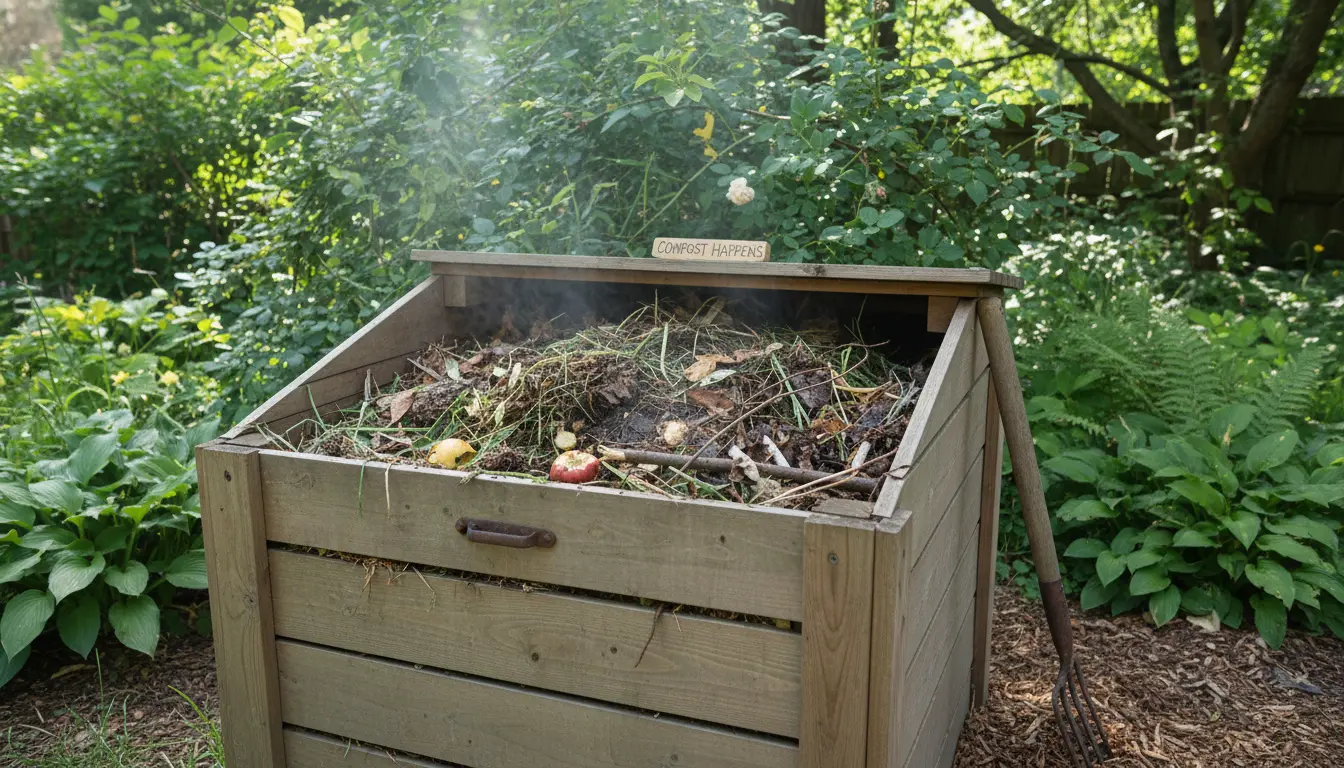
Why Home Composting Matters
Home composting turns kitchen and yard waste into a useful soil amendment. It reduces landfill waste and improves garden soil structure and nutrient content.
Beginners can start with a small bin or pile and scale up over time. Composting is accessible, low cost, and effective for most households.
Getting Started With Home Composting
Start by choosing a location that is convenient and has good drainage. A flat, partially shaded spot near the house is usually best.
Decide on a container or method before collecting materials. The right system depends on space, the amount of waste, and how much effort you want to put in.
Choosing a Compost System for Home Composting
Common options include a simple compost bin, a tumbler, or an open pile. Each has pros and cons for maintenance and speed.
- Compost bin: affordable and tidy, easier to contain pests.
- Tumbler: faster mixing and quicker breakdown, but limited volume.
- Open pile: low cost and flexible size, but less tidy and slower.
What to Compost in Home Composting
Compostable materials fall into two groups: greens and browns. Balancing both speeds decomposition and avoids odors.
- Greens: fruit and vegetable scraps, coffee grounds, fresh grass clippings.
- Browns: dry leaves, shredded paper, straw, cardboard.
Aim for a roughly 2:1 or 3:1 ratio of browns to greens by volume to keep the pile aerated and odor-free.
Step-by-Step Process for Home Composting
Follow these simple steps to build and maintain a compost pile that breaks down efficiently.
- Layer a base of coarse browns like small branches or straw to aid airflow.
- Add kitchen scraps and fresh greens in thin layers to avoid compaction.
- Top layers with dry browns to absorb moisture and control smells.
- Turn the pile every 1–2 weeks to introduce oxygen and mix materials.
- Monitor moisture; the pile should feel like a damp sponge, not soggy.
Tools and Supplies for Home Composting
You do not need much to start. A pitchfork or compost aerator helps, and a simple thermometer can monitor internal temperature for hot composting.
- Compost bin or tumbler
- Pitchfork or turner
- Garden gloves and a watering can
- Optional: compost thermometer
Maintaining Your Home Composting System
Regular turning and monitoring moisture are key maintenance tasks. Turning improves oxygen flow so microbes can break down material faster.
If the pile smells, add more dry browns and turn it. If it is dry and slow, add water and more greens.
Troubleshooting Common Problems
Problems are usually simple to fix and relate to balance, moisture, or aeration.
- Bad odors: too many greens or not enough air; add browns and turn the pile.
- Slow decomposition: pile may be too small, too dry, or too cold; add moisture and more material or insulate the pile.
- Pests: avoid adding meat, dairy, or oily foods; use a closed bin if animals are attracted.
Properly managed home compost can heat to 130–160°F (54–71°C) in a hot compost system, killing most weed seeds and pathogens. Cold composting is slower but still produces rich humus over time.
Using Finished Compost
Finished compost is dark, crumbly, and smells earthy. It should be cool and free of recognizable food scraps.
Use finished compost to amend garden beds, topdress lawns, or mix into potting mixes. A thin layer (1–2 inches) improves soil structure and fertility.
Small Real-World Example
Case Study: A three-person household started a 50-gallon compost bin in spring. They collected kitchen scraps and yard waste, balancing browns and greens and turning the bin fortnightly.
After six months, they produced enough compost for two raised beds, reduced their landfill waste by about 30%, and reported healthier plants the following season.
Quick Tips for Successful Home Composting
- Chop or shred large items to speed breakdown.
- Aim for variety—different materials add different nutrients.
- Insulate your bin in winter for faster decomposition.
- Keep a small countertop container with a lid to collect kitchen scraps for routine transfer.
Home composting is a practical, low-cost way to recycle organic waste and improve soil health. Start small, learn by doing, and adjust your system to suit your space and lifestyle.