
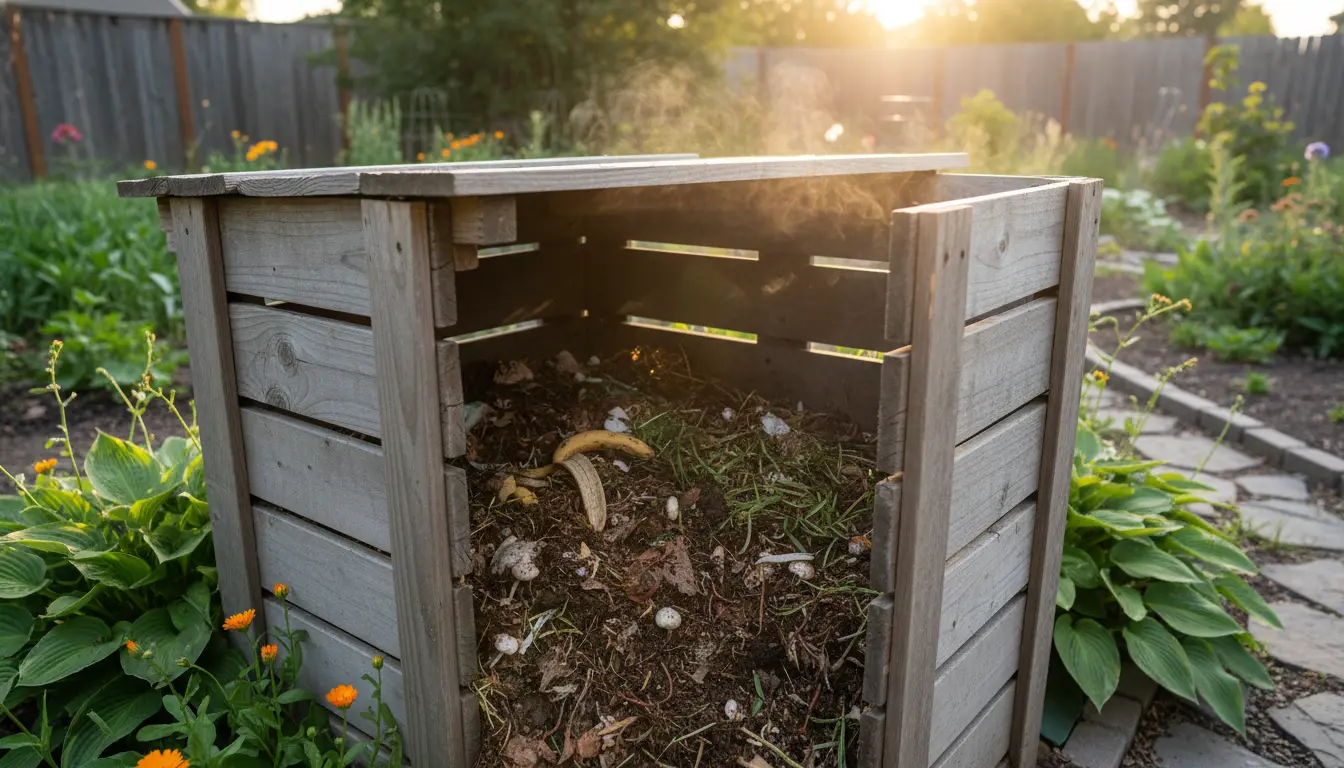
Start Home Composting for Beginners With Simple Steps
Home composting transforms kitchen scraps and yard waste into useful soil. This guide focuses on practical steps beginners can follow to start and maintain a compost system at home.
Why Home Composting for Beginners Matters
Composting reduces household waste and returns nutrients to soil. It also lowers landfill methane emissions and can save money on fertilizer.
Beginners benefit from simple systems that need minimal time and space. Even small efforts can produce rich compost within months.
What You Need to Start Home Composting for Beginners
You do not need fancy equipment to compost. Choose a container, gather materials, and follow a few basic rules to keep the pile healthy.
Basic supplies
- A bin or pile: closed tumbler, open bin, or simple wire frame.
- Mix of green and brown materials for balance.
- Water source and a garden fork or turning tool.
Green and brown materials
Use a mix of nitrogen-rich “greens” and carbon-rich “browns.” Proper balance helps microbes break down waste efficiently.
- Greens: vegetable scraps, coffee grounds, fresh grass clippings.
- Browns: dry leaves, shredded paper, straw, cardboard pieces.
Setting Up Your First Compost Bin
Pick a location with good drainage and partial shade. A spot near the kitchen or garden makes turning and adding materials easier.
Layer materials: start with a few inches of coarse brown material to help airflow. Alternate green and brown layers to keep the mix active.
Step-by-step setup
- Place bin on soil or grass to allow worms and microbes to access the pile.
- Add a 3–4 inch base of twigs or coarse brown material for aeration.
- Add kitchen scraps and yard waste in alternating layers with browns.
- Moisten the pile lightly; it should feel like a wrung-out sponge.
- Turn the pile every 1–2 weeks for faster decomposition.
Maintenance Tips for Home Composting for Beginners
Regular maintenance keeps odor and pests away while speeding composting. Small, consistent actions are more effective than occasional intensive work.
Temperature and moisture
A healthy compost pile will warm as microbes work. If the pile cools, add greens and turn to reheat. Keep moisture even but not soggy.
Turning and aeration
Turning the pile introduces oxygen that aerobic microbes need. Use a fork or tumbler and aim to turn at least once every two weeks.
Common Problems and Simple Fixes
Beginners often face odors, slow breakdown, or pests. These issues usually have straightforward solutions.
- Smell of ammonia: add more browns and turn the pile.
- Pile too wet: mix in dry leaves or shredded cardboard.
- Pests: avoid adding meat, dairy, or oily foods; use a closed bin if needed.
When Is Compost Ready?
Finished compost looks dark, crumbly, and earthy in smell. Small twigs may remain, but most original materials are unrecognizable.
Depending on method and conditions, compost can be ready in 2–6 months. Slow, steady turnover and balance speed up the process.
Compost can retain heat and speed decomposition: a properly balanced pile can reach 120°F to 150°F (49°C to 65°C), killing many weed seeds and pathogens.
Small Case Study: Balcony Composting by a Beginner
Maria lived in a small apartment and wanted to reduce waste. She used a small sealed tumbling composter on her balcony and a simple bucket for kitchen scraps.
After three months of weekly turns and a steady mix of coffee grounds, veggie peels, and shredded cardboard, she produced several liters of rich compost. She used it to feed potted herbs and saw improved growth.
Practical Examples for Home Composting for Beginners
Here are simple example mixes to try. Aim for roughly three parts brown to one part green by volume.
- Example A (Yard-heavy): 3 buckets dry leaves + 1 bucket grass clippings + kitchen scraps.
- Example B (Kitchen-heavy): 2 buckets shredded cardboard + 1 bucket coffee grounds + fruit/vegetable scraps.
- Example C (Small scale): layered paper towels, chopped vegetable scraps, and dry tea leaves in a small bin.
Final Tips for Success
Start small and be consistent. Learn by adjusting the brown-to-green ratio and checking moisture and temperature regularly.
Use finished compost in gardens, potted plants, or as a soil topdressing. Composting is flexible—adapt techniques to your space and schedule.
Home composting for beginners is a low-cost, practical way to reduce waste and improve soil. With basic setup, regular turning, and proper balance, anyone can produce their own compost within months.