
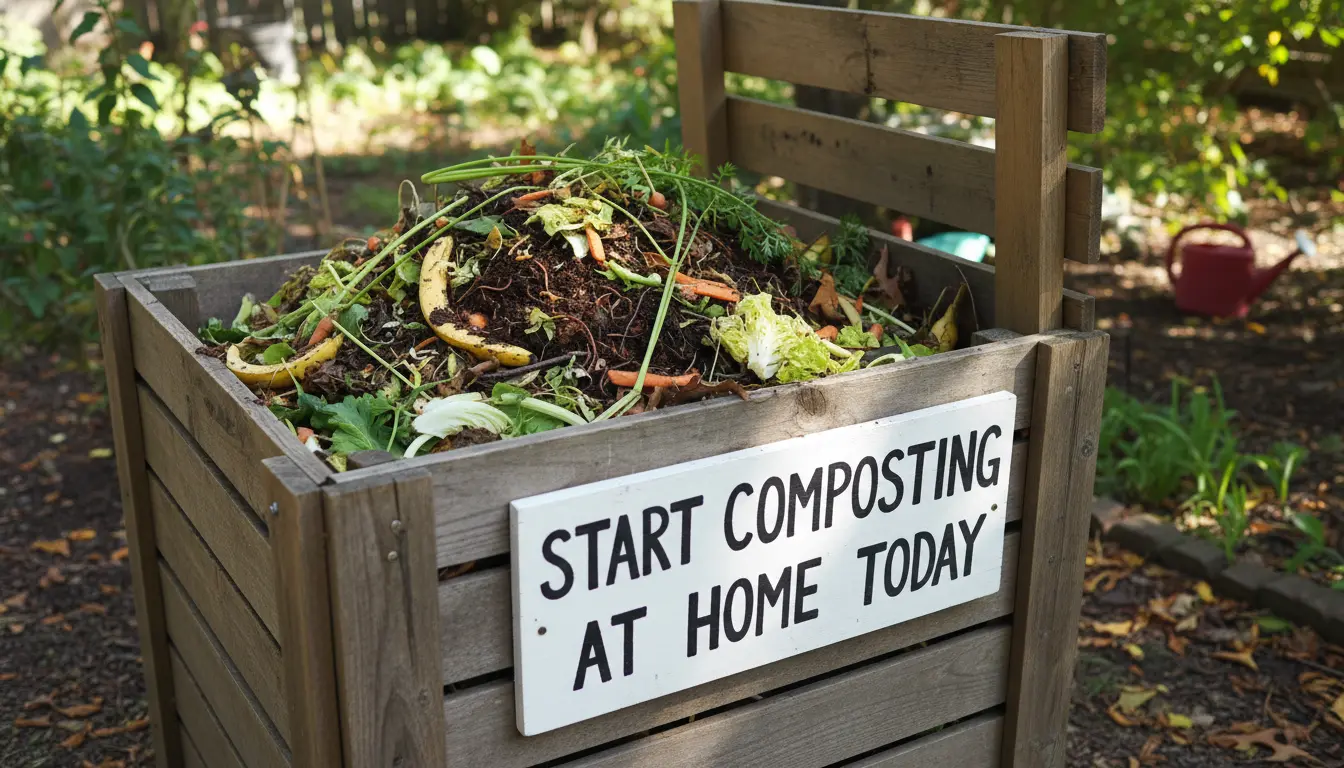
Why Start Composting at Home
Composting at home reduces kitchen and yard waste while producing nutrient-rich material for plants. It cuts landfill contributions and improves soil structure for gardens or potted plants.
This guide explains simple, realistic steps to start composting at home, with methods you can use in a yard, balcony, or small apartment.
Choose a Method to Start Composting at Home
Selecting the right compost system depends on space, time, and how much waste you produce. Each option has pros and cons for beginners.
- Compost bin: Enclosed, low-maintenance, good for yards and small gardens.
- Tumbler: Faster results with regular turning, compact for small yards.
- Open pile: Works for large yards but requires more area and management.
- Vermicompost (worm bin): Best for apartments; processes kitchen scraps quickly with minimal odor if managed well.
Setting Up a Basic Bin
Place your bin on soil or a well-drained surface to allow microbes and worms to enter. Add a base layer of coarse material like twigs or straw for drainage and airflow.
Avoid placing a bin on concrete if you want faster breakdown; direct contact with soil helps soil life move in.
What to Compost: Greens and Browns
Composting relies on a balance of nitrogen-rich (greens) and carbon-rich (browns) materials. Proper balance speeds decomposition and reduces odor.
- Greens: Vegetable peels, coffee grounds, fresh grass clippings, tea bags.
- Browns: Dry leaves, shredded paper, cardboard, straw, wood chips.
A good rule of thumb is roughly 2–3 parts browns to 1 part greens by volume. If your pile smells sour, add more browns.
What Not to Compost
- Meat, dairy, bones, and oily foods (can attract pests).
- Diseased plants and weeds that have gone to seed.
- Pet waste from carnivores.
Manage Moisture and Aeration
Moisture and oxygen are two key factors for healthy compost. Aim for damp sponge moisture—moist but not soaking wet.
Turn or aerate your compost periodically to introduce oxygen and reduce anaerobic odors. Tumblers are easiest for turning; with a pile or bin, use a pitchfork every 1–2 weeks.
Common Maintenance Routine
- Add fresh greens and browns as you produce them rather than big single deposits.
- Turn the pile more often for faster compost (every few days to weekly).
- Monitor temperature; a hot pile (40–60°C or 104–140°F) breaks down materials faster, but low-heat methods still work over months.
Composting can divert up to 30 percent of household waste from landfills. Even small efforts like collecting coffee grounds and egg shells make a difference.
Troubleshooting: Smells, Pests, and Slow Breakdown
If your compost smells rotten, it likely lacks oxygen or has too many greens. Turn the pile and add dry browns like shredded paper or leaves.
Pests are usually attracted to meat or oily foods. Remove these items and bury food scraps in the center of the pile to reduce attraction.
Slow composting often means materials are too large or too dry. Chop or shred large pieces and add water to reach proper moisture.
When Is Compost Ready and How to Use It
Finished compost is dark, crumbly, and smells earthy. Depending on method and management, compost can be ready in 2 months to a year.
Use finished compost as a soil amendment, potting mix ingredient, or top dressing for lawns and garden beds. A typical application is a 1–3 inch layer worked into the top 6 inches of soil.
Simple Use Cases
- Vegetable gardens: Mix 1 part compost to 3 parts soil for raised beds.
- Potted plants: Blend 1 part compost with 2 parts potting mix for improved water retention and nutrients.
- Lawn top dressing: Spread a thin layer after raking to avoid smothering grass.
Small Case Study: Balcony Worm Bin Success
Maria, an apartment resident, started a worm bin with 2,000 red wigglers and a 10-liter kitchen collection container. She collected fruit and vegetable scraps daily and added shredded paper as needed.
Within three months Maria harvested 15 liters of rich vermicompost and reduced her weekly waste bag by half. She used the compost to feed balcony tomatoes and potted herbs with noticeable improvement in plant vigor.
Quick Checklist to Start Composting at Home
- Choose a method: bin, tumbler, pile, or worm bin.
- Gather browns and greens and maintain roughly 2–3:1 browns to greens.
- Monitor moisture and turn the pile regularly.
- Avoid meat, dairy, diseased plants, and pet waste.
- Use finished compost to improve soil and plants.
Starting composting at home is low-cost and scalable to any living situation. With a simple routine and basic troubleshooting, most households can convert kitchen and yard waste into useful compost within a few months.