
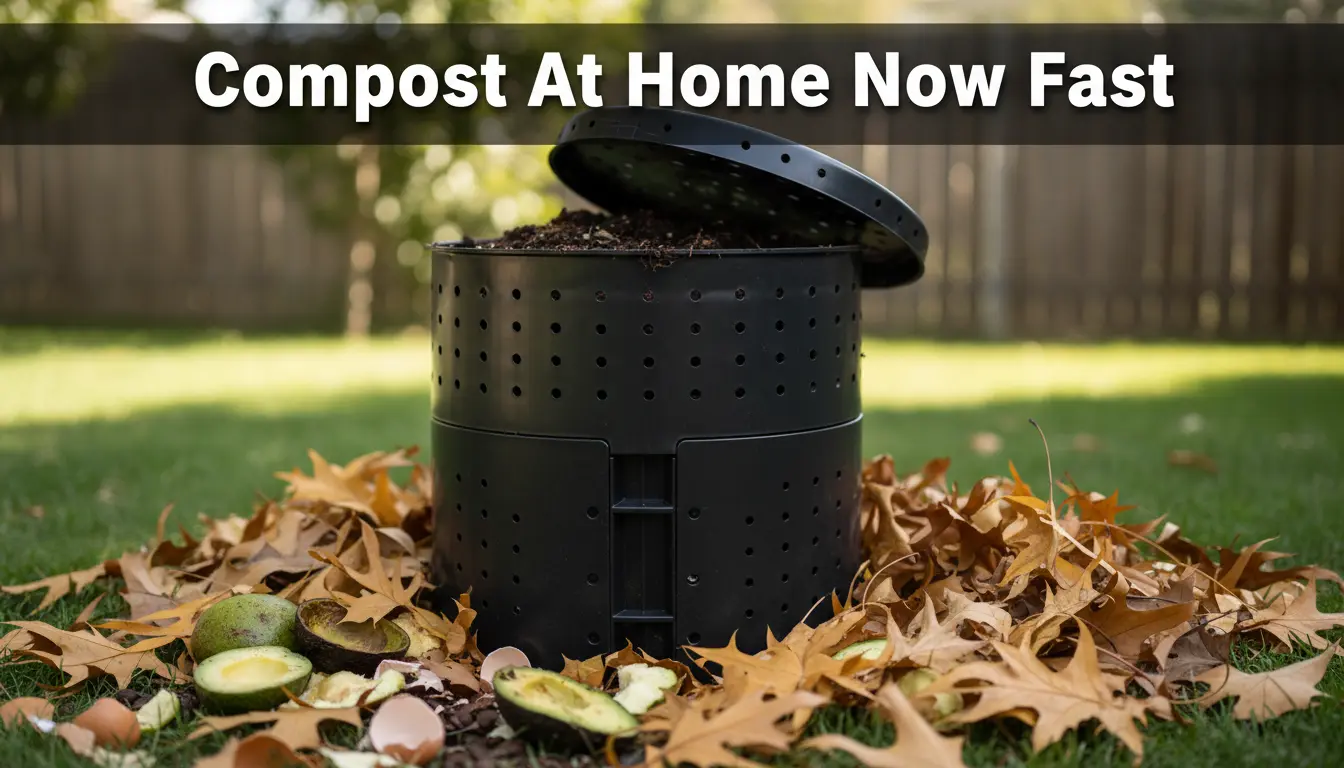
Composting at home turns kitchen scraps and yard waste into a valuable soil amendment. This practical guide for home composting for beginners covers what you need, how to start, and common problems with clear, actionable steps.
Home Composting for Beginners: What You Need
Start with a simple setup and minimal tools. You don’t need fancy equipment; a bin, some basic materials, and a little attention are enough to get started.
- Compost bin options: tumblers, plastic bins, DIY wooden or wire enclosures.
- Essential tools: a pitchfork or garden fork, a garden thermometer (optional), and a garden hose or watering can.
- Materials: greens (nitrogen-rich) and browns (carbon-rich).
Greens include vegetable peels, coffee grounds, and fresh grass clippings. Browns include dry leaves, shredded paper, and straw.
Choosing the Right Compost Bin
Pick a bin that suits space and budget. A small backyard with pets might prefer a closed tumbler to deter animals. If you have yard space, a simple open bin or three-bin system works well.
- Small yards: compact tumblers or sealed plastic bins.
- Larger yards: open bins or multi-bin systems for staged composting.
- Apartment balconies: worm composting (vermicompost) in a small tray is effective.
How to Start Home Composting for Beginners
Follow a few clear steps to establish a healthy compost pile. Consistency is more important than perfection.
- Location: place the bin on bare soil or a well-drained spot to allow drainage and access for microbes.
- Layering: start with a layer of coarse browns (twigs or straw) for airflow, then add a mix of greens and browns in thin layers.
- Moisture: keep the pile damp like a wrung-out sponge — not waterlogged and not bone dry.
- Turning: aerate the pile every 1–2 weeks to speed decomposition and reduce odors.
- Patience: expect finished compost in 2–12 months depending on conditions and method.
Balancing Greens and Browns
Aim for a roughly 2:1 or 3:1 ratio of browns to greens by volume. Too many greens can cause odor and sliminess; too many browns slow the process.
- If the pile smells, add more browns and turn it.
- If decomposition stalls, add greens and moisture.
Troubleshooting Common Compost Problems for Home Composting for Beginners
Some problems are easy to fix once you know the signs. Troubleshooting keeps your compost healthy and productive.
Bad Odor
Cause: excess wet greens or poor aeration. Fix: add dry browns, turn the pile, and ensure drainage.
Slow Decomposition
Cause: too dry, too many browns, or lack of microbial activity. Fix: moisten the pile, add some greens or a small shovel of garden soil to introduce microbes.
Pests
Cause: food scraps like meat, dairy, or oily foods attract animals. Fix: remove these items, use a secure bin, or consider bokashi pre-treatment indoors.
Compost can reduce household waste by up to 30 percent when food scraps and yard waste are diverted. Finished compost improves soil structure, water retention, and plant health.
Case Study: A Small Urban Household
A two-person urban household started a 60-liter tumbler and used it for six months. They collected kitchen scraps in a countertop pail, emptied the pail into the tumbler every other day, and added shredded paper as a brown when needed.
After three months of turning the tumbler weekly and maintaining moisture, they had usable compost to top-dress potted herbs. The process reduced their weekly trash bag by nearly half and improved plant growth in small balcony pots.
Quick Tips to Keep Compost Healthy
- Chop or shred larger items to speed decomposition.
- Keep a balance: when in doubt, add more browns than greens.
- Use a lid or cover during heavy rain to prevent waterlogging.
- Keep a small airtight kitchen caddy for scraps to reduce odor and flies indoors.
- Test the pile: finished compost is dark, crumbly, and smells earthy.
Using Finished Compost
Finish compost can be mixed into potting soil, used as a top dressing for lawns, or blended into garden beds. Start by mixing 10–25 percent compost into existing soil for most plants.
Home composting for beginners is achievable with small, consistent actions. Start simple, observe changes, and adjust the mix as you learn what works best for your space and climate.
Ready to begin? Choose a bin, gather a few browns, and save your kitchen greens. In a few months you could be feeding your soil with rich, homemade compost.