
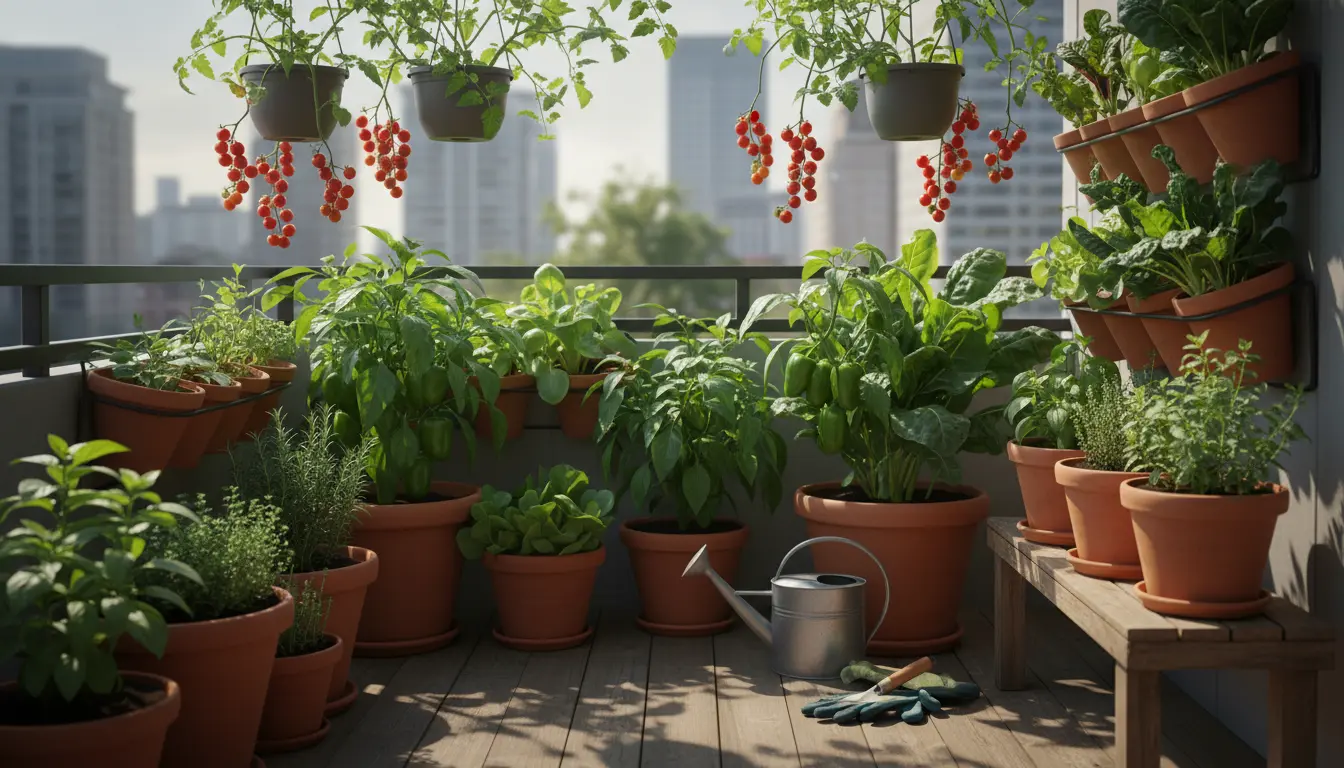
Starting a balcony vegetable garden is a practical way to grow fresh food in limited space. This guide explains simple steps, common mistakes, and quick wins for beginners.
Why Choose a Balcony Vegetable Garden
A balcony vegetable garden fits urban lifestyles where yard space is limited. It reduces grocery trips and gives you control over how produce is grown.
Small-scale gardening also improves air quality and can be therapeutic. With the right plan, you can harvest herbs, greens, and compact vegetables year-round.
Plan Your Balcony Vegetable Garden
Planning saves time and prevents wasted effort. Assess sunlight, wind exposure, weight limits, and access to water before you plant.
Use these quick checklist items to evaluate your balcony:
- Measure available floor space and railing length.
- Note hours of direct sun per day (full sun = 6+ hours).
- Check building rules about planters and water drainage.
- Confirm structural load limits for heavy soil and pots.
Choose the Best Location
Place sun-loving crops in the sunniest spot and shade-tolerant plants in less sunny corners. South-facing balconies typically get the most light.
Group plants by water needs to simplify care. Use rolling carts or lightweight planters to move plants seasonally.
Pick Containers and Soil for a Balcony Vegetable Garden
Containers control root space and moisture. Choose containers with drainage holes and durable materials to resist weather.
- Small pots (1–3 gallons) for herbs and small greens.
- Medium containers (5–10 gallons) for peppers and dwarf tomatoes.
- Window boxes and railing planters for lettuce and strawberries.
Use a quality potting mix designed for containers rather than garden soil. A lightweight mix holds moisture and keeps roots healthy.
Soil Mix Tips
- Look for mixes with peat, coco coir, and perlite for aeration.
- Add slow-release fertilizer or liquid feed during the season.
- Replace or top up soil annually to prevent compaction.
Choose Vegetables for a Balcony Vegetable Garden
Select crops suited to small containers and your light conditions. Fast-growing and compact varieties work best for balconies.
Recommended choices by light:
- Full sun: cherry tomatoes, peppers, eggplant, basil.
- Partial sun: leafy greens, chard, kale, radishes.
- Shade or low sun: mint, parsley, lettuce mixes.
Succession Planting
Stagger sowing times to extend harvests. When a spring crop finishes, replace it with a heat-tolerant summer plant or fall greens.
Watering and Feeding Your Balcony Vegetable Garden
Containers dry out faster than ground beds, so consistent watering is essential. Check moisture daily in hot weather and water when the top inch of soil is dry.
Use these watering tips for healthy plants:
- Water at the base of the plant to avoid wet foliage.
- Use drip irrigation, self-watering pots, or a watering wand for control.
- Feed with balanced liquid fertilizer every 2–4 weeks for heavy feeders.
Pest Control and Common Problems
Balconies have fewer pests than ground gardens, but aphids, snails, and fungal issues can still appear. Early detection prevents major losses.
- Inspect leaves weekly for pests and yellowing.
- Remove affected leaves and use insecticidal soap for control.
- Improve airflow to reduce fungal diseases by spacing containers.
Season Extension
Use shade cloth in extreme heat and row covers or small cold frames to protect against early frost. Move containers to a sheltered wall during storms.
Containers warm up and dry out faster than garden soil. Using light-colored pots and mulch reduces root heat stress and conserves moisture.
Small Real-World Case Study: Maria’s Balcony Vegetable Garden
Maria, a city apartment resident with a 6-foot-wide balcony, started a balcony vegetable garden using five containers. She chose two 10-gallon pots for dwarf tomatoes, one 5-gallon pot for peppers, and two window boxes for lettuce and herbs.
Within three months she harvested weekly salad greens and several pints of cherry tomatoes. Her approach:
- Chose compact plant varieties and paired plants by water needs.
- Used a lightweight potting mix and applied liquid fertilizer every three weeks.
- Placed a small tray under containers to catch runoff and saved water for plants.
This small setup supplied fresh salad ingredients and cut Maria’s grocery lettuce purchases in half during the growing season.
Quick Start Checklist to Start a Balcony Vegetable Garden
- Measure sunlight and balcony space.
- Choose sturdy containers with drainage.
- Buy quality potting mix and appropriate seeds or seedlings.
- Group plants by water needs and arrange for easy access.
- Set a simple watering and feeding schedule.
Conclusion: Keep It Simple and Learn by Doing
Starting a balcony vegetable garden is achievable with basic planning and modest investment. Begin with a few easy crops and refine your setup each season.
Track what works, note watering frequency, and enjoy the steady rewards of fresh homegrown produce from your balcony.