
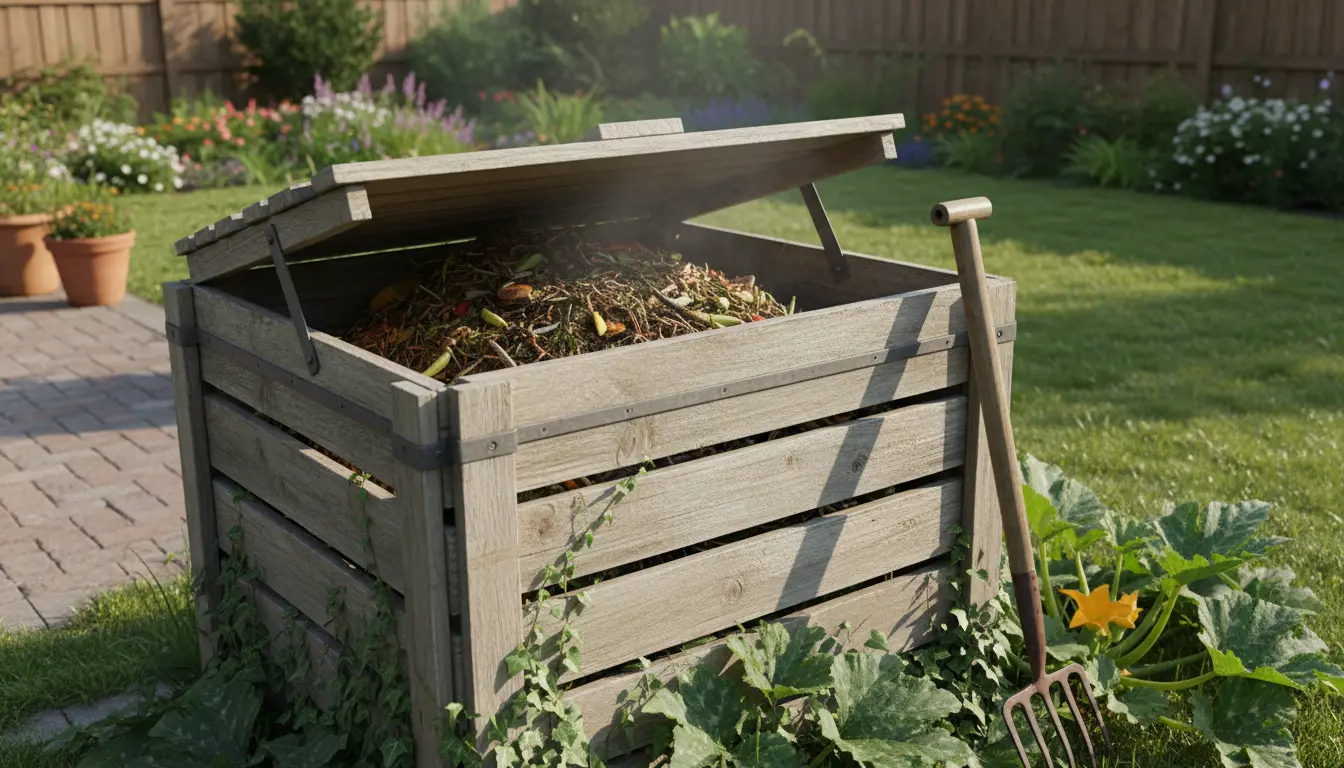
Why Choose Home Composting
Home composting turns kitchen and yard waste into a useful soil amendment. It reduces trash, improves garden soil, and saves money on fertilizer.
This guide explains home composting for beginners with clear steps, common mistakes, and a small real-world example you can follow.
How Home Composting Works
Composting is a controlled decomposition process that breaks down organic matter into humus. Microorganisms, moisture, oxygen, and the right mix of materials drive the process.
Key Factors in Home Composting
Temperature, moisture, and the carbon-to-nitrogen balance determine speed and quality. Managing these keeps odors away and produces rich compost.
Step-by-Step Home Composting for Beginners
Follow these practical steps to start a successful compost pile or bin. Each step is short and actionable for new composters.
1. Choose a Bin or Pile
Select a container that fits your space: open pile, tumbling bin, or stationary bin. Tumblers are neater; stationary bins hold more volume.
Place the bin on bare soil if possible to allow organisms to move in. Choose a partly shaded spot to keep moisture stable.
2. Gather the Right Materials
Compost needs a balance of carbon “browns” and nitrogen “greens.” Aim for about a 25-30:1 carbon-to-nitrogen ratio for steady decomposition.
- Greens (nitrogen): vegetable scraps, coffee grounds, fresh grass clippings.
- Browns (carbon): dry leaves, straw, shredded cardboard, paper.
- Avoid: meat, dairy, oily foods, diseased plants, and persistent weeds.
3. Build the Pile Properly
Start with a 3–6 inch layer of coarse browns to aid airflow. Alternate layers of greens and browns about 2–4 inches thick.
Keep layers moist but not soggy. The pile should feel like a wrung-out sponge.
4. Maintain Moisture and Aeration
Turn or aerate the pile every 1–2 weeks to add oxygen and speed up breakdown. In a tumbler, rotate frequently; in a bin, use a pitchfork.
If the pile smells sour, it is too wet or lacks air. Add more browns and turn the pile to fix it.
5. Know When Compost Is Ready
Finished compost is dark, crumbly, and earthy-smelling. Particle size is small and you no longer recognize the original materials.
Small piles may be ready in 3–6 months; larger or cooler piles can take a year. Sifting speeds use in potting mixes.
Common Mistakes in Home Composting
Avoid these beginner errors to keep composting effective and low-maintenance.
- Too wet or compacted piles causing odors.
- Too much of one material (e.g., only grass clippings) creating imbalance.
- No aeration—lack of turning slows decomposition.
Troubleshooting Tips for Home Composting
Quick fixes help recover a struggling pile without starting over. These are straightforward and practical.
- Smelly pile: add dry browns and turn to add air.
- Pile not heating: add more greens and mix to increase microbial food.
- Pests: avoid adding meat and bury food scraps in the center of the pile.
Composting can reduce household waste by up to 30 percent. A typical kitchen produces enough scraps to create several gallons of compost every month.
Real-World Example: Small Backyard Compost Case Study
Maria, a homeowner with a 50-foot yard, started a 3-bin stationary system. She followed the 50/50 approach of browns to greens and turned the middle bin weekly.
After four months, Maria harvested about 30 liters of rich compost and used it to top-dress vegetable beds. Her soil water retention improved and tomato yields rose the next season.
Tools and Materials Checklist for Home Composting
These simple items make composting easier and more efficient for beginners.
- Bin or compost tumbler
- Pitchfork or compost aerator
- Shredder or scissors for cardboard and large leaves
- Thermometer (optional) to monitor pile temperature
Final Tips for Successful Home Composting
Start small and observe how your pile behaves. Adjust water, materials, and turning frequency based on smell and temperature.
Composting is flexible: if you have limited space, try a worm bin (vermicomposting) for faster results with minimal odor.
With basic steps and regular, simple maintenance, home composting is an accessible way to recycle organic waste and build healthier garden soil.