
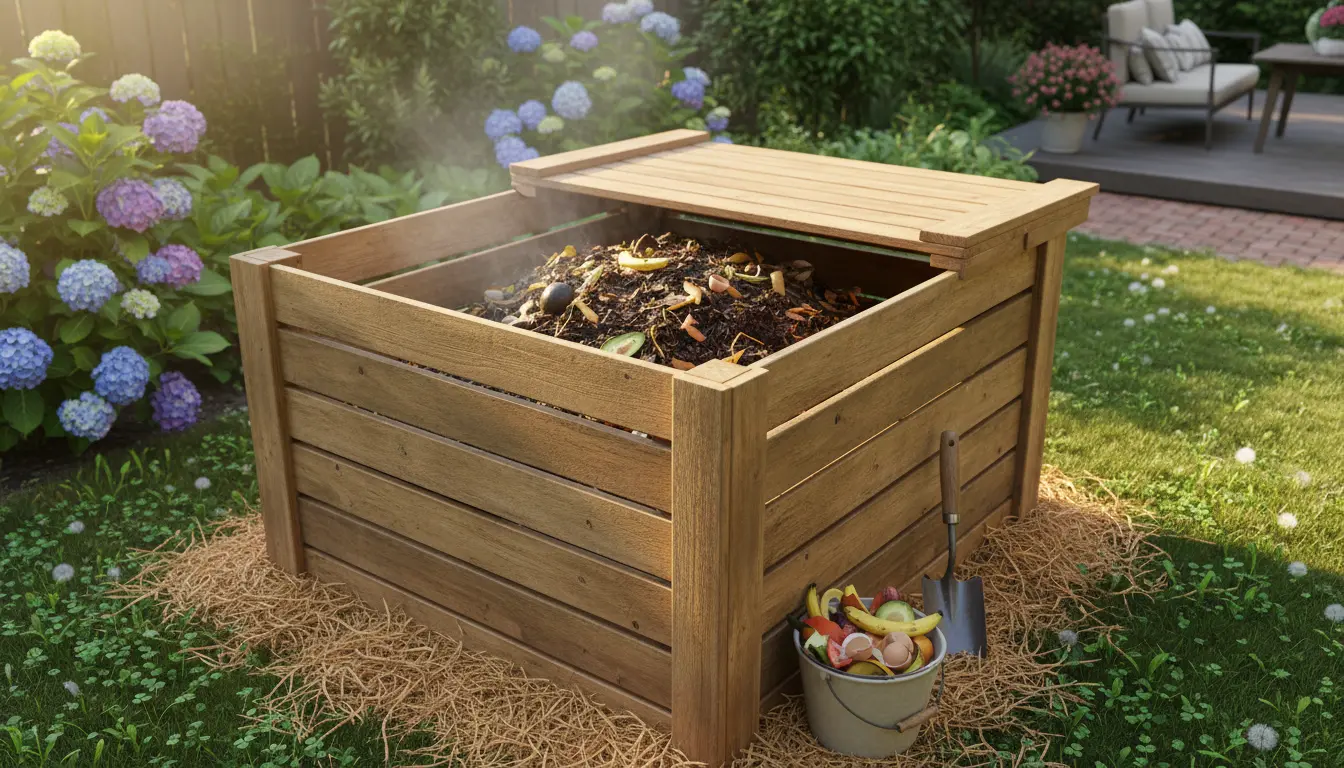
Home Composting Basics
Home composting turns kitchen and yard waste into soil-rich compost. This reduces household trash and improves garden soil naturally.
A compost bin is a controlled place to speed up decomposition. Understanding basic inputs and conditions makes composting reliable and low-effort.
Why Set Up a Compost Bin at Home
Composting lowers waste volumes and returns nutrients to your garden. It also reduces methane from landfill disposal when done correctly.
Many people find home composting saves money on fertilizers and improves soil structure for healthier plants.
Home Composting: What You Need
Starting a compost bin requires minimal equipment and a small commitment to routine turning or layering. You can use a purchased bin, a DIY tumbler, or a simple heap.
Basic needs include a mix of brown and green materials, moisture, air, and space for the pile to heat slightly.
Essential Materials for a Compost Bin
- Greens: vegetable scraps, fresh grass clippings, coffee grounds.
- Browns: dry leaves, shredded paper, straw, wood chips.
- Water: keep the pile damp like a wrung-out sponge.
- Air: turn or aerate to speed decomposition.
Where to Place Your Compost Bin
Choose a level, shaded spot with good drainage and easy access. A location near the kitchen or garden saves time and effort.
Bins can sit directly on soil to allow worms and microbes to enter, which speeds composting and improves final quality.
How to Start a Compost Bin Step by Step
Follow simple steps to create a stable environment for microbes. Keep tasks small and consistent for best results.
Step 1: Create a Base Layer
Start with coarse browns like twigs or straw to help drainage. This layer prevents compaction and improves airflow at the bottom.
Step 2: Add Mixed Layers
Alternate thin layers of greens and browns. A good rule is roughly 2 to 3 parts brown to 1 part green by volume.
Chop large materials to speed breakdown and maintain consistent layering.
Step 3: Maintain Moisture and Aeration
Check moisture weekly and add water only if the pile is dry. Turn the pile every 1–2 weeks to introduce oxygen.
Use a pitchfork or a compost aerator tool for turning. Tumble-style bins can be rotated for aeration.
Step 4: Know When Compost Is Ready
Compost is ready when materials are dark, crumbly, and earthy-smelling. This typically takes 2–6 months depending on conditions.
Sift out large bits and return them to the new pile to continue decomposing.
Troubleshooting Home Composting Problems
Common issues have simple fixes. Identifying the main symptom quickly keeps the process on track.
Problem: Bad Odor
Cause: Too much green material or poor aeration. Fix: Add browns, turn the pile, and increase airflow.
Problem: Slow Decomposition
Cause: Pile too dry, too cold, or too compacted. Fix: Add water, chop materials, and turn often. Ensure a mix of greens and browns.
Problem: Pests
Cause: Food scraps exposed or meat and dairy in the pile. Fix: Avoid meat/dairy, bury food scraps under browns, or use a closed bin to deter animals.
Practical Tips for Better Home Composting
- Chop scraps into small pieces to increase surface area.
- Keep the pile moist but not waterlogged.
- Use a thermometer if you want to monitor the internal temperature; 120–150°F (49–66°C) is ideal for active composting.
- Rotate finished compost into beds in spring and fall to build soil health.
Real-World Case Study: Small Yard, Big Results
Maria, a homeowner with a small yard, set up a 60-gallon tumbler bin beside her patio. She started with a 3:1 brown-to-green layer and turned the tumbler twice a week.
Within four months she had enough compost to amend two raised beds. Her tomatoes showed fuller growth and better moisture retention, and she reduced kitchen waste by nearly 40%.
Quick Home Composting Checklist
- Choose a bin and location that allow drainage and access.
- Layer browns and greens; chop large pieces.
- Maintain moisture and aerate regularly.
- Troubleshoot odors, pests, or slow decomposition promptly.
Starting a home compost bin is low-cost and high-impact. With a few simple steps you can convert waste into valuable compost and support healthier soil at home.