
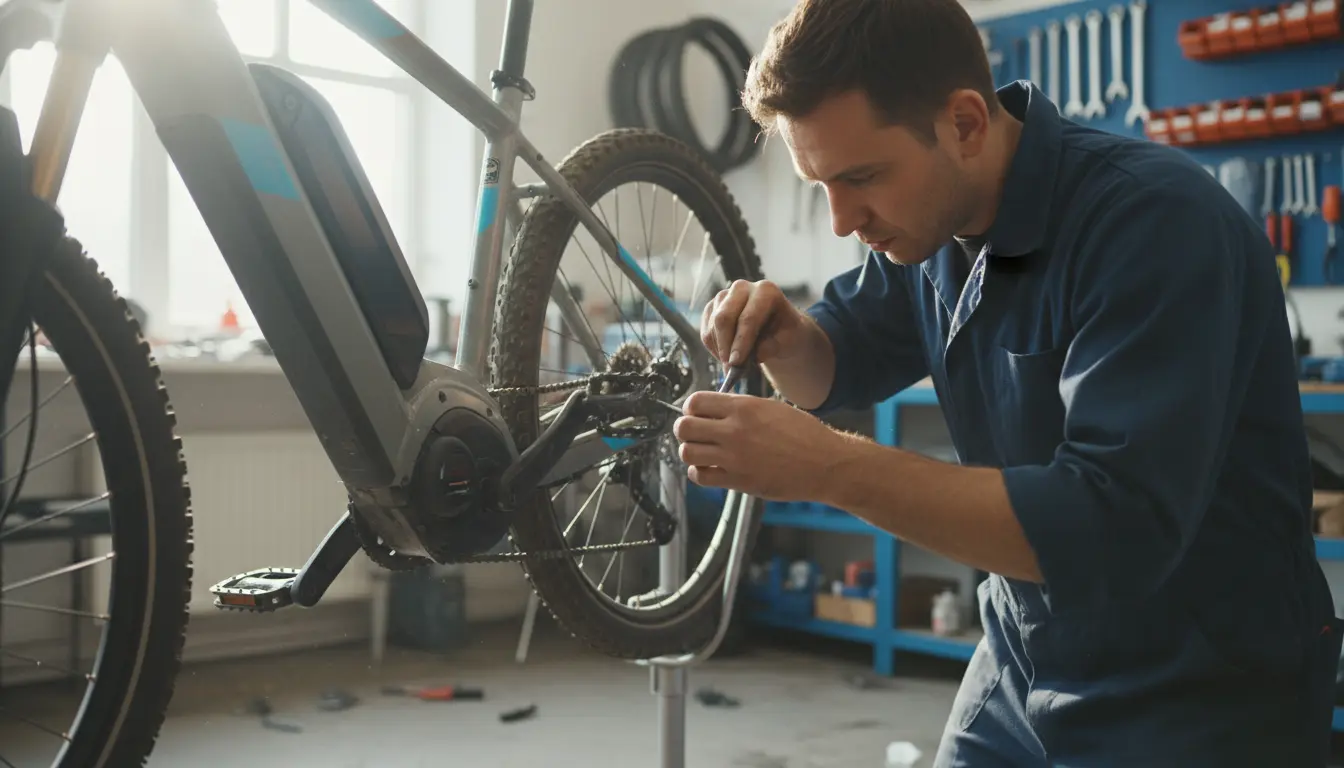
Why electric bike maintenance matters
Regular electric bike maintenance keeps your e-bike safe, reliable, and efficient. Small checks prevent major repairs and help you get the most from the battery and drivetrain.
This guide covers routine tasks you can do at home and checks to schedule with a professional. Use it as a checklist for weekly, monthly, and seasonal care.
Weekly checks for electric bike maintenance
Short, regular inspections catch problems early. Spend five to ten minutes before or after each ride on these quick checks.
- Visual inspection: Look for loose bolts, frayed cables, or obvious damage.
- Tire pressure: Check with a gauge and inflate to the recommended PSI on the tire sidewall.
- Brakes: Squeeze brakes to confirm firm engagement and listen for squeal or grinding.
- Lights and electronics: Verify that the display, lights, and switches work correctly.
Monthly maintenance tasks for longevity
Perform deeper checks every month to protect key components like the battery, motor, and drivetrain.
- Battery balance and charge: Fully charge and check for unusual heat or drop in range.
- Chain and drivetrain: Clean and lubricate the chain; inspect cassette and chainrings for wear.
- Cable tension and housing: Ensure smooth shifting and braking response.
- Fasteners: Tighten bolts to manufacturer torque settings if available.
How to clean and lube an e-bike chain
Cleaning the chain improves efficiency and extends component life. Use a dedicated bike degreaser and a brush or chain-cleaning tool.
- Shift to the smallest chainring and smallest rear cog.
- Apply degreaser, scrub, then rinse carefully without soaking electrical parts.
- Dry the chain and apply a low-residue chain lube, wiping off excess.
Battery care and charging best practices
Battery health is central to electric bike maintenance. Proper charging and storage preserve capacity and reduce the risk of faults.
- Use the charger supplied by the manufacturer to avoid voltage mismatch.
- Avoid full deep discharges; recharge when the battery reaches about 20–30%.
- Store batteries at about 40–60% charge in cool, dry places for long periods.
- Avoid extreme temperatures: don’t charge or store a battery below 0°C or above 40°C.
Signs a battery needs professional attention
Look out for swelling, rapid range loss, inconsistent power delivery, or overheating during charge. If you see any of these, stop using the battery and consult a dealer or manufacturer.
Motor and electronics: inspection and simple care
Motors and controllers are mostly sealed, but you can still do basic checks to help avoid failures.
- Keep connectors dry and free of corrosion; use dielectric grease if recommended.
- Avoid high-pressure water when cleaning around the motor and display.
- If you hear unusual noises from the motor, have a technician inspect bearings and internal mounts.
Proper tire pressure can improve e-bike range by up to 10 percent. Underinflated tires increase rolling resistance and drain the battery faster.
Seasonal maintenance and storage tips
Change your routine with the seasons. Winter storage and wet-weather riding need extra care to prevent rust and electrical damage.
- Before winter storage: clean the bike, partially charge the battery, and remove it if the manual recommends.
- For wet rides: dry connectors and moving parts quickly after exposure to rain or salt.
- Rubber seals and suspension bushings benefit from periodic inspection and light lubrication where appropriate.
Professional service intervals
Even with good home maintenance, schedule a professional checkup at least once per year or every 1,500–3,000 miles depending on use. Technicians can test electronics, torque fasteners precisely, and replace worn bearings.
Case study: Commuter maintenance that extended battery life
Emma commutes 20 miles daily on her mid-drive e-bike. She noticed range drop after a year and followed a simple routine to improve performance.
- She switched to the manufacturer charger and avoided overnight trickle charging.
- She checked tire pressures weekly and cleaned the drivetrain monthly.
- When she stored the bike for two weeks, she kept the battery at 50 percent and in a cool closet.
Outcome: Emma regained about 15% of her original range and avoided a costly battery replacement for another season.
Quick maintenance checklist for electric bike maintenance
- Before every ride: visual check, tire pressure, brakes, lights.
- Weekly: clean drivetrain, check fasteners, test electronics.
- Monthly: inspect battery, connectors, and motor area; service as needed.
- Yearly: professional service for electronics and structural inspection.
Final tips and safety reminders
Always follow the manufacturer manual for torque settings, battery handling, and recommended service intervals. If a repair involves the battery or internal motor components, use a certified technician.
Consistent, simple maintenance saves money and keeps your rides safe. Start with the weekly checks and build the monthly and seasonal tasks into your routine.