
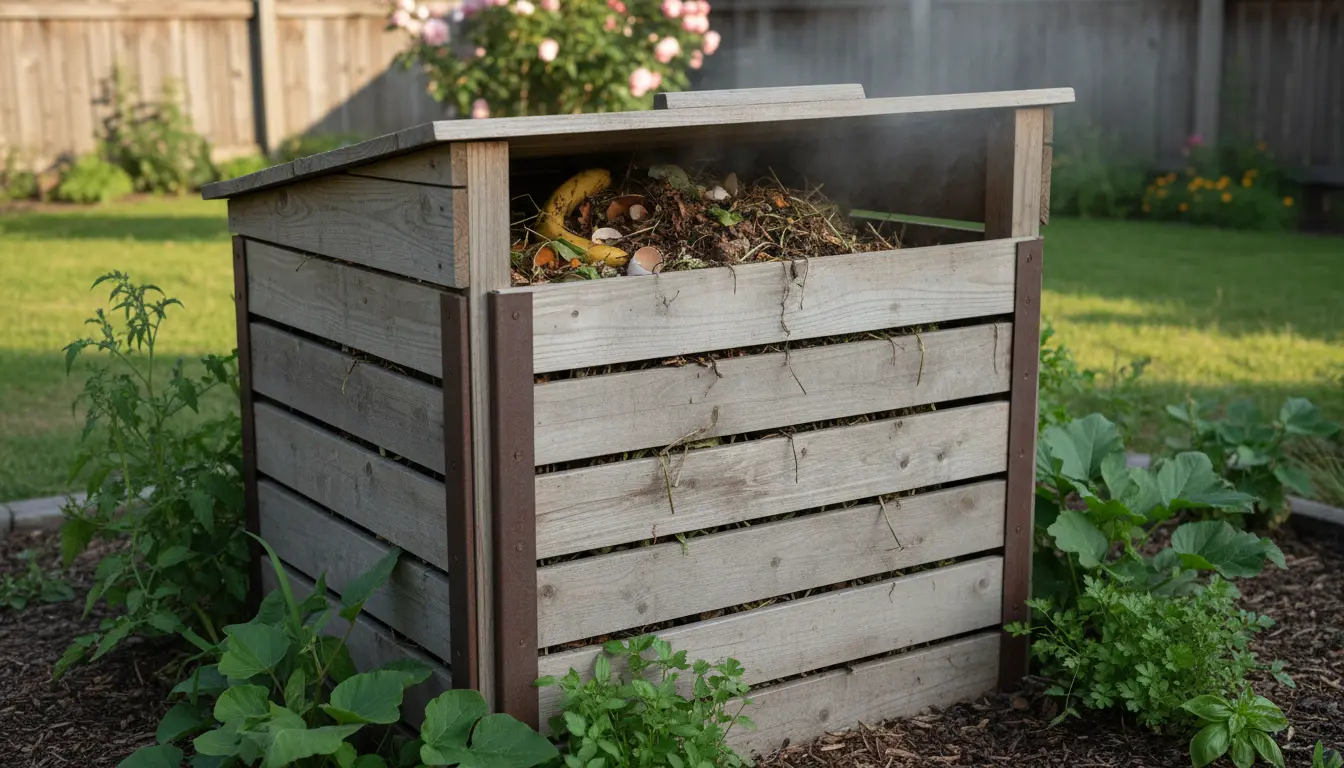
Home composting for beginners is a practical way to reduce kitchen waste and create rich soil for plants. This guide explains simple steps, common methods, and troubleshooting so you can start composting today.
Why Start Home Composting
Composting cuts household waste and returns nutrients to the soil. It lowers landfill use and can save money on fertilizer and soil amendments.
Beyond environmental benefits, compost improves soil structure, water retention, and plant health. For beginners, the process is low-tech and flexible.
How to Start Home Composting
Starting home composting only requires a container, a mix of materials, and basic maintenance. Choose a method that fits your space and schedule.
Choose a Composting Method
Pick one of these beginner-friendly options based on space and effort:
- Traditional bin: A simple plastic or wooden bin in the yard for steady composting.
- Tumbler: A rotating drum that speeds up mixing and aeration.
- Bokashi: Fermentation system for small spaces and food scraps, including meat.
- Vermicomposting: Indoor worm bin that produces castings quickly for small-scale use.
Where to Put Your Compost
Place the compost bin on bare soil if possible to allow organisms to move in. Keep it in a partly shaded area to prevent drying or overheating.
For balcony or indoor systems, keep the bin accessible for regular deposits and maintenance. Odor control is easier with proper balance of materials.
What to Compost: Greens and Browns
Home composting works best with a balance of green and brown materials. Greens provide nitrogen and energy for microbes, while browns add carbon and bulk.
Examples of Compostable Materials
- Greens: vegetable scraps, coffee grounds, tea leaves, fresh grass clippings.
- Browns: dried leaves, shredded paper, cardboard, straw, wood chips.
- Not recommended: fats, oils, large meat pieces, dairy in open bins (use Bokashi for these).
A good mix is roughly 2–3 parts brown to 1 part green by volume. Chop larger items to speed decomposition.
Step-by-Step Composting Routine
Follow a simple routine to keep your compost active and healthy. Regular attention avoids common problems.
- Add: Drop kitchen scraps and yard waste into the bin as you generate them.
- Layer: Add browns in between greens to maintain balance and reduce odors.
- Moisten: Compost should be as damp as a wrung-out sponge; add water if dry.
- Aerate: Turn or mix the pile weekly for faster breakdown and to prevent anaerobic smells.
- Harvest: Finished compost is dark, crumbly, and smells earthy; use it in pots, beds, or as mulch.
Troubleshooting Home Composting Problems
Beginners often encounter odor, pests, or slow decomposition. Most issues are easy to fix with small adjustments.
Odor and Wetness
Bad smells usually mean too much green or poor aeration. Add more browns and turn the pile. Avoid putting wet food scraps on top without covering.
Pests
Use closed bins or bury food scraps in the pile to discourage rodents and flies. For meat or dairy, use Bokashi or a sealed system.
Slow Decomposition
Slow breakdown results from low temperature, lack of nitrogen, or large pieces. Chop materials, add greens, and keep the pile moist and warm to speed the process.
Practical Tips for Home Composting Success
- Keep a small countertop container with a lid for food scraps; empty it daily into the outdoor bin.
- Shred cardboard and paper before adding to increase surface area and speed decomposition.
- Use a compost thermometer for large piles to monitor activity; ideal range is 120–140°F (49–60°C) for hot composting.
- Start a small worm bin if you only have vegetable scraps and limited outdoor space.
Composting at home can reduce household waste by up to 30 percent and return nutrients to your garden in the form of natural fertilizer.
Small Case Study: How One Household Started Composting
Sarah, a renter in a small yard, began home composting with a 50-gallon bin and a simple routine. She collected kitchen scraps in a lidded counter bucket and added shredded leaves from fall cleanup.
After three months of weekly turning and maintaining a 2:1 brown to green mix, her bin produced dark compost she used to top up vegetable beds. She cut waste pickup by nearly half and noticed healthier tomato plants in the second season.
Using Finished Compost
Finished compost is versatile: mix it into potting soil, topdress lawns, or work it into garden beds. It improves soil texture and slowly releases nutrients.
Apply a 1–2 inch layer around plants or mix 10–20 percent compost by volume into planting soil for new beds.
Final Checklist for Home Composting Beginners
- Choose a method that fits your space (bin, tumbler, Bokashi, worm bin).
- Balance greens and browns; aim for 2–3 parts brown to 1 part green.
- Keep the pile moist and aerated; turn weekly if possible.
- Monitor for pests and odors, and adjust materials accordingly.
Home composting for beginners is achievable with a little planning and routine. Start small, learn from the pile, and enjoy richer soil and less waste within months.