
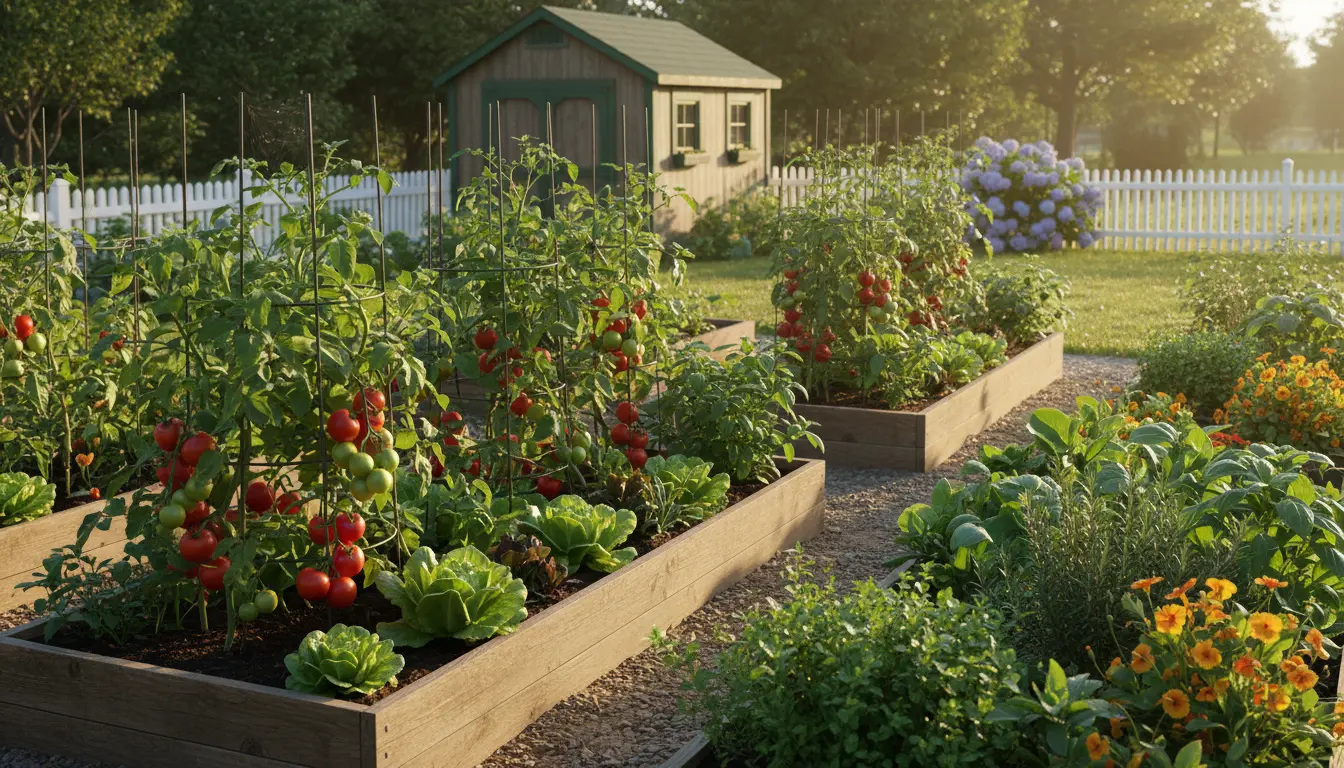
Why an Organic Vegetable Garden Matters
Starting an organic vegetable garden reduces exposure to synthetic pesticides and builds healthier soil. It also saves money and improves flavor in homegrown produce.
This guide explains practical steps to plan, prepare, plant, and maintain an organic vegetable garden at home, with simple lists and an example to follow.
Plan Your Organic Vegetable Garden
Good planning sets the foundation for success. Begin by choosing a sunny spot that gets at least six hours of direct sun daily.
Decide the scale and format, such as in-ground beds, raised beds, or containers. Consider water access and proximity to your kitchen for easy harvesting.
Choose What to Grow
Start with easy, high-yield vegetables that fit your climate and preferences. Examples include tomatoes, lettuce, kale, radishes, and herbs.
List what your household eats most and pick three to five crops for your first season to keep the workload manageable.
Prepare Soil for an Organic Vegetable Garden
Soil health is the most important factor in organic gardening. Test soil texture and pH to know what amendments you need.
Improve soil using organic matter like compost, well-rotted manure, or leaf mold. Aim for a crumbly, nutrient-rich planting mix that drains well.
Basic Soil Preparation Steps
- Clear the area of weeds using hand tools, not chemicals.
- Work in 2 to 3 inches of compost per 100 square feet.
- Loosen compacted soil to a depth of 8 to 12 inches for root growth.
- Mulch with straw or shredded leaves to retain moisture and suppress weeds.
Planting in an Organic Vegetable Garden
Time planting to your local frost dates and crop needs. Use seedlings for slow-growing crops and direct-sow fast growers like beans and radishes.
Space plants according to seed packet directions to reduce disease and competition for nutrients.
Companion Planting and Crop Rotation
Companion planting helps reduce pests and improves pollination. For example, plant basil near tomatoes to improve flavor and deter some insects.
Rotate families of vegetables each season to prevent soil-borne diseases and nutrient depletion. Avoid planting the same family in the same bed two years running.
Organic Pest and Disease Management
Start with prevention: healthy soil, proper spacing, and clean tools reduce most problems. Monitor plants weekly and act early if you spot issues.
Use organic controls like insecticidal soap, neem oil, or biological controls when needed. Encourage beneficial insects by planting flowers and providing habitat.
Simple Steps to Manage Pests
- Handpick large pests like slugs and caterpillars.
- Use row covers to protect young plants from flying insects.
- Apply organic solutions only when necessary and follow label guidance.
Watering and Fertilizing an Organic Vegetable Garden
Water deeply and less often to encourage strong roots. Early morning irrigation reduces disease risk compared with evening watering.
Feed plants with compost tea, well-composted manure, or organic fertilizers based on soil test results. Avoid over-fertilizing, which can lead to weak growth and pest issues.
Seasonal Care and Harvesting
Keep beds tidy, remove diseased plants, and add compost annually. Mulch replenishment before summer helps conserve moisture during hot months.
Harvest regularly to encourage production. Pick leafy greens and herbs frequently, and harvest tomatoes as they ripen for best flavor.
One square meter of productive garden can yield over 40 pounds of vegetables per season with good soil and consistent care.
Small Case Study: Urban Balcony Organic Vegetable Garden
Maria, a teacher in a city apartment, converted a 6 by 3 foot balcony into a productive organic vegetable garden. She used three 4 foot raised containers and several pots for herbs.
Her approach: compost-amended potting mix, tomato cages, drip irrigation, and weekly compost tea. In one season she harvested enough salad greens and herbs for her family and preserved tomatoes for winter.
Key takeaways from Maria’s experience include starting small, prioritizing high-value crops, and using vertical supports to maximize space.
Common Mistakes to Avoid in an Organic Vegetable Garden
- Overwatering young plants, causing root rot and fungal disease.
- Planting too densely, which increases disease pressure.
- Skipping soil tests and guessing fertilizer needs.
- Using unripe compost that can burn plants or attract pests.
Quick Start Checklist for Your Organic Vegetable Garden
- Choose a sunny spot and decide on bed type
- Test and amend soil with compost
- Select 3 to 5 beginner-friendly crops
- Plant at the right time and space correctly
- Monitor for pests and water deeply
- Harvest regularly and add compost at season end
Final Tips for Organic Success
Be patient and observe your garden daily during the first few weeks. Small adjustments based on what you see will lead to better yields.
Keep a simple garden journal with planting dates, varieties, and problems observed. Over time this record will improve planning and outcomes.
Starting an organic vegetable garden is a practical, rewarding project. With good soil, sensible planning, and regular care you can grow healthy food and build soil for years to come.