
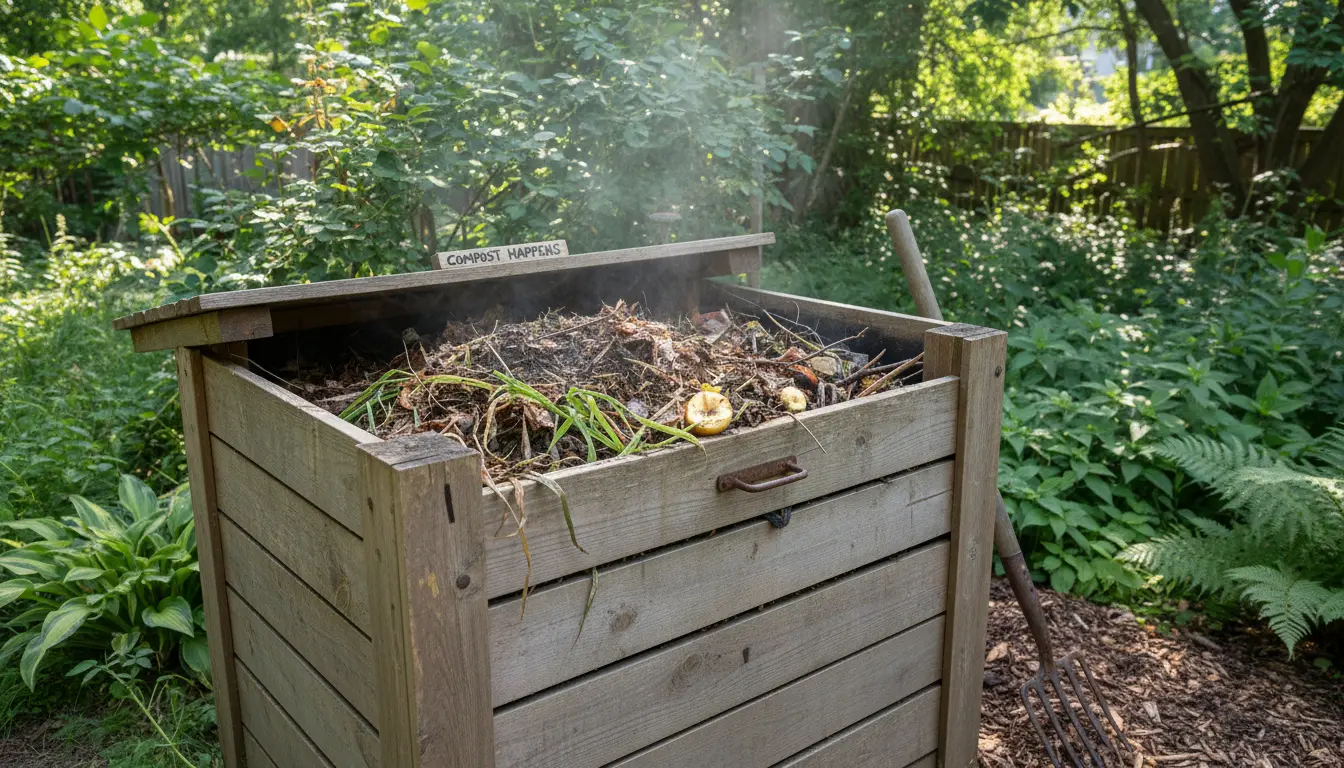
Home composting turns kitchen scraps and yard waste into nutrient-rich soil. This guide explains what you need, a step-by-step process, and quick fixes for common problems.
Why Home Composting Matters
Home composting reduces household waste and improves soil health. It closes the loop by returning organic material to your garden rather than sending it to a landfill.
Benefits of Home Composting
- Reduces garbage volume and organics in landfills.
- Provides free, nutrient-rich compost for plants and lawns.
- Improves soil structure, water retention, and plant growth.
What You Need to Start Home Composting
Starting home composting requires minimal tools and a bit of planning. Choose a location, pick a container, and know what materials to add.
Basic Equipment for Home Composting
- Compost bin or pile: tumbler, stationary bin, or open pile.
- Garden fork or pitchfork for turning the pile.
- Kitchen collection container for scraps (with a lid).
- Optional: thermometer to monitor internal temperature.
Choosing a Compost Bin for Home Composting
Select a bin size that fits your yard and waste production. Tumblers speed up decomposition but stationary bins offer higher capacity.
Place the bin on soil to allow worms and microbes to enter. Position it in partial sun to help maintain warmth and moisture.
Step-by-Step Home Composting Process
Follow this simple process to build and maintain an active compost pile. Keep layers balanced and turn the pile regularly to encourage aerobic decomposition.
-
Gather Materials:
Collect ‘greens’ (nitrogen-rich) like fruit and vegetable scraps, coffee grounds, and fresh grass clippings. Gather ‘browns’ (carbon-rich) like dry leaves, straw, shredded paper, and cardboard.
-
Build the Pile:
Start with a base layer of coarse browns for airflow. Alternate layers of greens and browns, aiming for a rough 1:2 ratio of greens to browns by volume.
-
Moisture and Aeration:
Keep the pile moist like a wrung-out sponge. Turn the pile every 1–2 weeks to add oxygen and speed decomposition. Use a pitchfork or tumbler mechanism if available.
-
Monitor Progress:
Heat indicates active decomposition. Smaller piles produce less heat and take longer. Finished compost is dark, crumbly, and smells earthy.
-
Harvest and Use:
Sift or screen compost to remove larger pieces. Use finished compost as soil amendment, mulch, or potting mix component.
Troubleshooting Home Composting Problems
Common issues are easy to fix when you know what to check. Use simple adjustments to rebalance your pile.
Common Problems and Solutions
-
Bad odors:
Cause: Too wet or too many greens. Fix: Add dry browns, turn the pile, and increase airflow.
-
Pile too dry:
Cause: Lack of moisture slows microbes. Fix: Add water and mix; cover the pile to retain moisture.
-
Pests or rodents:
Cause: Food scraps left uncovered. Fix: Bury food scraps under browns, secure the bin, or avoid meat and dairy in home compost.
-
Slow decomposition:
Cause: Too large materials or poor aeration. Fix: Shred materials, add more greens, and turn the pile regularly.
Home composting can cut your household waste by up to 30 percent and provide free compost that improves soil structure and plant health.
Practical Tips for Successful Home Composting
- Chop or shred materials to speed decomposition. Smaller pieces break down faster.
- Keep a balance of carbon and nitrogen. If the pile is smelly, add more carbon-rich browns.
- Use finished compost in garden beds, around trees, or mixed into potting soil.
- Rotate between two bins or have a staging area to allow one pile to finish while another is active.
Small Real-World Case Study
The Martinez family started home composting in a suburban yard using a 200-liter tumbler. They added kitchen scraps and shredded leaves, turning the tumbler twice a week.
Within four months they had rich compost for their vegetable beds and cut weekly trash by one bag. Their tomatoes and herbs showed improved growth after adding compost to planting holes.
Quick Start Checklist for Home Composting
- Choose a bin size and location on soil.
- Collect greens and browns separately.
- Layer materials and keep moist but not soggy.
- Turn the pile every 1–2 weeks.
- Harvest finished compost after 2–6 months depending on conditions.
Home composting is a practical way to reduce waste and produce valuable soil amendment. With a simple bin, balanced materials, and regular turning, most households can create compost that benefits gardens and reduces landfill impact.