
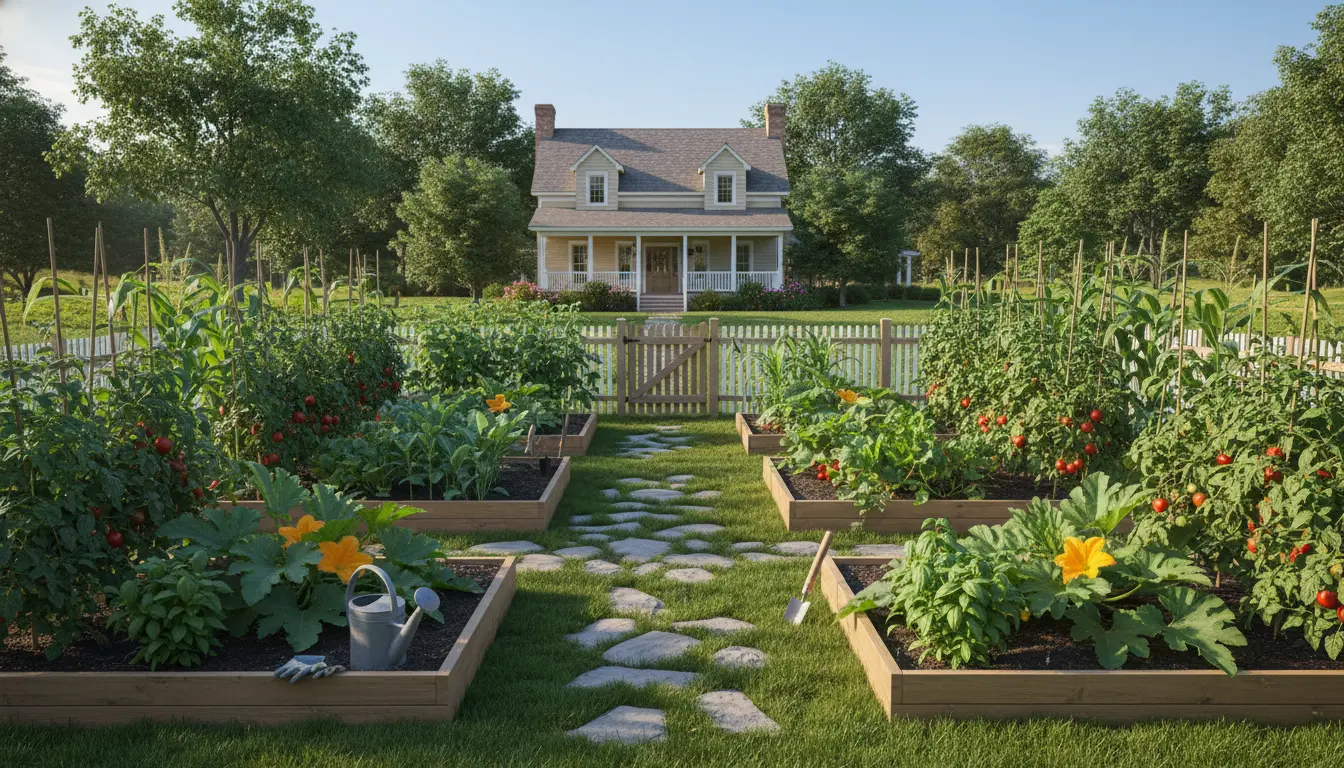
Starting a vegetable garden is a practical way to grow fresh food, save money, and enjoy time outdoors. This guide breaks the process into clear steps so beginners can plan, prepare, and maintain a productive backyard vegetable garden.
Plan Before You Start a Vegetable Garden
Good results begin with a simple plan. Decide which vegetables you want to grow and how much space each requires.
- Choose crops suited to your climate and season.
- Start small: a few beds or containers are easier to manage.
- Consider sunlight: most vegetables need 6–8 hours of direct sun.
Sketch a layout showing beds, paths, and access to water. Planning prevents common mistakes and saves effort later.
Choose Location and Prepare Soil
Location affects productivity. Pick a flat, sunny spot with good drainage and easy water access.
How to start a vegetable garden: soil steps
Soil determines plant health. Test soil pH and texture before planting. Many local extension services offer free or low-cost soil tests.
- Remove grass and weeds from the bed area.
- Loosen soil to at least 8–12 inches for most vegetables.
- Amend with compost to improve fertility and drainage.
Raised beds or containers can be used if native soil is poor. Raised beds warm faster in spring and provide better control over soil quality.
Select Seeds, Seedlings, and Planting Times
Choose between seeds or transplants depending on crop and season. Fast-growing greens and root vegetables are ideal from seed.
Planting schedule and spacing
Follow seed packet or plant tag instructions for spacing and depth. Overcrowding reduces airflow and increases disease risk.
- Cool-season crops (lettuce, spinach, peas) go in early spring or fall.
- Warm-season crops (tomatoes, peppers, cucumbers) need warm soil and air.
- Stagger planting to extend harvest over weeks rather than days.
Watering, Mulching, and Basic Maintenance
Consistent watering is key. Most vegetables need about 1 inch of water per week, more in hot weather.
- Water at the base of plants to reduce leaf disease.
- Use drip irrigation or soaker hoses to conserve water.
- Mulch with straw or wood chips to retain moisture and suppress weeds.
Regularly remove weeds, monitor for pests, and stake or trellis vining plants. Early intervention prevents small problems from becoming large ones.
Fertilizing and Crop Rotation
Most soils benefit from periodic feeding. Use compost, balanced granular fertilizers, or slow-release organic options.
Rotate crop families each year to reduce pest and disease buildup. For example, avoid planting tomatoes where potatoes grew the previous season.
Simple fertilizing routine
- Work compost into beds once a year in spring or fall.
- Side-dress heavy feeders like corn or tomatoes mid-season with compost or balanced feed.
- Observe plant vigor and adjust feeding rather than following fixed schedules.
Companion planting, such as growing basil near tomatoes, can improve flavor and may deter pests without chemicals.
Pest and Disease Management
Preventive practices reduce most pest problems. Keep plants healthy, clean up plant debris, and encourage beneficial insects.
- Inspect plants weekly for holes, spots, or unusual growth.
- Use row covers for young seedlings to prevent insect damage.
- Introduce or attract predators like ladybugs for aphid control.
Resort to targeted organic treatments only when necessary, and always follow label directions.
Harvesting and Continuous Production
Harvest vegetables at peak ripeness for best flavor and to encourage continued production. Pick frequently to avoid overripening.
- Leafy greens can be cut every few weeks using cut-and-come-again methods.
- Tomatoes should be picked when fully colored; some varieties ripen off the vine.
- Store or preserve surplus through freezing, canning, or drying.
Case study: Sarah’s 8 x 4 Raised Bed
Sarah started a single 8 x 4 foot raised bed in her suburban yard. She planted tomatoes, lettuce, carrots, and beans in year one.
By following a simple plan—testing soil, adding compost, and mulching—she produced weekly salad greens and summer tomatoes. Her initial costs were under $150, and she reduced grocery lettuce purchases by half that season.
This small example shows that modest space and basic care can yield regular harvests for a household of two.
Summary: Start a Vegetable Garden with Practical Steps
Begin with a clear plan, choose a sunny spot, and improve soil with compost. Start small, plant at the right time, and maintain regular watering and weeding.
Monitor pests, rotate crops yearly, and harvest often. With a few simple routines you can have a productive backyard vegetable garden that rewards effort with fresh, healthy food.
Ready to begin? Pick one bed or a couple of containers and use this guide as your checklist for the first season.