
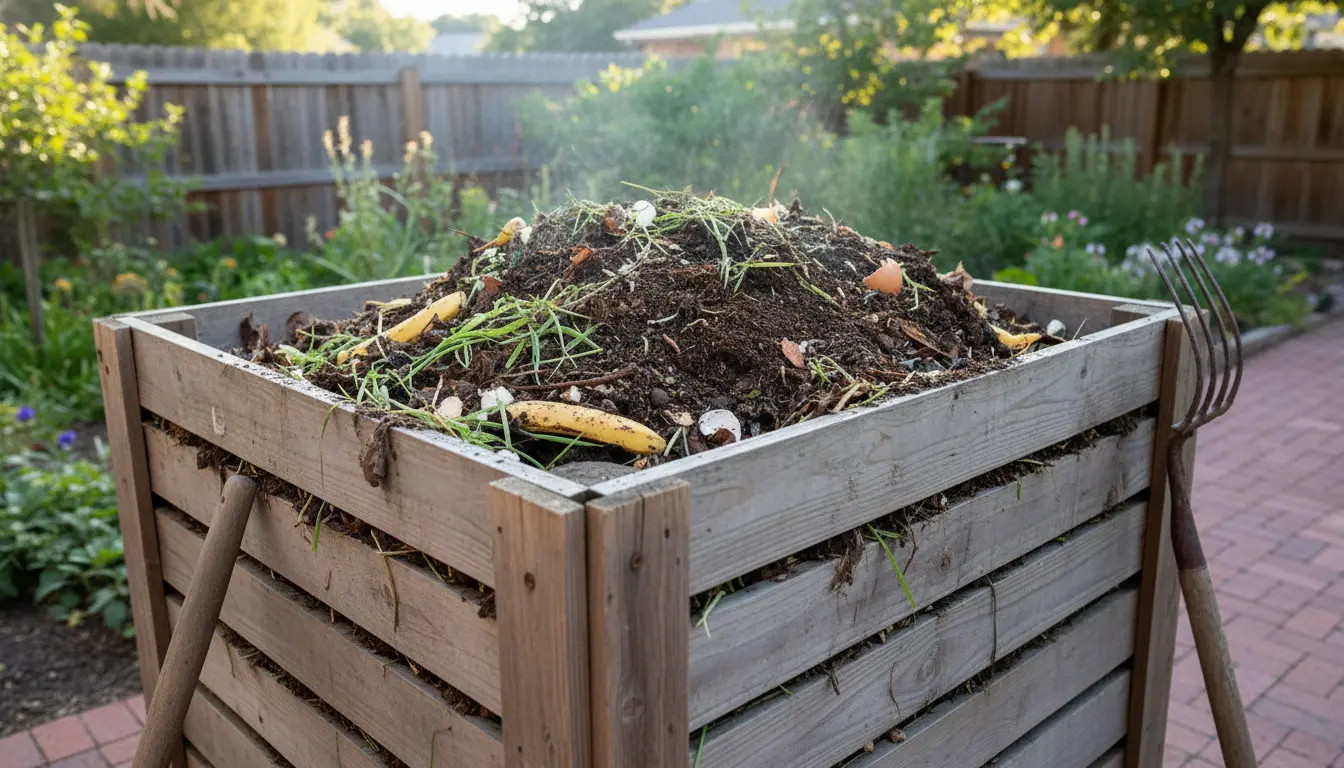
Composting at home turns kitchen scraps and yard waste into useful soil and reduces the amount of trash sent to landfill. This guide explains simple, practical steps for home composting for beginners, with clear actions and common pitfalls to avoid.
Why Home Composting Matters
Home composting reduces waste, improves soil structure, and returns nutrients to your garden. It also lowers methane emissions that come from food waste in landfills.
For beginners, composting is a low-cost way to support healthy plants while practicing sustainable habits. You do not need special skills, just consistent steps and simple monitoring.
How to Start Home Composting for Beginners
Starting is easier than it looks. Follow a few basic choices first, then commit to regular maintenance.
Choose a compost bin or system
Decide based on space and effort level. Options include a simple open pile, a tumbling bin, a stationary bin, or indoor worm composting.
- Open pile: cheaper and suitable for larger yards.
- Tumblers: speed up mixing and reduce pests, good for patios.
- Stationary bin: low maintenance and affordable.
- Worm bin: ideal for apartments and small kitchens, produces rich castings.
Balance greens and browns
Compost needs a mix of nitrogen rich materials called greens and carbon rich materials called browns. Aim for a rough ratio of 1 part greens to 3 parts browns by volume.
- Greens: vegetable scraps, coffee grounds, fresh grass clippings.
- Browns: dry leaves, shredded paper, straw, cardboard.
Examples: mix a bucket of kitchen scraps with three buckets of dry leaves or shredded paper to keep the pile aerated and odor free.
Layering and turning
Start with a layer of coarse browns at the bottom to help airflow. Alternate layers of greens and browns, then turn the pile every 1 to 2 weeks.
Turning introduces oxygen, which supports the microbes that break down material. If using a tumbler, rotate it a few times each week.
Monitoring and Troubleshooting
Watch for these common issues and follow simple fixes to keep compost healthy.
Smells and pests
A sour, rotten smell usually means the pile is too wet or has too many greens. Add browns, turn the pile, and cover fresh food scraps with dry material.
To deter pests, avoid adding meat, dairy, or oily foods. Use a closed bin or bury scraps deeper in the pile.
Dry pile that won’t break down
If decomposition stalls and material is dry, add water until the pile feels like a wrung-out sponge. Mix in greens to supply nitrogen.
Slow decomposition in cold months
Decomposition slows in winter. Insulate bins with straw or move tumblers to a more sheltered spot. Be patient; activity will pick up as temperatures rise.
How to Use Finished Compost
Finished compost looks dark, crumbly, and smells earthy. Use it as a top dressing, mix it into potting soil, or blend it into garden beds to improve structure and nutrient content.
- Top-dress lawns with a thin layer to boost soil health.
- Mix 25 to 50 percent compost into planting soil for vegetables and flowers.
- Make compost tea by steeping compost in water for a mild, nutrient-rich liquid feed.
Simple Tools and Supplies
You do not need fancy gear. Basic items include a bin, a pitchfork or turning tool, a garden thermometer, and a kitchen scrap pail with a lid.
- Bin or tumbler suited to your space.
- Turning tool or pitchfork for aeration.
- Kitchen container to collect scraps between trips to the bin.
- Optional thermometer to monitor active heat.
Small Case Study: A City Balcony Compost
Anna lives in a two bedroom apartment with a small balcony. She started a worm bin under her sink and kept a sealed counter pail for food scraps. After six months she had enough castings to blend 20 percent into potting soil for her tomato pots.
Key actions that worked for her were keeping bedding moist but not wet, feeding chopped scraps to speed breakdown, and harvesting castings every four months. The worm bin eliminated most food waste from her trash and improved her container vegetables noticeably.
Practical Checklist for Home Composting for Beginners
- Choose the right bin for your space
- Collect greens and browns separately at first
- Layer materials and keep the pile moist
- Turn regularly to add oxygen
- Troubleshoot smells and pests quickly
- Harvest finished compost and put it to use
Home composting is a small weekly habit that yields big environmental and gardening benefits. Start with simple steps, observe your pile, and adjust as you learn. Within a few months you will see how kitchen scraps become valuable soil and how easy sustainable waste reduction can be.