
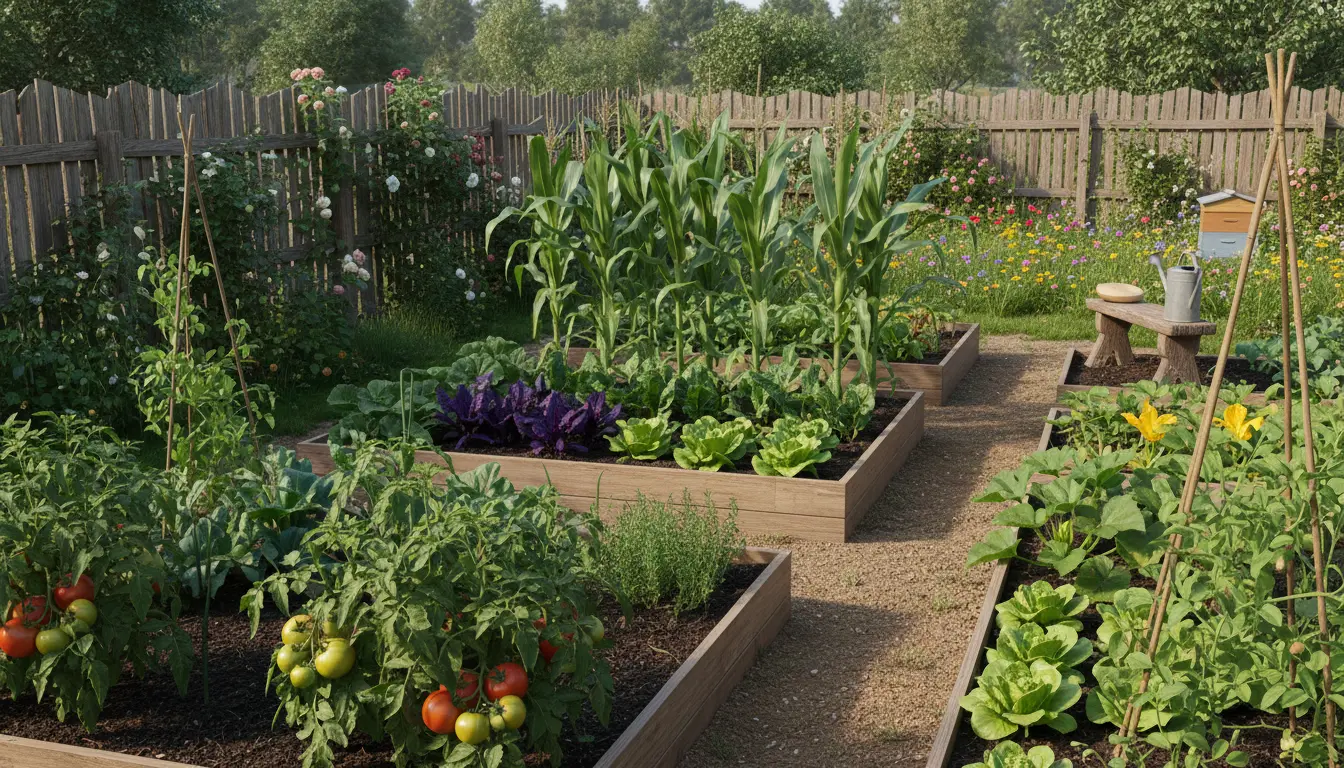
Growing your own vegetables is rewarding and practical. This guide gives clear, step-by-step instructions to help beginners start a productive vegetable garden with minimal fuss.
Why Start a Vegetable Garden
Home vegetable gardens save money and offer fresher food. They also let you control what goes into your produce and reduce trips to the store.
Even small spaces or containers can yield enough herbs and vegetables for a family or a couple.
How to Start a Vegetable Garden Practical Steps
Follow these core steps to start a vegetable garden that fits your space and schedule. Each step is short and actionable for beginners.
Choose Location and Containers
Pick a spot that gets at least 5–6 hours of sunlight daily. Most vegetables need full sun to produce well.
If you lack yard space, use raised beds, containers, or balcony planters. Good drainage is essential for containers.
Prepare Soil and Amendments
Test or evaluate your soil: sandy soils drain fast, clay soils hold water. Aim for loose, crumbly soil with good fertility.
Mix compost or well-rotted manure into topsoil at a rate of 2–3 inches across the bed. This improves structure and adds nutrients.
Planting and Crop Selection
Choose easy, reliable crops for your first season. Tomatoes, lettuce, radishes, green beans, and herbs are good starter plants.
Stagger planting for continuous harvest: sow quick crops (radishes, lettuce) every 2–3 weeks and plant slower crops (tomatoes, peppers) once per season.
Watering and Maintenance
Water deeply and less often to encourage strong roots. Aim for even moisture rather than frequent shallow watering.
- Water early in the morning to reduce evaporation and fungal risk.
- Mulch with straw or wood chips to retain moisture and suppress weeds.
- Pinch or prune as needed to shape plants and improve airflow.
Planning Your Garden Layout
Good layout saves time and increases yield. Group plants by water needs and height to reduce shading and simplify care.
Use companion planting to deter pests and boost growth. For example, plant basil near tomatoes to improve flavor and repel some insects.
Suggested Layout Examples
- Small raised bed (4×4 ft): tomatoes in back, lettuce and herbs in front.
- Containers: one large pot for a tomato, small pots for herbs and salad greens.
- Vertical trellis for beans and cucumbers to save space.
Seasonal Care and Troubleshooting
Adjust care across the season. Peak growth needs more water and feeding, while cooler months require less intervention.
Pests and Diseases: Simple Responses
Inspect plants weekly and remove damaged leaves early. Hand-pick large pests like caterpillars and slugs when you see them.
Use soap sprays or neem oil for minor insect issues. Rotate crops yearly to reduce disease buildup in soil.
Harvesting and Storage
Harvest leafy greens when young for best flavor. Pick tomatoes when fully colored and slightly soft to the touch.
Store produce properly: cool, dry places for root vegetables and refrigeration for harvested greens and herbs when needed.
Quick Case Study Small Urban Garden
Case: A two-bedroom apartment balcony produced regular harvests for a couple. They used three 18-inch containers, one 2×4 foot raised bed, and a vertical trellis.
Outcomes after one season: continuous salad greens, fresh basil and parsley, and five cherry tomato plants yielding about 30–40 tomatoes each. Initial investment was under $200 and weekly maintenance took about 30–45 minutes.
Many common vegetables like lettuce and radishes mature in 30 days or less, letting you enjoy multiple harvests in one growing season.
Practical Tips and Quick Checklist
Keep a simple checklist to stay on track. This minimizes mistakes and keeps your garden productive.
- Choose spot with 5–6 hours sun
- Prepare soil with 2–3 inches compost
- Select 3–5 beginner crops
- Water deeply 1–3 times weekly depending on weather
- Mulch and check plants weekly for pests
Examples of Beginner-Friendly Vegetables
- Lettuce and other salad greens — fast and continuous
- Radishes — harvest in about a month
- Green beans — productive and space-efficient with a trellis
- Cherry tomatoes — high yield in containers or beds
- Herbs like basil, parsley, and chives — great for small spaces
Starting a vegetable garden is achievable with planning and small, regular tasks. Begin with simple crops, prepare your soil, and adjust as you learn. Over time you will refine techniques and increase yields.
Ready to start? Pick one small area or three containers and plant your first seeds this weekend. Consistency beats perfection in gardening.