
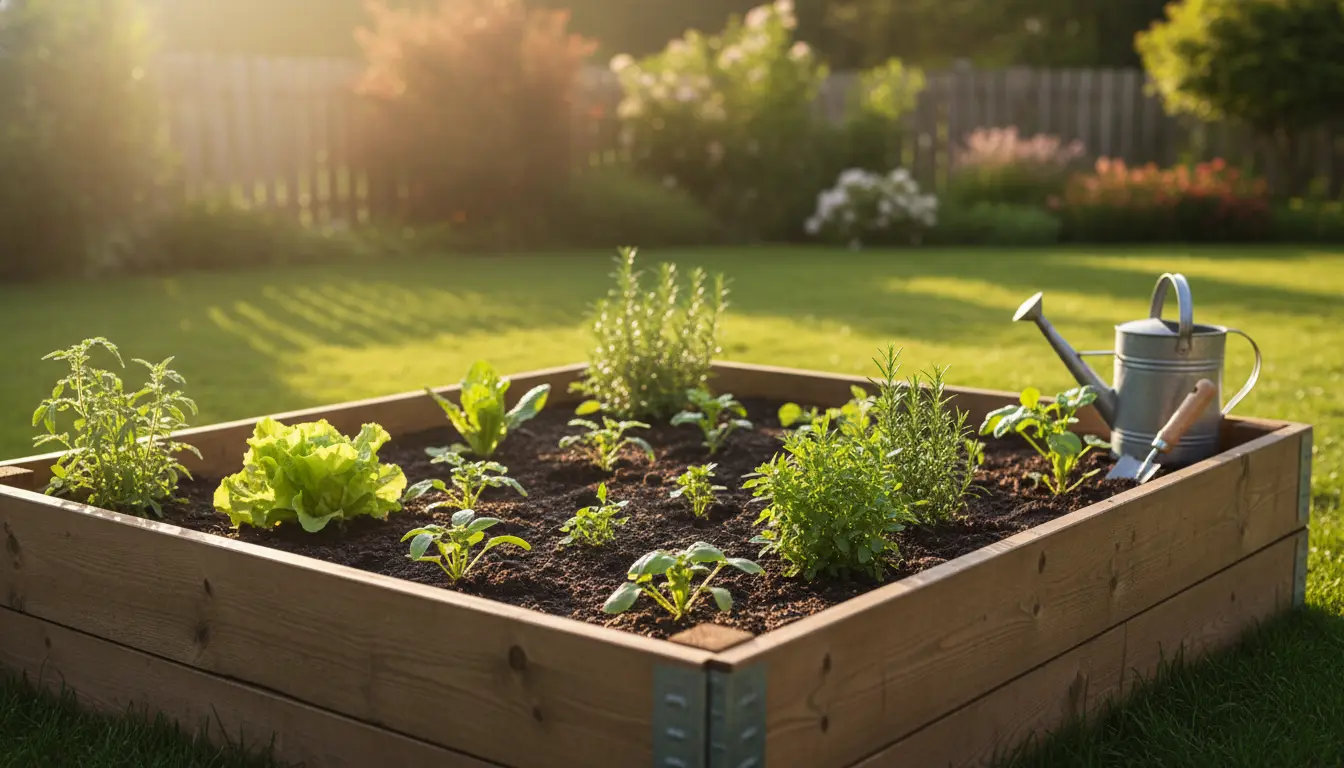
Start with a clear goal for your vegetable garden
Decide whether you want a few containers for herbs and salad greens or a full backyard vegetable garden. A clear goal helps you choose the right location, soil, and types of plants.
List the vegetables you and your family will actually eat. This keeps the garden manageable and productive in the first year.
Choosing a site for your vegetable garden
Vegetable garden sunlight and drainage
Most vegetables need at least six hours of direct sunlight per day. Observe sun patterns across the seasons before you commit to a location.
Good drainage prevents root rot. Avoid low spots that collect water after rain.
Size and accessibility of the vegetable garden
Start small. A 4×8 foot raised bed or a few large containers reduce workload and simplify soil improvement.
Place the garden near a water source and close to your kitchen for easier harvests and daily attention.
Prepare soil for your vegetable garden
Testing and amending soil for a vegetable garden
Test the soil pH and texture using a simple kit or local extension service. Most vegetables prefer slightly acidic to neutral soil (pH 6.0–7.0).
Work in organic matter such as compost or well-rotted manure to improve fertility and structure.
Simple soil improvement steps
- Add 2–3 inches of compost over the bed and mix into the top 6–8 inches of soil.
- Use a balanced organic fertilizer if a soil test shows nutrient deficiencies.
- Consider raised beds or containers if native soil is poor or compacted.
Choosing vegetables and planting for your vegetable garden
Selecting vegetables for beginners
Pick reliable, low-maintenance crops to build confidence. Try lettuce, radishes, spinach, bush beans, tomatoes, and carrots.
Check your hardiness zone and local frost dates to time planting correctly.
Planting tips for a vegetable garden
- Sow seeds at the depth recommended on the packet and thin seedlings to the proper spacing.
- Transplant seedlings in the evening or on cloudy days to reduce transplant shock.
- Stagger plantings for continuous harvests—plant lettuce or radishes every 2–3 weeks.
Watering and maintenance of a vegetable garden
Watering schedule for a vegetable garden
Vegetables need consistent moisture. Aim for deep, infrequent watering to encourage strong roots.
Water in the morning to reduce disease risk and evaporation. Use drip irrigation or soaker hoses to target roots efficiently.
Mulching and weeding for a vegetable garden
Apply 2–3 inches of organic mulch like straw or shredded leaves to conserve moisture and suppress weeds.
Pull weeds regularly while they are small to avoid competition for nutrients and water.
Pest and disease management in a vegetable garden
Start with prevention: rotate crops, space plants for airflow, and keep plants healthy through proper watering and feeding.
Use physical barriers like row covers, handpick pests when practical, and use targeted organic controls when necessary.
Harvesting and learning from your vegetable garden
Harvest vegetables at peak ripeness for the best flavor and to encourage more production. For many crops, frequent harvesting increases yield.
Keep a garden journal with dates for planting, problems observed, and harvest amounts. This simple record helps improve planning next season.
Many common garden vegetables will regrow or produce for weeks after the first harvest if picked correctly. Leafy greens like lettuce and chard can be cut using the “cut-and-come-again” method.
Small real-world example: First-year raised bed success
Case study: A homeowner converted a 4×8 foot lawn patch into a raised bed. They added 3 inches of compost and planted tomatoes, bush beans, lettuce, and radishes.
With weekly watering, mulching, and staggered sowing, they harvested table lettuce in six weeks, continuous beans through summer, and a steady supply of salad greens. The small size made maintenance easy and the family reported using fresh produce daily.
Practical checklist to start your vegetable garden
- Choose a sunny, well-drained site near water.
- Decide on garden type: raised bed, in-ground, or containers.
- Test and amend soil with compost and necessary nutrients.
- Select beginner-friendly vegetables suited to your climate.
- Plant at correct times, water deeply, and mulch to retain moisture.
- Monitor for pests and diseases and keep simple records.
Final tips for a successful vegetable garden
Start small and expand once you gain experience. Regular short tasks—watering, weeding, and quick checks—are more effective than occasional long sessions.
Be patient and learn each season. Even small gardens can supply fresh produce and teach essential skills for longer-term success.