
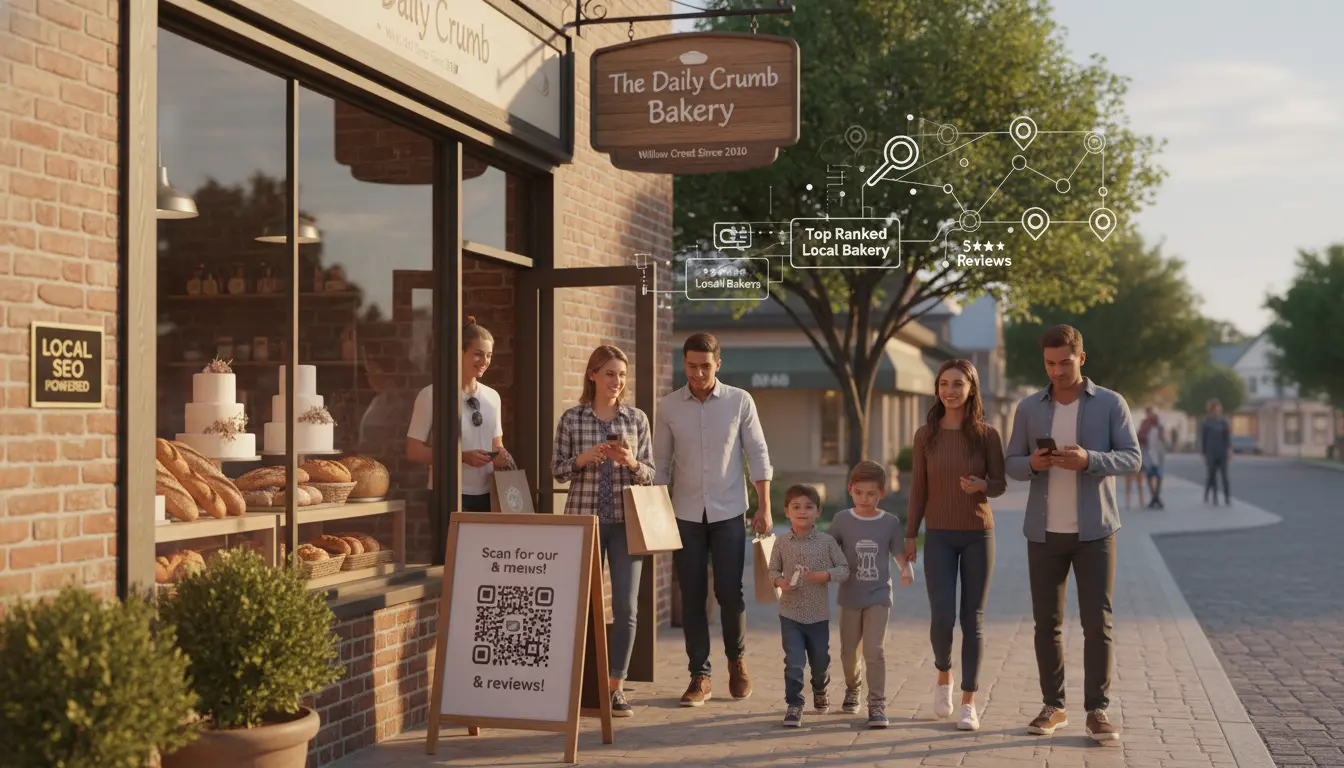
Why Local SEO for Small Businesses Matters
Local SEO for small businesses helps potential customers find you when they search on Google, Maps, or voice assistants. It targets searches with local intent, like product or service plus a place name.
For small businesses with limited marketing budgets, local SEO is one of the most cost-effective channels. The right local signals convert searches into store visits and phone calls.
Core Elements of Local SEO for Small Businesses
Focus on a few core elements that move the needle quickly: listings, on-page signals, reviews, and local links. Each element supports how search engines understand your business and location.
Google Business Profile Optimization
Claim and fully complete your Google Business Profile (GBP). Accurate hours, categories, services, and a clear business description matter.
- Use your real business name, address, and phone number consistently.
- Select primary and secondary categories that match your main services.
- Add high-quality photos of your shop, products, and team.
On-Page Local SEO for Small Businesses
Optimize key pages on your website for local queries. Target service pages and your homepage with city or neighborhood names.
- Title tags and H1s: include primary service and location.
- Meta descriptions: add a call to action and location reference.
- NAP on contact page: present name, address, phone in text.
Local Citations and Directory Listings
Consistent listings across directories help search engines verify your location. Use the same NAP formatting on major directories.
- Key directories: Yelp, Bing Places, Apple Maps, and industry-specific sites.
- Use local data aggregators or a citation service if you have many locations.
Reviews and Reputation Management
Reviews are both a ranking signal and a trust signal. Encourage happy customers to leave reviews and respond professionally to all feedback.
Set up a simple process to request reviews by email, SMS, or receipt follow-up. Make it easy and timely.
Best Practices for Reviews
- Ask for reviews within 48–72 hours after a purchase or service.
- Respond to reviews within 24–48 hours with gratitude or resolution.
- Do not offer incentives for positive reviews; follow platform rules.
Local Content and On-Site Signals
Create pages or posts that address local needs. Local content helps you rank for neighborhood searches and shows relevance to the area.
Examples include service pages, local event posts, and customer stories tied to neighborhoods.
Content Ideas for Local SEO for Small Businesses
- Top 10 reasons locals choose your service
- Case studies featuring local customers
- Guides for neighborhood-specific problems or regulations
Local Links and Community Signals
Links from local organizations, newspapers, chambers of commerce, and suppliers strengthen local relevance. Attend events and get listed on community sites.
Partner with local charities, join sponsorships, or publish expert commentary to earn local mentions and links.
Tracking and Measuring Local SEO for Small Businesses
Use a few reliable metrics to measure progress: search visibility, GBP insights (calls, direction requests), website traffic from local queries, and conversions.
Tools to use include Google Search Console, Google Analytics, and your Google Business Profile insights dashboard.
Simple KPIs to Watch
- Number of GBP views and searches
- Phone calls and direction requests from GBP
- Organic local traffic to service pages
Over 80% of consumers use search engines to find local businesses. Optimizing your Google Business Profile can increase calls and visits without extra ad spend.
Quick Action Plan for Local SEO for Small Businesses
Follow these steps in the first 30 days to build momentum. These actions are low cost and high impact for small budgets.
- Claim and fully complete your Google Business Profile.
- Audit and standardize NAP across your website and top directories.
- Ask 10 recent customers for reviews and respond to them.
- Create one neighborhood-focused content piece and publish it.
- List your business on two local community sites or directories.
Small Real-World Case Study
Joe’s Bakery is a single-location bakery in a mid-size town. They optimized their Google Business Profile, added photos, and asked customers for reviews after every purchase.
Within three months, Joe’s Bakery saw a 38% increase in phone calls and a 25% increase in walk-in customers traced to GBP direction requests. Sales grew 12% compared to the previous quarter.
Key changes included clear business hours, a dedicated “fresh pastries” service page targeting the town name, and responding to reviews within 24 hours.
Common Local SEO Mistakes to Avoid
- Inconsistent NAP across listings and website.
- Ignoring reviews or leaving negative feedback unanswered.
- Using generic categories in your GBP instead of specific services.
Final Checklist for Local SEO for Small Businesses
- Claim and complete Google Business Profile
- Standardize NAP on web and directories
- Collect and respond to reviews regularly
- Create local content and earn local links
- Track GBP insights and local traffic metrics
Local SEO for small businesses is an ongoing process, but consistent small improvements deliver measurable results. Start with the basics, measure outcomes, and scale the tactics that work.