
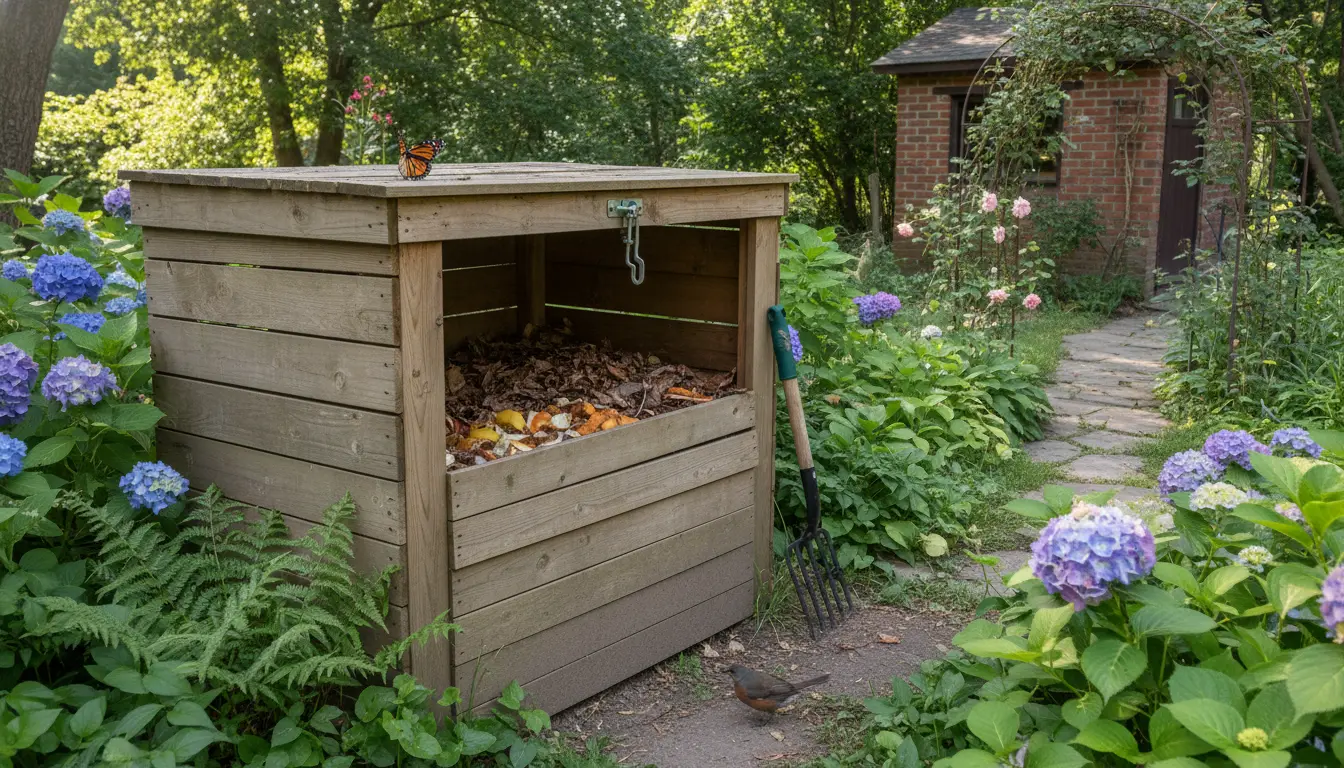
Why Home Composting Matters
Home composting turns kitchen scraps and yard waste into a useful soil amendment. It reduces landfill waste and returns nutrients to your garden.
Composting is practical for small spaces and can save money on soil and mulch. This guide explains how to start, maintain, and use compost effectively.
Basic Principles of Home Composting
Compost is made by allowing organic materials to break down with the help of microbes. A healthy pile needs carbon, nitrogen, air, and moisture in balance.
Think of carbon-rich materials as “browns” and nitrogen-rich materials as “greens.” Both are essential for efficient decomposition.
What to Add to a Home Compost
Use a mix of greens and browns to keep the compost active and odor-free.
- Greens (nitrogen): vegetable scraps, coffee grounds, fresh grass clippings
- Browns (carbon): dried leaves, straw, shredded cardboard, paper
- Small amounts of garden soil can add beneficial microbes
What Not to Compost
Avoid materials that can attract pests or introduce disease.
- Meat, fish, bones, and dairy
- Diseased plants and invasive weeds with seeds
- Pet waste from carnivores
How to Start Home Composting
Choose a method that fits your space and schedule. Common options include a compost bin, tumbler, or a simple pile.
Start small, then scale up as you learn what works in your climate and garden.
Choosing a Compost Bin for Home Composting
Select a bin based on space, budget, and how much waste you produce. Bins help retain heat and deter pests.
- Closed plastic or wooden bins: good for small yards
- Tumblers: easy to turn and maintain aerobic conditions
- Open piles: low cost, need more space and turning
Layering and Turning
Build the pile in layers: a base of browns, then greens, then a thin layer of soil. Keep layers moist but not soggy.
Turn the pile every 1–2 weeks to add oxygen, which speeds decomposition. Use a pitchfork or simply rotate a tumbler.
Troubleshooting Home Composting Problems
Common issues include bad odors, slow decomposition, and pests. Most problems relate to imbalance of materials or moisture.
Fixing Odors
Bad smells usually mean too many greens or not enough oxygen. Add dry browns and turn the pile.
If soggy, add shredded cardboard or leaves and mix to restore airflow.
Speeding Up Decomposition
Chop materials into smaller pieces and maintain a balanced ratio of browns to greens (roughly 3:1 by volume). Keep the pile warm and moist.
Adding a shovelful of finished compost or garden soil introduces helpful microbes.
Using Finished Compost
Finished compost is dark, crumbly, and smells earthy. Use it to improve soil structure, water retention, and fertility.
- Mix 2–3 inches into garden beds before planting
- Top-dress lawns with a thin layer to feed grass
- Use as a potting mix component for containers
Small Case Study: A Family’s First Year of Home Composting
A three-person household started home composting with a 60-gallon tumbling bin. They collected kitchen scraps in a countertop pail and added yard waste weekly.
After six months they had produced enough finished compost to mulch two vegetable beds. Their curbside waste decreased by about 35% in the first year.
Key actions that worked: regular turning, chopping larger items, and maintaining a brown-to-green balance.
Practical Tips for Consistent Home Composting
- Keep a small countertop container with a tight lid to collect kitchen scraps.
- Chop or shred bulky items to speed breakdown.
- Store a supply of dry browns (cardboard, leaves) near your bin for quick additions.
- Monitor moisture by squeezing a handful—should feel like a wrung-out sponge.
- Label and rotate bins if you maintain multiple piles to track readiness.
Final Checklist to Start Home Composting
- Choose a bin or pile suited to your space
- Collect greens and browns separately
- Layer materials and maintain moisture and airflow
- Turn regularly and monitor progress
- Use finished compost to enrich garden soil
With a simple bin and a little routine, home composting becomes an easy part of household waste management. Start small, observe what works, and adjust your approach each season.