
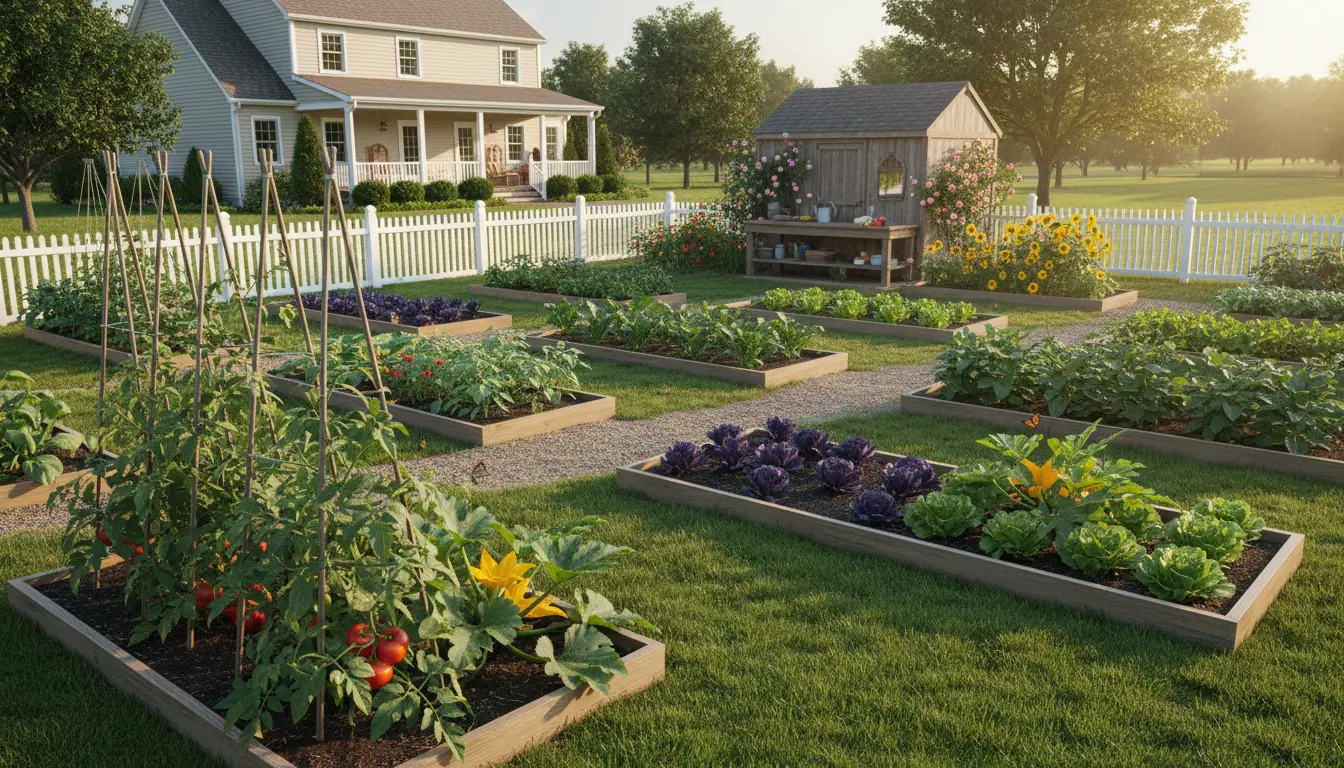
Why Start a Vegetable Garden
Starting a vegetable garden gives you fresh produce, exercise, and a chance to control what you eat. With a straightforward plan, even a small space can produce significant yield.
Planning to Start a Vegetable Garden
Good planning saves time and reduces mistakes when you start a vegetable garden. Choose a sunny spot, decide on bed type, and list vegetables suited to your climate.
Choose Location and Sunlight
Most vegetables need 6–8 hours of direct sunlight a day. Observe potential sites for a week to confirm sun patterns before you start a vegetable garden.
Decide Bed Type and Size
Raised beds, in-ground rows, or containers are common options when you start a vegetable garden. Pick what fits your space, budget, and physical ability.
Soil Preparation for Starting a Vegetable Garden
Healthy soil is the foundation when you start a vegetable garden. Test soil pH and amend with compost to improve fertility and structure.
How to Test and Improve Soil
Buy a basic soil test kit or send a sample to an extension lab for pH and nutrient analysis. Add compost, aged manure, or balanced organic fertilizer based on test results.
- Loamy soil with good drainage is ideal.
- Aim for pH 6.0–7.0 for most vegetables.
- Work in 2–3 inches of compost before planting.
What to Plant First When You Start a Vegetable Garden
Start with easy, reliable crops to build confidence. Fast-growing and forgiving plants help you learn basic care before trying more demanding varieties.
Beginner-Friendly Vegetables
Consider these for your first season: lettuce, radishes, bush beans, cherry tomatoes, zucchini, and herbs like basil. These plants tolerate common mistakes and provide quick rewards when you start a vegetable garden.
Planting and Timing
Follow local frost dates and seed packet instructions for spacing and depth. Stagger plantings for continuous harvest rather than planting everything at once.
- Check last frost date for your area.
- Sow cool-season crops early and warm-season crops after frost risk ends.
- Use succession planting to extend harvests.
Watering and Mulching Tips
Consistent watering is critical for steady growth and fruit set. Mulch reduces evaporation, suppresses weeds, and evens soil temperature once you start a vegetable garden.
Watering Best Practices
Water deeply at the root zone rather than frequent shallow sprays. Aim for 1–1.5 inches of water per week, adjusting for rainfall and soil type.
Pest and Disease Management
Use preventive measures first: healthy soil, proper spacing, and crop rotation. Inspect plants weekly and remove affected leaves early to prevent spread.
- Handpick larger pests like beetles.
- Use physical barriers like row covers for seedlings.
- Apply organic controls such as neem oil when needed.
Maintenance and Harvesting
Keep up with weeding, staking, and pruning to maximize yield and plant health. Harvest regularly; many vegetables produce more when picked on time.
Harvest Timing Examples
Lettuce is best harvested young, while tomatoes are picked at full color. Beans should be picked when firm and about thumb-width long for best flavor.
Companion planting, such as basil near tomatoes, can improve flavor and reduce pests naturally. Small changes like this help when you start a vegetable garden.
Small Case Study: First-Year Yields
Emma, a beginner gardener with a 4×8 raised bed, planted tomatoes, basil, lettuce, and bush beans in her first year. By following basic soil prep and regular watering, she harvested enough tomatoes for salads twice a week and shared beans with neighbors.
Her simple routine: weekly watering, monthly compost top-dress, and removing early pests by hand. The modest output taught her timing and gave motivation to expand beds the next season.
Common Mistakes to Avoid When You Start a Vegetable Garden
Overplanting and poor watering are frequent beginner errors. Start small, learn crop needs, and gradually increase space as your skills grow.
- Don’t plant too close—crowding reduces airflow and invites disease.
- Avoid daily shallow watering; it weakens roots.
- Don’t ignore soil health; it affects everything else.
Simple Seasonal Checklist
Use a short checklist to stay organized through the year. Seasonal tasks keep your garden productive and reduce surprises.
- Spring: test soil, prepare beds, sow cool crops.
- Summer: water, mulch, stake, harvest regularly.
- Fall: remove spent plants, add compost, plan cover crop.
Final Tips for Success
Keep notes each season about what worked and what did not. Gardening is iterative—small improvements add up quickly when you start a vegetable garden.
Start with a simple plan, focus on soil and water, and pick a few reliable crops. Over time you can experiment with new varieties and expand with confidence.