
Growing herbs indoors is a low-cost way to add fresh flavor to meals and brighten your home. This guide shows practical steps to start and maintain an indoor herb garden with common kitchen herbs.
Why Choose Indoor Herb Gardening
Indoor herb gardening fits small spaces and busy schedules. Herbs need less space than vegetables and can thrive on a sunny windowsill or a compact grow shelf.
You get year-round access to fresh herbs and can control conditions more easily than an outdoor bed.
What You Need to Start Indoor Herb Gardening
Gather a few simple supplies before you begin. Choosing the right base items reduces common mistakes.
- Containers with drainage holes (pots, planters, or repurposed jars)
- Good potting mix formulated for containers
- Herb seedlings or seeds (basil, mint, parsley, rosemary, thyme)
- Sunny windowsill or grow light providing 6–8 hours of light
- Small watering can and a tray to catch excess water
Choosing Herbs for Beginners
Start with easy-to-grow herbs that tolerate indoor conditions. These give quick wins and increase confidence.
- Basil — fast-growing and great for kitchens with bright light
- Mint — forgiving, but best kept in its own pot to prevent spreading
- Rosemary — likes bright light and drier soil, slow-growing but durable
- Parsley — prefers consistent moisture and moderate light
- Thyme — small, sun-loving, and drought-tolerant
Seedlings vs Seeds
Buy seedlings if you want faster results and less initial care. Seeds are cheaper and offer more variety but require extra attention early on.
Light Requirements for Indoor Herb Gardening
Most culinary herbs need 6–8 hours of bright light each day. South- or west-facing windows work best in the northern hemisphere.
If natural light is limited, use a full-spectrum LED grow light placed 6–12 inches above the herbs for 12–14 hours per day.
Soil, Drainage, and Pot Choice
Use a lightweight potting mix formulated for containers; avoid garden soil, which compacts and can carry pests.
Good drainage prevents root rot. Ensure every pot has holes and place a saucer below to protect surfaces.
Watering and Feeding Schedule
Watering is the most common challenge. Check soil moisture before watering by feeling the top inch of soil.
- Water when the top 1 inch of soil feels dry for basil and parsley.
- Mint prefers more consistent moisture; keep slightly damp.
- Rosemary and thyme like to dry a bit between waterings.
Fertilize lightly every 4–6 weeks with a balanced liquid fertilizer diluted to half strength. Over-fertilizing can reduce flavor intensity.
Pruning and Harvesting Tips
Regular harvesting is also pruning. Pinch or cut stems above a leaf node to encourage bushier growth.
Avoid removing more than one-third of a plant at once. This keeps plants healthy and productive.
Growing herbs in slightly smaller pots can concentrate flavor. Roots confined to modest space often produce stronger essential oils, enhancing taste.
Common Problems and Simple Fixes
Indoor herbs face a few predictable problems. Spotting them early keeps plants productive.
- Yellowing leaves — often from overwatering; let soil dry and reduce frequency.
- Leggy growth — usually from inadequate light; move plants closer to light or add a grow light.
- Pests like aphids or spider mites — rinse leaves, use insecticidal soap, or isolate affected plants.
Preventive Care
Rotate pots weekly so all sides receive light. Clean pots and re-pot every 12–18 months to refresh soil and check roots.
Small Real-World Example
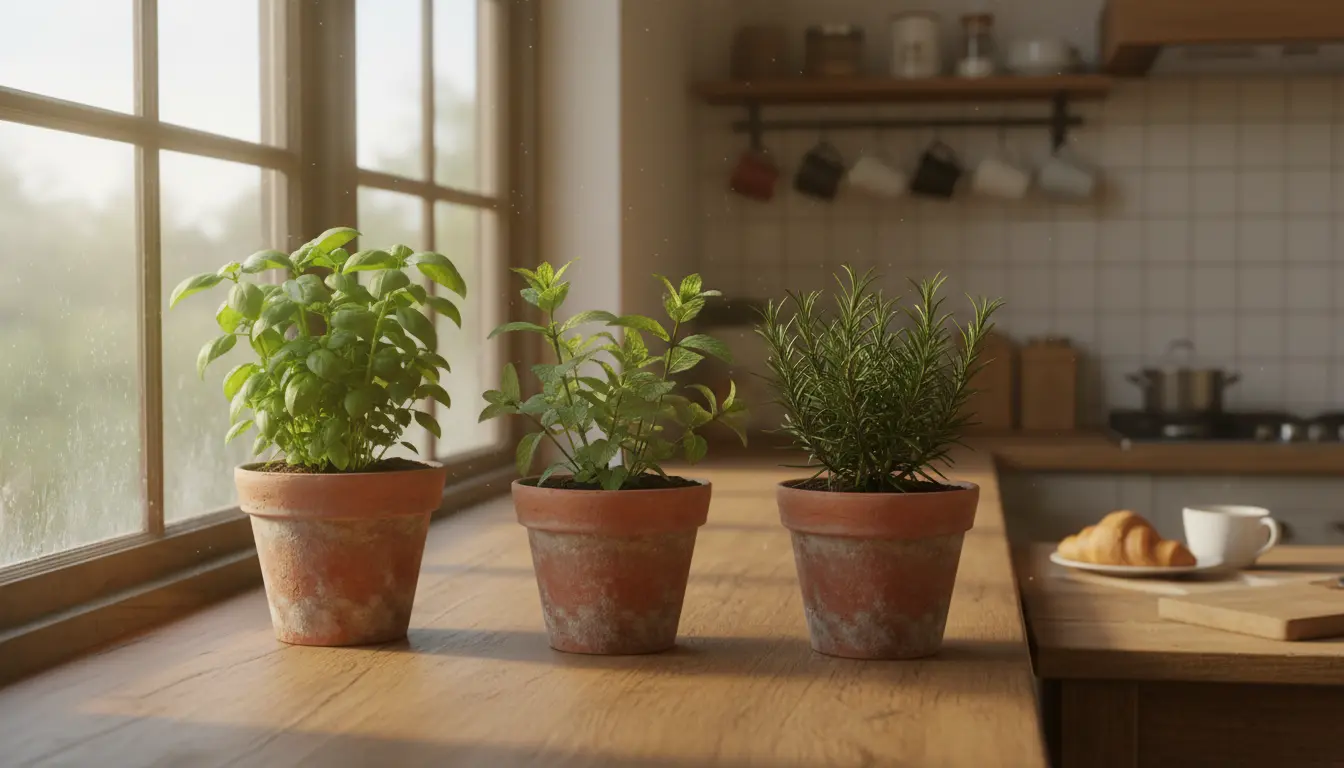
Case Study: A busy apartment dweller started with three 4-inch pots: basil, mint, and rosemary. Placed on a south-facing sill, they used seedling starts and a weekly light feed. Within six weeks, basil and mint were large enough for daily use in salads and teas. Rosemary grew more slowly but provided sprigs weekly for cooking. Easy pruning and correct watering kept all three healthy through winter.
Practical Weekly Care Checklist for Indoor Herb Gardening
Use this simple list to keep herbs thriving without extra hassle.
- Check light exposure and rotate pots — 1–2 minutes
- Test soil moisture and water if the top inch is dry — 2–3 minutes
- Harvest or prune as needed to encourage bushy growth — 5–10 minutes
- Inspect for pests and remove any affected leaves — 2–5 minutes
Next Steps to Expand Your Indoor Herb Garden
Once confident, add more varieties like cilantro, chives, or lemon balm. Consider a tiered shelf with LED lighting for more plants in the same footprint.
Experiment with different pot sizes and soil blends to learn what each herb prefers. Keep notes on watering intervals and harvest timing for best results.
Indoor herb gardening is a practical hobby that rewards simple, regular care. Start small, monitor light and moisture, and you’ll have fresh herbs at hand all year.