
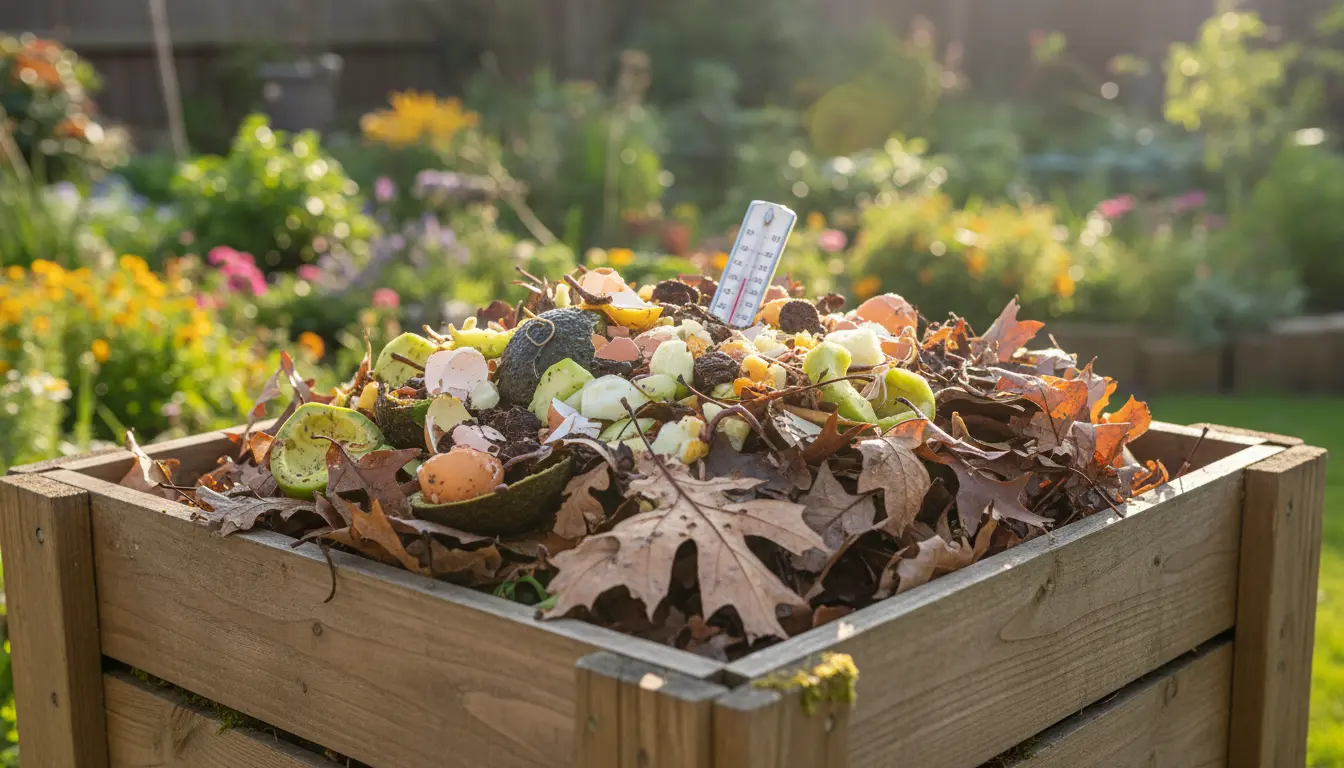
Why Home Composting for Beginners Matters
Home composting reduces kitchen and yard waste, improves soil, and lowers household trash. For beginners, composting is an accessible way to recycle organic materials and support healthier gardens.
This guide shows practical steps, common mistakes, and a short case study you can use to start composting at home.
Basic Principles of Home Composting for Beginners
Compost is the result of aerobic decomposition of organic materials by microorganisms. Balancing carbon and nitrogen, moisture, and airflow speeds the process.
Key factors to manage are particle size, moisture level, and aeration. These keep decomposition active and prevent odor.
What to Compost
- Greens (high nitrogen): fruit and vegetable scraps, coffee grounds, fresh grass clippings.
- Browns (high carbon): dry leaves, shredded paper, cardboard, straw.
- Do not compost: meat, dairy, oily foods, diseased plants, and pet waste from carnivores.
Choosing a Compost Method
Beginner-friendly options include a simple pile, a bin, or a tumbling composter. Choose based on space, budget, and how much waste you produce.
- Backyard bin: simple and low-cost, requires occasional turning.
- Tumbler: easier to aerate and faster, but costlier.
- Bokashi or worm bin: great for small spaces or apartment living.
Step by Step Home Composting for Beginners
Follow these steps to build and maintain a beginner compost system that works.
1. Pick a Spot and Container
Choose a partly shaded, level area near water access. If using a bin, ensure it has drainage and openings for airflow.
2. Layer Materials
Start with a 4–6 inch layer of coarse browns like small branches to help drainage. Alternate layers of greens and browns roughly 1:2 by volume.
3. Maintain Moisture and Aeration
Compost should feel like a wrung-out sponge—moist but not soggy. Turn the pile every 1–2 weeks to add oxygen and speed decomposition.
4. Monitor Temperature
A well-balanced compost pile heats to 120–150°F (50–65°C). Heat means microbes are active. If it stays cool, add more greens or increase particle size reduction.
5. Harvest Finished Compost
Compost is ready in 2–6 months depending on method and conditions. Finished compost is dark, crumbly, and earthy-smelling. Sift before use in pots or beds.
Troubleshooting Common Problems
Beginners often face odor, pests, or slow breakdown. Resolve issues quickly to keep compost healthy.
- Bad smells: usually from too much wet greens or lack of air. Turn pile and add dry browns.
- Fruit flies: cover fresh food scraps with a layer of browns or use a closed bin.
- Slow decomposition: chop materials smaller, increase moisture slightly, or add nitrogen-rich greens.
Composting can cut household waste volume by up to 30 percent and return essential nutrients to garden soil. Even small-scale composting reduces methane emissions from landfills.
Practical Tips for Success
- Chop or shred large materials to speed decomposition.
- Collect kitchen scraps in a small sealed container to reduce flies and odors.
- Keep a ratio of about two parts browns to one part greens by volume for most mixes.
- Use finished compost as a soil amendment, top dressing, or potting mix ingredient.
Small Real-World Example
Maria, a beginner gardener with a small backyard, began composting in a $50 plastic bin. She saved kitchen scraps for six months, layering with shredded leaves from her yard.
After four months of weekly turning, she produced about 30 liters of dark compost. She mixed this into her vegetable beds and saw more robust tomato plants the following season.
Short Case Study
Case: Community apartment building with 24 units introduced a shared compost bin and a worm bin for apartments. After one year they diverted 1.2 tons of organic waste from garbage collection.
Results included lower disposal costs and a community garden receiving regular compost. Participation rose after a short training session and labeled collection bins were installed in common areas.
Quick Starter Checklist for Home Composting for Beginners
- Choose method: bin, tumbler, worm or bokashi.
- Gather browns: dry leaves, shredded paper, cardboard.
- Collect greens: kitchen scraps, fresh clippings, coffee grounds.
- Maintain moisture and aeration: turn regularly and monitor feel.
- Harvest and use finished compost in gardens and potted plants.
Final Notes
Home composting for beginners is straightforward with consistent small efforts. Start with a simple system, monitor conditions, and adjust as you learn what works in your climate and space.
With basic attention to balance and moisture, you can transform household waste into a valuable resource for plants and soil health.