
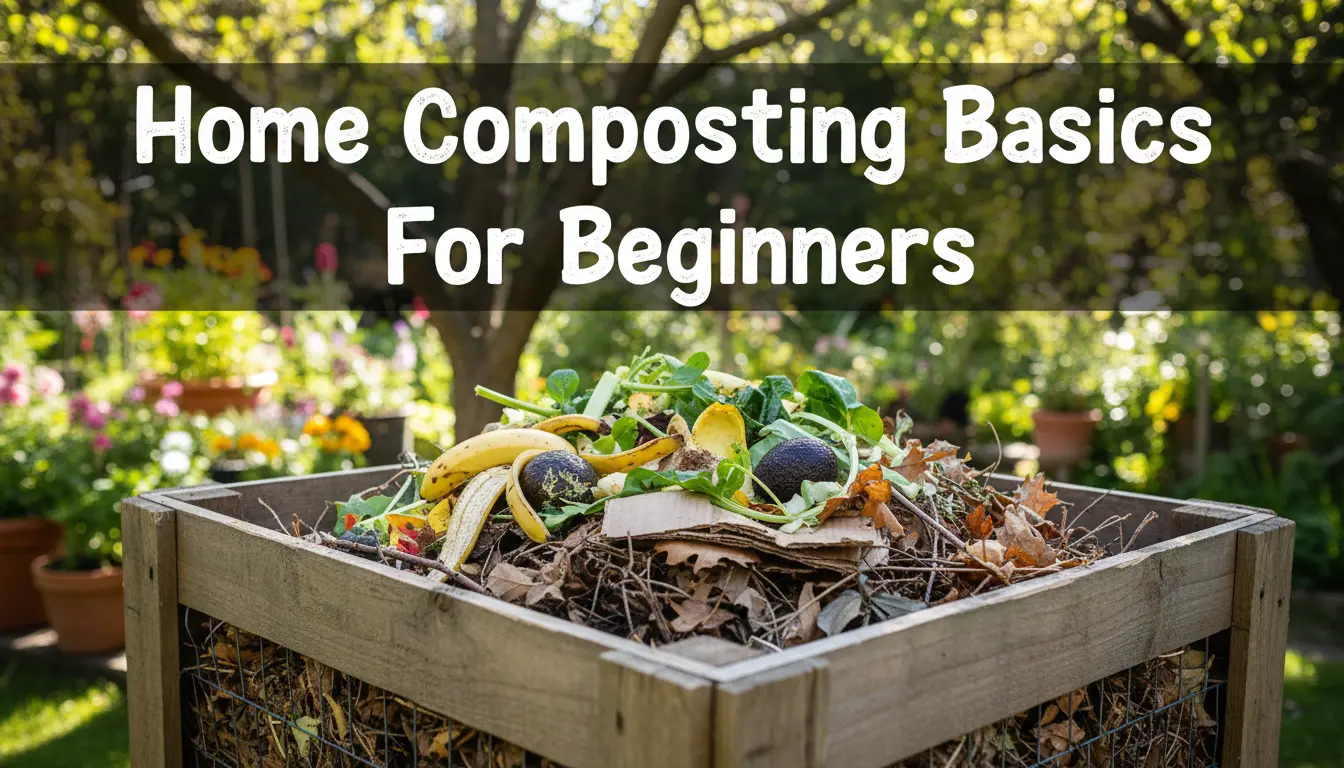
Home composting turns kitchen scraps and yard waste into valuable soil material. This guide covers the essentials you need to start a successful compost pile or bin at home.
Why home composting matters
Composting reduces landfill waste and returns nutrients to soil. It lowers household trash volume and supports healthier plants.
For many, home composting is an easy way to cut waste and save money on fertilizer. You also reduce methane emissions from organic material in landfills.
How to start home composting
Starting composting is a matter of choosing a system, adding the right materials, and keeping the mix balanced. Follow these practical steps to begin.
Choose a compost system
Select a method that fits your space and lifestyle. Options include a simple pile, a closed bin, tumblers, or worm composting (vermicompost).
- Pile or heap: Low cost, needs space and turning.
- Plastic or wooden bin: Controls pests and appearance.
- Tumbler: Easier turning, faster decomposition.
- Worm bin: Great for small spaces and kitchen scraps.
Pick the right location
Place your compost on bare soil where possible to allow worms and microbes to enter. Choose a level, well-drained spot with some shade.
Avoid placing a bin directly against the house or on concrete if you want maximum biological activity and drainage.
What to compost
Successful compost needs a mix of green (nitrogen) and brown (carbon) materials. Aim for a roughly 1:2 ratio of greens to browns by volume.
Common greens and browns:
- Greens: Fruit and vegetable scraps, coffee grounds, tea bags, fresh grass clippings.
- Browns: Dry leaves, straw, shredded paper, cardboard, wood chips.
What not to compost: meat, dairy, oily foods, diseased plants, and pet waste. These items can attract pests or harm the balance.
Compost maintenance and troubleshooting
Keep your compost active by monitoring moisture, aeration, and particle size. Regular attention speeds decomposition and prevents odors.
Turn and aerate
Turning adds oxygen and helps microbes break down materials. For a pile, turn every 1–2 weeks. For tumblers, rotate according to manufacturer instructions.
Manage moisture
Compost should be as damp as a wrung-out sponge. Add water during dry periods and add browns if the pile becomes too wet and smelly.
Speed up decomposition
Shred or chop materials to increase surface area. Maintain a balanced mix of greens and browns and keep the pile warm by insulating with a cover if needed.
Common problems and fixes
- Bad smell: Add more brown materials and turn the pile. Reduce wet kitchen wastes on top.
- No heat: Increase greens and moisture, and turn to add oxygen.
- Pests: Use a closed bin, bury food scraps, and avoid meat or oily foods.
- Slow breakdown: Chop materials smaller and maintain a better green-to-brown balance.
Compost can reduce household waste weight by up to 30 percent and supply nutrients that improve soil structure and water retention.
Harvesting and using finished compost
Finished compost is dark, crumbly, and smells earthy. Sift or let larger pieces break down further before use.
Ways to use finished compost:
- Top-dress lawns and garden beds.
- Mix into potting soil for houseplants and containers.
- Use as a mulch layer around shrubs and trees.
Small real-world example: a six-month starter case study
Sarah lives in a suburban townhouse and started a 90-liter compost bin. She used kitchen scraps plus shredded leaves from the yard.
She turned the bin weekly and kept the mix roughly two parts brown to one part green. In six months she produced three full buckets of dark compost and cut her weekly trash by about 40 percent.
Her tomato plants later showed stronger growth and better fruiting after she mixed compost into the planting beds.
Quick checklist to start home composting
- Choose a compost system that fits your space.
- Collect greens and browns separately to balance the mix.
- Keep compost moist and aerated; turn regularly.
- Avoid meat, dairy, and pet waste to prevent pests.
- Harvest when material is dark and crumbly and use in gardens and pots.
With minimal time and a small investment, home composting converts everyday waste into a valuable resource. Start small, observe the process, and adjust as needed to build a compost system that works for your home.