
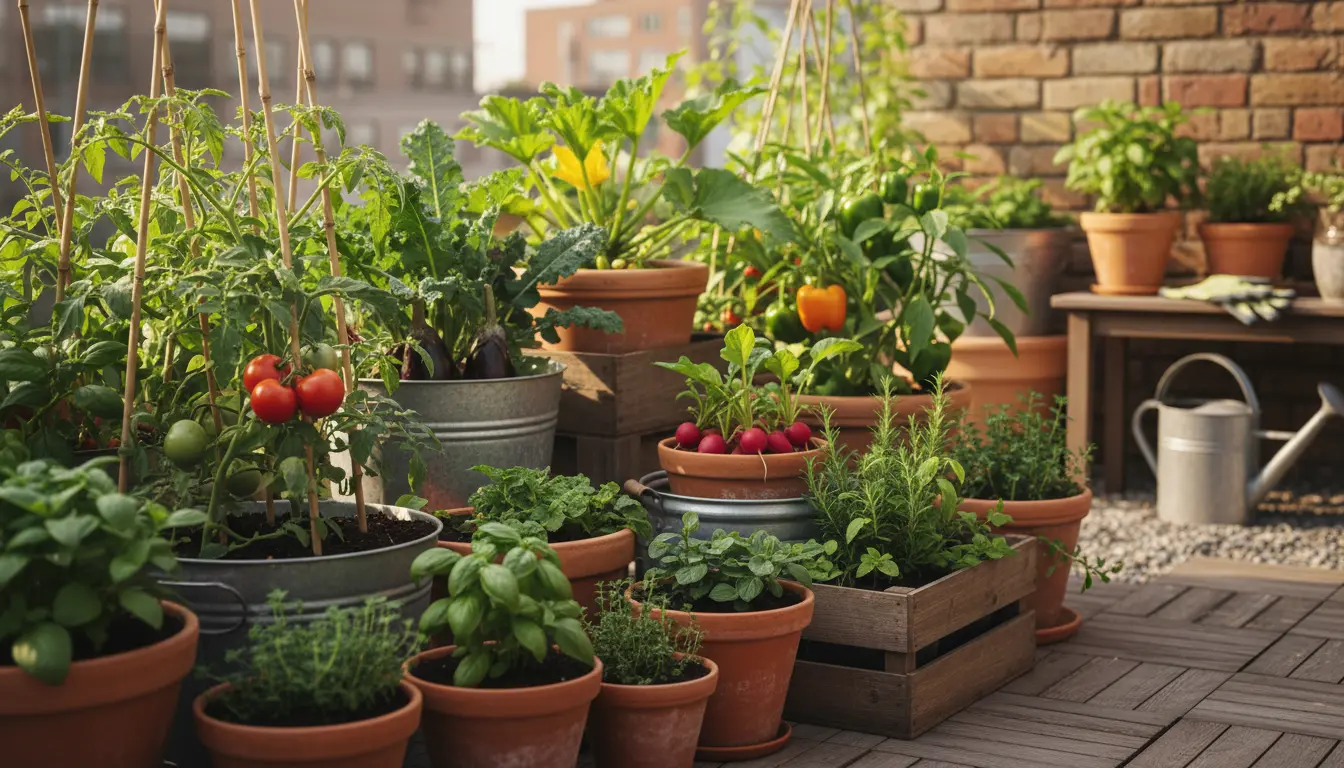
Why choose a container vegetable garden
Container vegetable gardening lets you grow food in small spaces like balconies, patios, or tiny yards. It reduces weeding and gives you control over soil, drainage, and plant placement.
This method works well for beginners, renters, and anyone with limited outdoor space. You can grow salads, herbs, peppers, and dwarf tomatoes without a full garden plot.
Planning your container vegetable garden
Good planning saves time and increases yield. Start by deciding location, sunlight, and what you want to eat.
Choose a spot that receives at least 5–6 hours of direct sunlight for most vegetables. Note wind exposure and access to water.
Choosing containers for a container vegetable garden
Select containers that match the plants’ root needs and your space. Use larger pots for root depth and heat buffering.
- Small containers (1–3 gallons): herbs, lettuce, radishes
- Medium containers (5–10 gallons): peppers, bush beans, dwarf tomatoes
- Large containers (15+ gallons): indeterminate tomatoes, eggplants, small potatoes
Ensure each container has drainage holes and consider saucers to protect surfaces from water runoff.
Soil and potting mix
Use a high-quality potting mix, not garden soil. Potting mixes hold air and drain well, which is critical in containers.
Look for mixes containing peat or coconut coir, perlite or vermiculite, and some compost or slow-release fertilizer.
Plant selection and spacing
Choose compact or determinate varieties labeled for containers when possible. These fit smaller spaces and produce reliably.
Plan spacing based on mature plant size. Overcrowding reduces airflow and increases disease risk.
- Lettuce and greens: 4–6 inches apart
- Herbs: 6–12 inches apart depending on variety
- Tomatoes: 18–24 inches for determinates; provide stakes or cages
Watering and feeding your container vegetable garden
Containers dry faster than ground soil, so check moisture daily during warm weather. Water deeply until water drains from the bottom.
Use a balanced liquid fertilizer every 1–2 weeks or a slow-release granular fertilizer at planting. Adjust feeding for heavy feeders like tomatoes.
Signs of under- and over-watering
- Under-watering: drooping leaves, dry soil pulling away from pot sides
- Over-watering: yellowing leaves, soggy soil, poor root oxygenation
Pest and disease management
Containers reduce some soil-borne diseases but pests still appear. Inspect plants regularly and act early.
Use these practical steps to manage common problems:
- Hand-pick slugs and caterpillars in the morning or evening
- Rinse aphids off with a strong spray of water
- Use insecticidal soap or neem oil for persistent soft-bodied pests
- Remove and dispose of diseased foliage to limit spread
Seasonal care and rotation
Plan for multiple cropping seasons where climate allows. Rotate plant families between containers to reduce pest buildup.
In warm climates, grow leafy greens in winter and heat-loving plants in summer. In cold climates, move containers to protected areas or use cold frames.
Winterizing containers
Empty and store small containers to prevent freeze damage. For large containers, insulate with bubble wrap or move them to sheltered spots.
Small case study: Balcony container vegetable garden
Anna lives in a third-floor apartment and wanted fresh salad greens. She used three 5-gallon containers and one 20-gallon tub on her balcony.
She planted mixed lettuce, basil, and a compact tomato variety. By watering every other day and feeding biweekly, she harvested continuous salad greens for three months.
Her takeaways: choose the right container size, use quality mix, and monitor water. The setup fit her small space and reduced grocery runs.
Quick reference checklist for a container vegetable garden
- Pick a sunny spot with water access
- Choose containers sized to plant needs with drainage
- Use quality potting mix and add slow-release fertilizer
- Select compact varieties and plan spacing
- Water consistently and feed on schedule
- Inspect for pests and remove diseased tissue
- Rotate crops and winterize containers if needed
Final tips for success with a container vegetable garden
Start small and expand after initial success. A few well-managed containers often outperform many neglected pots.
Keep a simple journal of watering, feeding, and harvest dates. Small records help you refine care and improve yields season to season.