
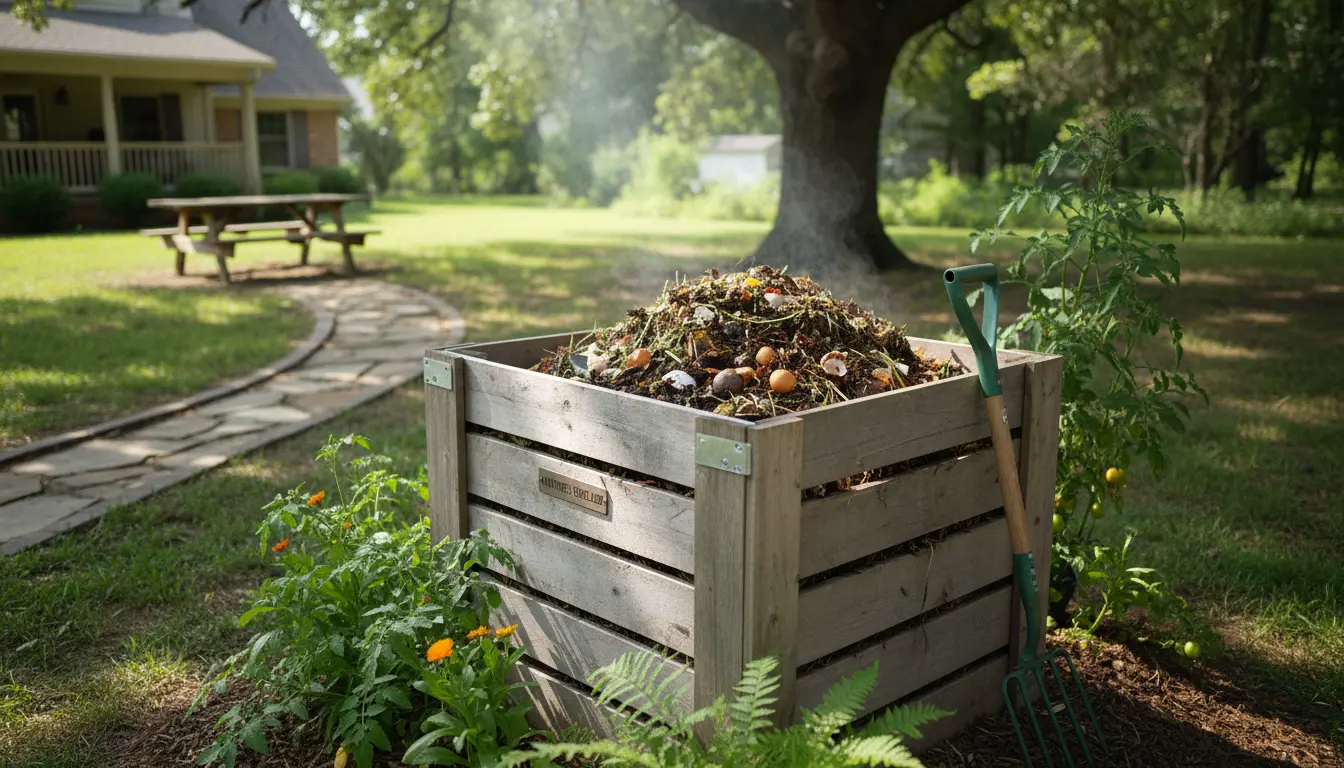
Why Home Composting Matters
Home composting turns kitchen scraps and yard waste into nutrient-rich material for your garden. It reduces landfill waste and lowers household carbon output.
Composting is suitable for small yards, balconies, and community gardens. With basic tools and consistent habits, anyone can compost successfully.
Choose the Right Compost Bin for Home Composting
Select a bin based on space, budget, and maintenance preference. Options include tumblers, stationary bins, and enclosed worm bins for vermicompost.
Consider airflow, drainage, and access. A good bin keeps pests out and retains the right moisture level.
Common Bin Types
- Tumbler: Easy turning, faster decomposition, ideal for small yards.
- Stationary bin: Low cost, larger capacity, requires manual turning with a fork.
- Vermicompost bin: Uses worms to break down food waste, great for indoor use and small spaces.
Basic Home Composting Materials
Compost needs a balance of carbon-rich (brown) and nitrogen-rich (green) materials. Aim for a roughly 3:1 ratio by volume of browns to greens.
Examples of browns and greens help you decide what to add each week.
Brown Materials (Carbon)
- Dry leaves, shredded cardboard, paper, straw
- Woody prunings, sawdust (small amounts)
Green Materials (Nitrogen)
- Vegetable peels, fruit scraps, coffee grounds
- Fresh grass clippings, green plant trimmings
Step-by-Step Home Composting Process
Follow a simple routine to maintain a healthy compost pile. Regular attention prevents odors and speeds decomposition.
Getting Started
- Place the bin in a shaded, level spot with good drainage.
- Add a 4–6 inch layer of coarse browns for airflow (twigs or straw).
- Alternate layers: add greens, then cover with browns to limit smells and pests.
Ongoing Maintenance
- Turn or aerate the pile once a week for hot composting.
- Keep moisture like a wrung-out sponge; too dry slows decomposition.
- Chop or shred large items to speed breakdown.
Troubleshooting Common Issues in Home Composting
Small problems are normal and fixable. Address the root cause rather than removing materials unnecessarily.
Bad Smell
Cause: Too much green material or poor aeration. Fix: Add browns and turn the pile to reintroduce oxygen.
Pests or Flies
Cause: Exposed food scraps or meat/dairy in the bin. Fix: Bury food under browns, avoid meat and dairy, or use a sealed bin.
Slow Decomposition
Cause: Pile too dry, too cold, or with large pieces. Fix: Add water, insulate the bin in cold weather, and chop materials finer.
Compost can reach temperatures above 130°F (54°C) in a well-managed hot pile, killing weed seeds and pathogens. Regular turning helps maintain these temperatures.
Using Finished Compost
Finished compost is dark, crumbly, and earthy-smelling. Use it as a soil amendment, mulch, or potting mix ingredient.
Application ideas include top-dressing lawns, mixing into garden beds, and enriching container soil.
Small Real-World Example: A Beginner Case Study
Sarah, a four-person household in a suburban backyard, started a tumbling compost bin. She collected kitchen scraps in a countertop pail and emptied it twice a week into the tumbler.
She balanced additions of greens with shredded cardboard and turned the tumbler weekly. After three months, Sarah harvested rich compost and used it to top her vegetable beds, noticing healthier plants the next season.
Practical Tips for Successful Home Composting
- Keep a small kitchen pail with a lid to make daily collection simple.
- Chop or blend tough scraps—blended smoothies and cooked vegetables break down faster.
- Record additions and turning schedule to learn what ratio works for your climate.
- Use a thermometer if aiming for hot composting; 130–160°F is ideal for pathogen control.
Quick Checklist Before You Start Home Composting
- Choose bin type and location
- Gather brown and green materials
- Set a routine for turning and moisture checks
- Keep out meat, dairy, and pet waste to avoid pests
Home composting is a low-cost, high-impact step toward sustainable living. With a suitable bin, balanced materials, and consistent care, you can turn everyday waste into a valuable garden resource.