
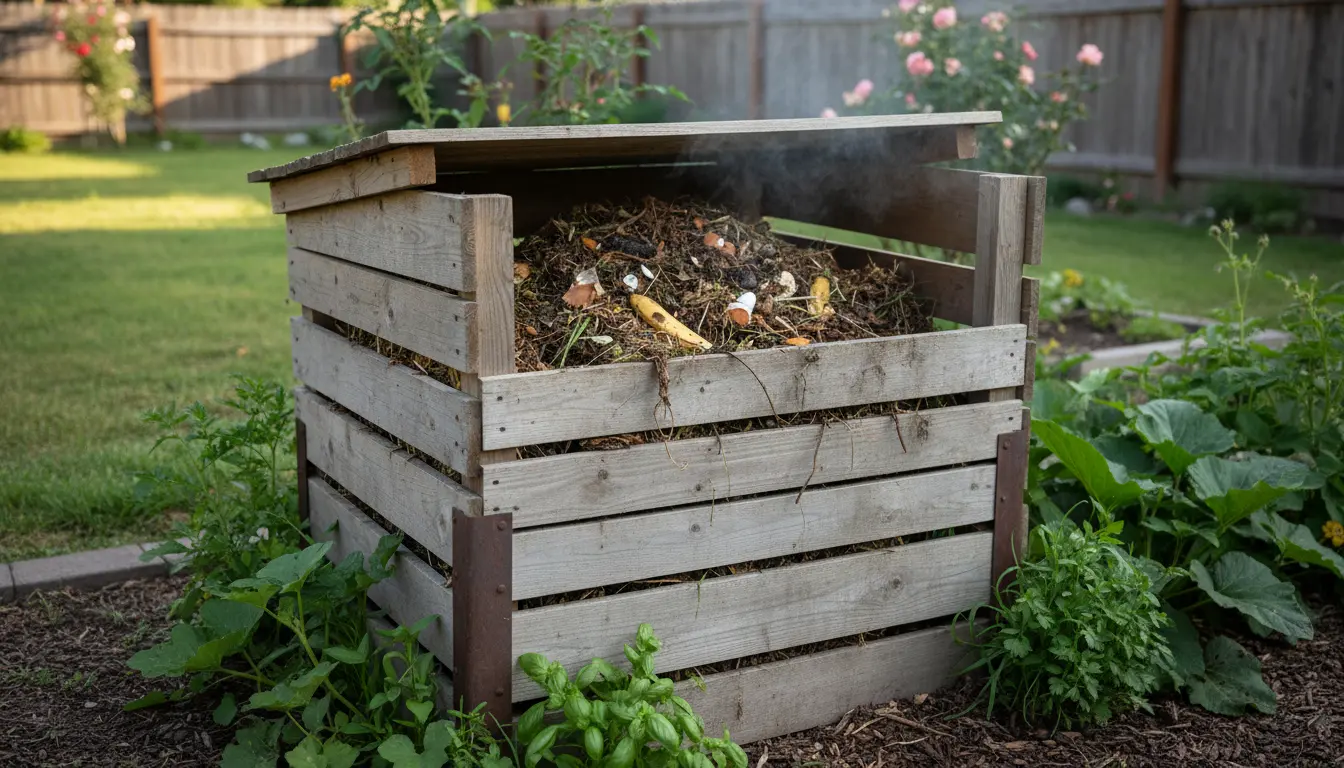
Composting at home turns kitchen scraps and yard waste into rich soil for gardens and potted plants. This guide explains what to collect, how to set up a bin, and simple maintenance to produce usable compost in months.
Why Choose Home Composting
Home composting reduces household waste and improves soil health without buying chemical fertilizers. It also saves money on trash collection and supports a circular approach to organic materials.
What You Need to Start Composting at Home
Starting home composting requires minimal tools and a basic plan. Choose from simple methods that fit your space and lifestyle.
Essential Materials for Home Composting
- Browns: dry leaves, shredded paper, cardboard, straw.
- Greens: fruit and vegetable scraps, coffee grounds, fresh grass clippings.
- A bin: a plastic or wooden compost bin, tumbler, or a simple heap in a corner of the yard.
- Tools: garden fork or pitchfork for turning, a small shovel, and a kitchen scrap container with a lid.
Choosing a Compost Bin for Home Composting
Select a bin based on space and effort. Tumblers speed up aeration but cost more. Open bins are cheap and effective if you turn the pile regularly.
Where to Place Your Compost Bin
Place the bin on bare soil if possible to allow worms to enter. A partly shaded spot helps maintain moisture and prevents the pile from drying out in hot weather.
Step-by-Step Home Composting Process
Follow these steps to build and maintain a healthy compost pile that breaks down efficiently.
1. Build the Base Layer
Start with coarse materials like small branches or straw to allow airflow at the bottom. This helps drainage and prevents anaerobic pockets.
2. Alternate Greens and Browns
Layer greens and browns in roughly equal volume. A good rule is two to three parts browns to one part greens by volume to balance carbon and nitrogen.
3. Keep It Moist and Aerated
Compost should feel like a damp sponge. Water lightly if it dries out. Turn the pile every 1–2 weeks to introduce oxygen and speed decomposition.
4. Monitor Temperature
A hot pile (up to 140°F or 60°C) indicates fast activity and kills many weed seeds. If the pile cools, turning and adding greens can reactivate it.
Troubleshooting Common Problems with Home Composting
Even simple systems can run into issues. Here are common problems and practical fixes for home composting.
- Smelly pile: Add more browns and turn the pile to add air.
- Pile too dry: Add water and more greens or cover the bin to retain moisture.
- Slow decomposition: Chop materials smaller, add nitrogen-rich greens, and increase turning.
- Fruit flies: Bury food scraps under a layer of browns or cover the kitchen pail and empty often.
Quick Tips to Improve Home Composting
- Chop or shred large items to speed breakdown.
- Maintain a balance of browns and greens for steady activity.
- Add garden soil or finished compost to introduce microbes.
- Use a thermometer if you want to track heat for faster results.
- Rotate compost locations if you have multiple bins to compare methods.
Composting diverts organic waste from landfills where it would produce methane, a potent greenhouse gas. Properly managed composting produces beneficial humus and helps lock carbon in soil.
Small Case Study: Urban Balcony Composting
Maria, an apartment gardener, started a 20-liter tumbler on her balcony. She added kitchen scraps and shredded paper in a 1:2 greens-to-browns ratio and turned the tumbler twice a week.
Within four months she had dark, crumbly compost she mixed into potting soil. Her tomato plants produced larger fruit, and she reduced trash volume by nearly half.
How to Use Finished Compost from Home Composting
Finished compost looks dark and crumbly and smells earthy. Use it as a soil amendment, top dressing for lawns, or as part of potting mixes.
For garden beds, mix 1–3 inches of finished compost into the top 6–8 inches of soil. For potted plants, replace up to 30% of potting mix with compost to avoid water retention issues.
Final Checklist for Successful Home Composting
- Collect and separate greens and browns at the source.
- Choose an appropriate bin and location.
- Maintain moisture and turn regularly.
- Troubleshoot odors and pests quickly by adjusting layers.
- Harvest finished compost for healthier soil and plants.
Home composting is a practical and low-cost step toward sustainable living. With basic materials and short weekly care, most households can transform organic waste into valuable compost within months.