
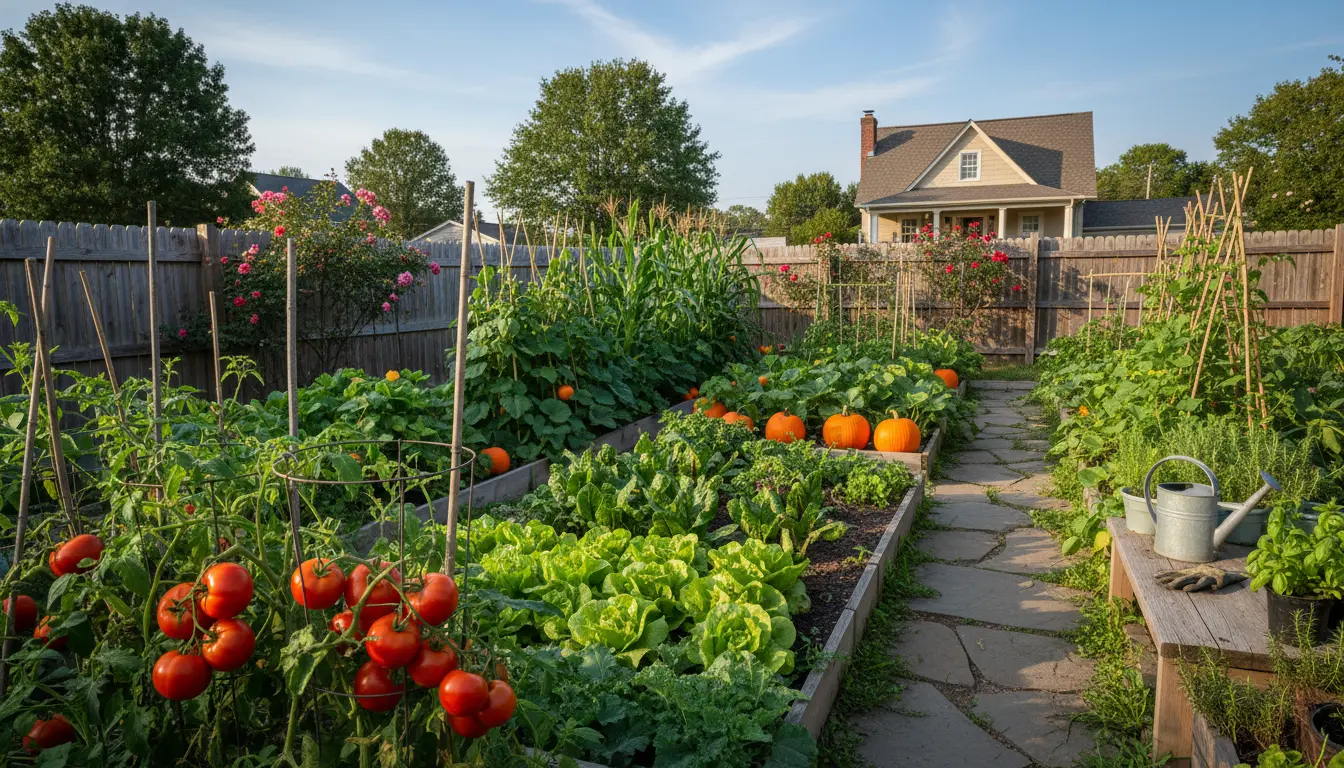
Starting a vegetable garden is a practical way to grow fresh food, save money, and enjoy time outdoors. This guide walks through the essential steps to start a vegetable garden whether you have a backyard, balcony, or small raised bed.
Choose the Right Location to Start a Vegetable Garden
Vegetable plants need sunlight, water access, and good drainage. Pick a spot that gets at least 6 hours of direct sun per day for most vegetables.
Consider these site factors before you start a vegetable garden:
- Sunlight: 6–8 hours daily is ideal.
- Water: Close to a hose or irrigation source.
- Drainage: Avoid low spots that hold water after rain.
- Access: Easy to reach for planting, weeding, and harvesting.
Plan Your Layout and What to Plant
Start small and choose easy-to-grow vegetables. Good beginner choices include tomatoes, lettuce, radishes, beans, and herbs.
Plan rows or beds based on space. Raised beds can improve soil and drainage, while containers work for balconies.
Select Vegetables Based on Season
Match crops to your local growing season. Plant cool-season crops like lettuce and spinach in early spring or fall. Warm-season crops like tomatoes and peppers belong after the last frost.
- Cool-season: Lettuce, spinach, peas, radish.
- Warm-season: Tomato, pepper, cucumber, squash.
Prepare Soil to Start a Vegetable Garden
Healthy soil is the most important factor for productive vegetables. Test soil or assume it needs improvement if you are unsure.
Basic soil steps:
- Remove weeds and debris.
- Add 2–4 inches of compost and mix into the top 6–8 inches of soil.
- Check pH if possible; most vegetables prefer pH 6.0–7.0.
Use Raised Beds or Containers
Raised beds warm faster in spring and allow better root growth. Use a mix of garden soil, compost, and coarse sand or perlite for containers.
Planting: Seeds and Seedlings
Decide whether to start from seed or use nursery seedlings. Seeds are cheaper, but seedlings give a head start.
Follow seed packet instructions for spacing and depth. Plant taller crops on the north side of beds to avoid shading shorter plants.
Watering and Feeding Your Vegetable Garden
Consistent moisture helps vegetables set fruit and grow evenly. Water deeply 1–2 times per week rather than lightly every day.
Mulch around plants to retain soil moisture and suppress weeds. Use organic mulch like straw or shredded leaves.
- Watering tip: Early morning reduces evaporation and disease risk.
- Fertilizing: Use balanced organic fertilizer or compost tea as needed.
Basic Pest and Disease Management
Monitor plants often for pests and early disease signs. Early action prevents spread and reduces damage.
Practical controls:
- Handpick larger pests like caterpillars and beetles.
- Use row covers to protect seedlings from insects.
- Rotate crops each year to reduce soil-borne disease.
When to Use Organic Sprays
Apply neem oil or insecticidal soap for soft-bodied insects. Use fungicides only when necessary and follow label directions.
Harvesting and Ongoing Care
Harvest vegetables at their peak for best flavor and to encourage continued production. Pick regularly—many plants produce more when harvested often.
Continue to add compost and keep beds tidy. At season end, remove spent plants and add them to your compost pile.
Small Real-World Example: Balcony to Table in Six Weeks
Case study: Rosa had a 6-foot balcony and wanted fresh salad greens. She used two 12-inch containers, filled them with potting mix and compost, and planted mixed lettuce seeds.
Within six weeks she harvested baby greens, with continuous sowing every two weeks providing fresh salad for three months. Key steps were consistent watering, partial shade in hot afternoons, and weekly light feeding.
Quick Checklist to Start a Vegetable Garden
- Choose a sunny location with good water access.
- Pick beginner-friendly crops and plan your layout.
- Improve soil with compost and consider raised beds.
- Plant seeds or seedlings according to season.
- Water deeply, mulch, and monitor for pests.
- Harvest regularly and rotate crops yearly.
Starting a vegetable garden is manageable with simple planning and routine care. Begin small, learn from each season, and expand as you gain confidence. Fresh homegrown vegetables are an achievable reward for modest effort.