
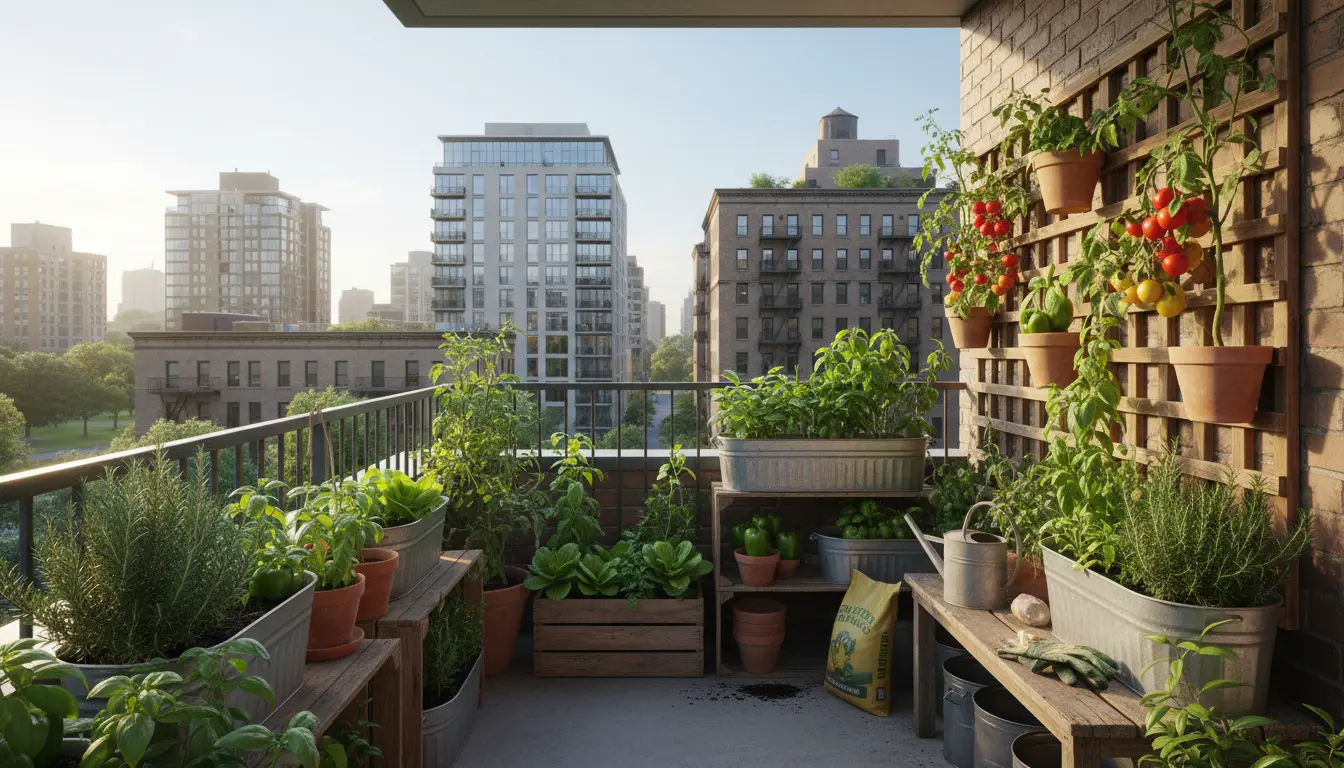
Why choose small space vegetable gardening
Growing vegetables on a balcony turns unused space into a productive source of fresh food. It fits apartments, patios, and other compact areas where traditional gardens aren’t possible.
The approach focuses on containers, lightweight soil, and plant selection to maximize yields without heavy labor. This guide gives clear steps to start and maintain a balcony garden successfully.
Planning your balcony garden: site, weight, and sunlight
Assess sunlight first. Most vegetables need 5–8 hours of direct sun. Note sun patterns over several days to choose the best spot.
Consider balcony weight limits and railing rules. Use lightweight containers and avoid overloading with heavy soil and water.
Checklist: balcony site assessment
- Measure available square footage and railing length.
- Record hours of direct sunlight and wind exposure.
- Check building rules about planters on railings and drainage.
- Estimate maximum safe weight for planters and stands.
Choosing containers and soil for small space vegetable gardening
Container choice affects root health and watering frequency. Choose containers with drainage holes and adequate depth for the crops you select.
Use high-quality potting mix designed for containers—avoid garden soil. Potting mixes retain moisture yet drain well and include nutrients essential for container plants.
Container size recommendations
- Leafy greens: 6–8 inch pots or troughs.
- Herbs and bush tomatoes: 8–12 inch pots.
- Determinate tomatoes and peppers: 12–18 inch pots.
- Vining crops (cucumbers, pole beans): deep 15–20 inch containers with trellis support.
Best crops for a balcony garden
Select crops that fit your space, sunlight, and maintenance time. Start with easy, quick-yield varieties to build confidence and harvest sooner.
- Leafy greens: lettuce, spinach, arugula.
- Herbs: basil, parsley, chives, mint (in separate pots).
- Compact vegetables: bush beans, dwarf tomatoes, peppers.
- Fast growers: radishes, baby carrots, microgreens.
Planting, watering, and feeding
Plant at recommended depths and space containers to allow air flow. Mulch the top of pots to reduce evaporation and maintain stable soil temperatures.
Watering frequency depends on container size, weather, and plant type. Check soil moisture daily during hot weather and water deeply when the top 1–2 inches of soil are dry.
Fertilizer and nutrient tips
- Use a balanced slow-release fertilizer at planting, then supplement with liquid feed every 2–4 weeks.
- Watch for yellowing leaves or stunted growth as signs of nutrient deficiency.
- Flush containers occasionally to prevent salt buildup from fertilizers.
Pest management and common problems for balcony gardens
Pests can be managed with preventive care and targeted action. Regularly inspect plants for aphids, whiteflies, and fungal signs.
Use handpicking, insecticidal soap, or row covers as first-line defenses. Avoid broad-spectrum pesticides that harm beneficial insects.
Common issues and quick fixes
- Wilting: check water and root health; repot if roots are root-bound.
- Yellow leaves: assess drainage, overwatering, or nutrient shortage.
- Pests: spray with water, use neem oil or insecticidal soap when needed.
Many compact tomato varieties yield fruit in 60–70 days, making them ideal for balcony gardens with limited space and time.
Seasonal care and crop rotation on a balcony
Plan crops seasonally to make continuous use of your balcony. Rotate crop families between containers or refresh potting mix annually to reduce disease risk.
Use succession planting: start another round of quick greens or herbs as early crops finish to maintain steady harvests.
Small Space Vegetable Gardening case study
Case study: Maria, a city renter with a 6-foot balcony, grew a productive container garden over one season. She used four 12-inch pots and two railing planters.
Her crop choices included one compact tomato, two pepper plants, lettuce in a trough, and basil in a small pot. She harvested weekly salads and several pounds of tomatoes over three months.
Key actions Maria took: she tracked sunlight, used lightweight potting mix, installed a small drip watering system, and rotated microgreens between tomato cycles.
Practical tips and final checklist for starting a balcony garden
Keep a short checklist to start efficiently. Focus on sunlight, container selection, crop choice, and a simple watering plan.
- Map sunlight and measure space before buying containers.
- Start with 3–6 containers rather than dozens—scale gradually.
- Choose fast, compact varieties labeled for containers.
- Install simple supports for vining plants and lightweight shelving if needed.
- Record planting dates and harvests to refine planning next season.
Conclusion: sustainable harvests from small spaces
Small space vegetable gardening on a balcony is practical and rewarding when planned with sunlight, container choice, and appropriate crops. Regular care and simple systems make the difference between a few plants and a continuous supply of fresh produce.
Start small, record results, and expand based on what grows well in your unique microclimate. With basic planning and consistent maintenance, a balcony can deliver delicious vegetables year after year.