
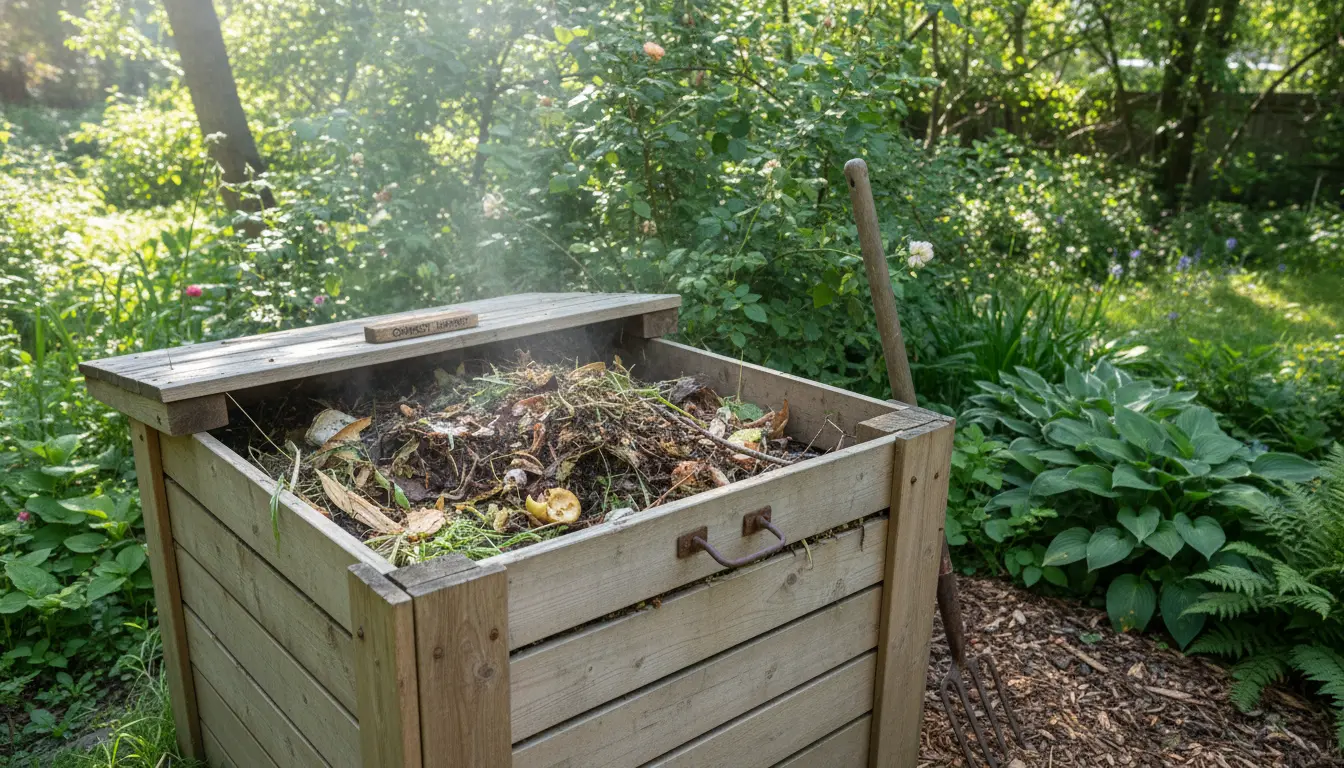
Why composting at home matters
Composting at home turns kitchen scraps and yard trimmings into a useful soil amendment. It reduces household waste and improves plant health without chemical fertilizers.
Even small efforts lower landfill waste and greenhouse gas emissions. Home composting is low cost and scalable for apartments, yards, and community plots.
Choose the right method for composting at home
Select a method based on space, effort, and how fast you want compost. The three common choices are backyard bins, tumblers, and worm bins.
- Backyard bin: Good for yards. Requires turning with a pitchfork.
- Tumbler: Easier turning, faster results. Works for small to medium households.
- Worm bin (vermicomposting): Ideal for apartments or cold climates. Uses food scraps and red wiggler worms.
Where to place your compost
Pick a well-drained, partly shaded spot that’s easy to access. Keep the bin on soil or a breathable base to allow worms and microbes to enter.
Avoid placing bins too close to living areas if odors are a concern. Proper management keeps smells minimal.
What to compost: materials checklist for composting at home
Compost needs a balance of carbon-rich “browns” and nitrogen-rich “greens.” Aim for roughly 25–30 parts carbon to 1 part nitrogen by volume.
- Browns (carbon): dry leaves, straw, shredded cardboard, paper towels.
- Greens (nitrogen): fruit and vegetable scraps, coffee grounds, fresh grass clippings.
- Not compostable: meat, dairy, fats, diseased plants, pet waste from carnivores.
Quick examples of mix ratios
- Small kitchen scraps: 1 part greens to 2–3 parts browns.
- Fresh lawn clippings: Mix with dry leaves to avoid compacting.
- Shredded paper: Use sparingly; wet paper can mat and block airflow.
Step-by-step process to start composting at home
- Set up the bin on soil or a breathable base.
- Add a 3–4 inch base layer of browns for drainage and airflow.
- Alternate small layers of greens and browns as you add materials.
- Keep moisture like a wrung-out sponge. Add water in dry spells.
- Turn the pile every 1–3 weeks to aerate and speed decomposition.
- Harvest finished compost when dark, crumbly, and earthy-smelling (usually 2–6 months).
Speed tips for composting at home
- Chop or shred materials to increase surface area.
- Maintain a consistent moisture level; too wet smothers microbes.
- Turn regularly to add oxygen that speeds up breakdown.
- Add a handful of finished compost or garden soil to introduce microbes.
Troubleshooting common problems with composting at home
Smells usually mean the pile is too wet or has too many greens. Add browns and turn more often.
Slow breakdown often results from a lack of oxygen, large materials, or a cold pile. Chop materials, insulate the pile, and turn to warm it up.
- Fruit flies: Bury food scraps under a layer of browns and close the bin tightly.
- Rodents: Avoid meat, dairy, and large fruit pits; use a secure bin design.
- Excess heating: If the pile is very hot, turn it to cool and re-balance greens and browns.
How to use finished compost from home
Finished compost is a dark, crumbly material with an earthy smell. Use it as a soil amendment or mulch.
Topdress lawns, mix into planting beds, or use as potting mix component (up to 30%). Compost improves soil structure, water retention, and nutrient content.
Application rates
- Vegetable beds: 1–2 inches spread and lightly worked into the topsoil.
- Flower beds and shrubs: 1–3 inches around plants, keeping compost away from stems.
- Potting mix: Replace up to 20–30% of the mix with compost for nutrient boost.
Real-world example: suburban family starts composting at home
Case study: A family of four converted a corner of their backyard into a three-bin system. They collected kitchen scraps in a small counter pail and added dry leaves from fall yard work.
After four months of regular turning and balance tweaks, they harvested compost that reduced their store-bought fertilizer use by half. Their vegetable yields improved and kitchen waste dropped noticeably.
Final checklist for successful composting at home
- Choose a bin that fits your space and workload.
- Balance browns and greens; keep the pile moist but not soaked.
- Turn the pile regularly and monitor temperature if possible.
- Avoid problematic items like meat and pet waste.
- Use finished compost to build soil health and reduce waste costs.
Composting at home is accessible to most households with a little planning and regular care. Start small, learn from your first cycle, and expand the system as you gain confidence.