
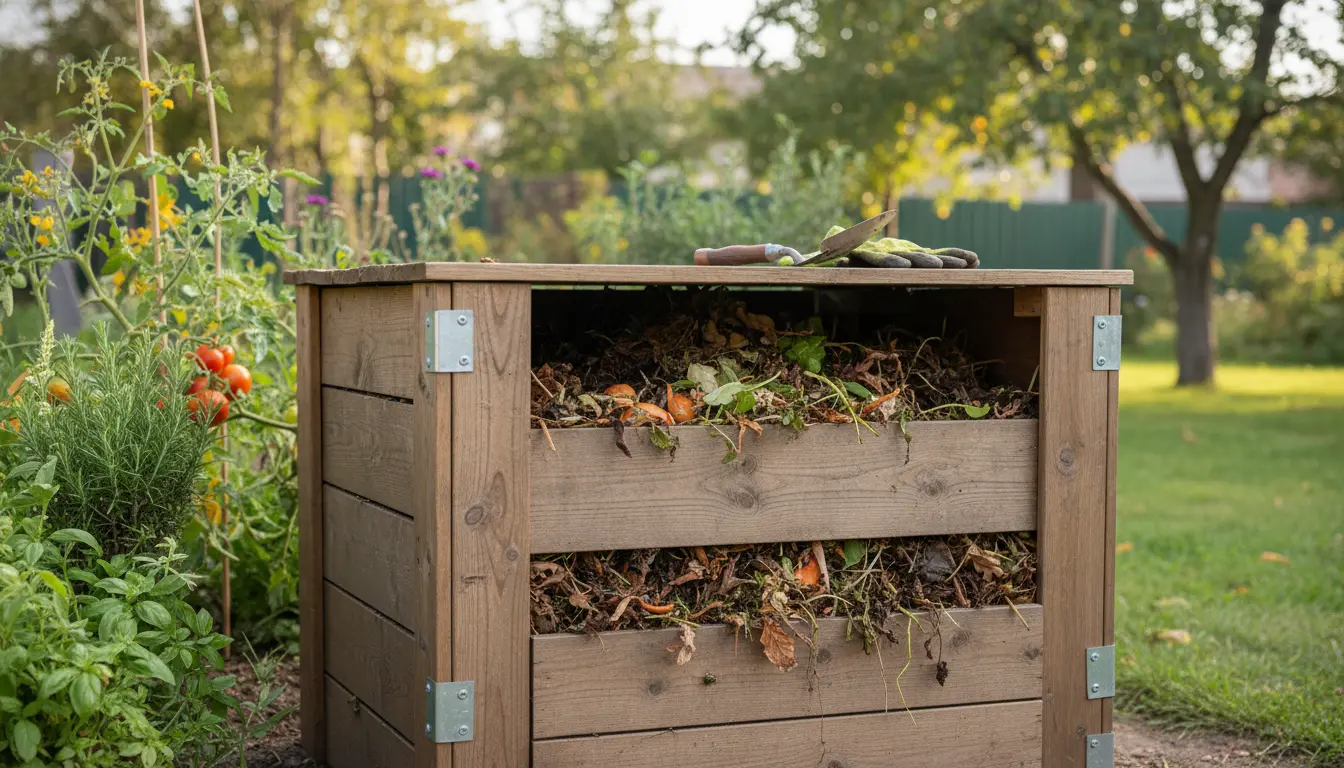
Home composting turns kitchen scraps and yard waste into nutrient-rich soil amendment. This guide explains how to start and maintain a compost bin with simple, actionable steps.
Getting Started with Home Composting
Choose a site for your compost bin that is convenient and well-drained. A shaded spot close to the kitchen makes it easier to add material regularly.
Select the compost system that fits your space and routine. Options include open piles, tumblers, and stationary bins.
Choosing a Compost Bin
Consider these common choices and their benefits:
- Open pile: Low cost, flexible size, but less tidy.
- Stationary bin: Contained and simple, good for yard waste.
- Tumbler: Faster mixing and easier turning, ideal for smaller households.
What to Compost: Greens and Browns
Balance is key. Compost needs a mixture of nitrogen-rich “greens” and carbon-rich “browns” to decompose efficiently.
- Greens (nitrogen): vegetable scraps, fruit peels, coffee grounds, fresh grass clippings.
- Browns (carbon): dry leaves, straw, shredded paper, wood chips.
A simple rule is roughly 2–3 parts browns to 1 part greens by volume. Adjust to avoid bad odors or slow decomposition.
What Not to Compost
- Meat, dairy, and oils — attract pests and cause odors.
- Diseased plant material or weeds with mature seeds — risk spreading problems.
- Pet waste — contains pathogens not safe for garden use.
Building and Maintaining a Healthy Compost Bin
Start with a layer of coarse material to promote airflow. Alternate layers of greens and browns as you add material.
Maintain moisture like a wrung-out sponge. Too dry and decomposition slows; too wet and it smells.
Turning and Aeration
Oxygen supports the microbes that break down organic matter. Turn the pile every 1–3 weeks for faster composting.
If you use a tumbler, rotate on a schedule. For a stationary bin, use a pitchfork to mix layers and introduce air.
Troubleshooting Common Problems
Problems are usually easy to fix once you identify the cause.
- Bad smell: Add more browns and turn the pile to aerate.
- Slow decomposition: Chop material into smaller pieces and ensure moisture and aeration.
- Pests: Avoid adding meat or dairy, and use a closed bin or wire mesh around the pile.
Temperature and Timing
A hot pile (131–160°F or 55–70°C) decomposes quickly and kills many pathogens. Cold composting at ambient temperature takes longer but still produces good compost.
Expect finished compost in 3–12 months depending on method, particle size, temperature, and how often you turn the pile.
Composting can reduce household food waste by up to 30 percent, depending on how much raw organic material you generate.
Using Finished Compost
Finished compost looks dark, crumbly, and earthy. Use it to enrich garden soil, topdress lawns, or make potting mixes.
- Soil amendment: Mix 1–3 inches into garden beds annually.
- Seed starting: Blend one part compost with two parts sterile potting mix.
- Mulch: Spread a thin layer around established plants to retain moisture.
Testing Compost Readiness
Key signs of ready compost: uniform dark color, crumbly texture, and no recognizable food scraps. A gentle smell of earth confirms maturity.
Small Real-World Example
A household of three in Portland started a 55-gallon tumbler. They collected kitchen scraps in a counter caddy and added yard leaves weekly.
By shredding larger pieces and turning the tumbler twice a week, they produced usable compost in about four months. Their vegetable beds showed improved soil structure and stronger seedling growth the next season.
Quick Checklist to Start Home Composting
- Choose a bin type and location.
- Collect greens and browns separately.
- Layer materials and keep moisture balanced.
- Turn the pile regularly for aeration.
- Monitor for pests, odors, and moisture issues.
Home composting is a straightforward way to reduce waste and improve your garden soil. With basic balance, regular aeration, and a little attention to moisture, most households can produce quality compost within a year.