
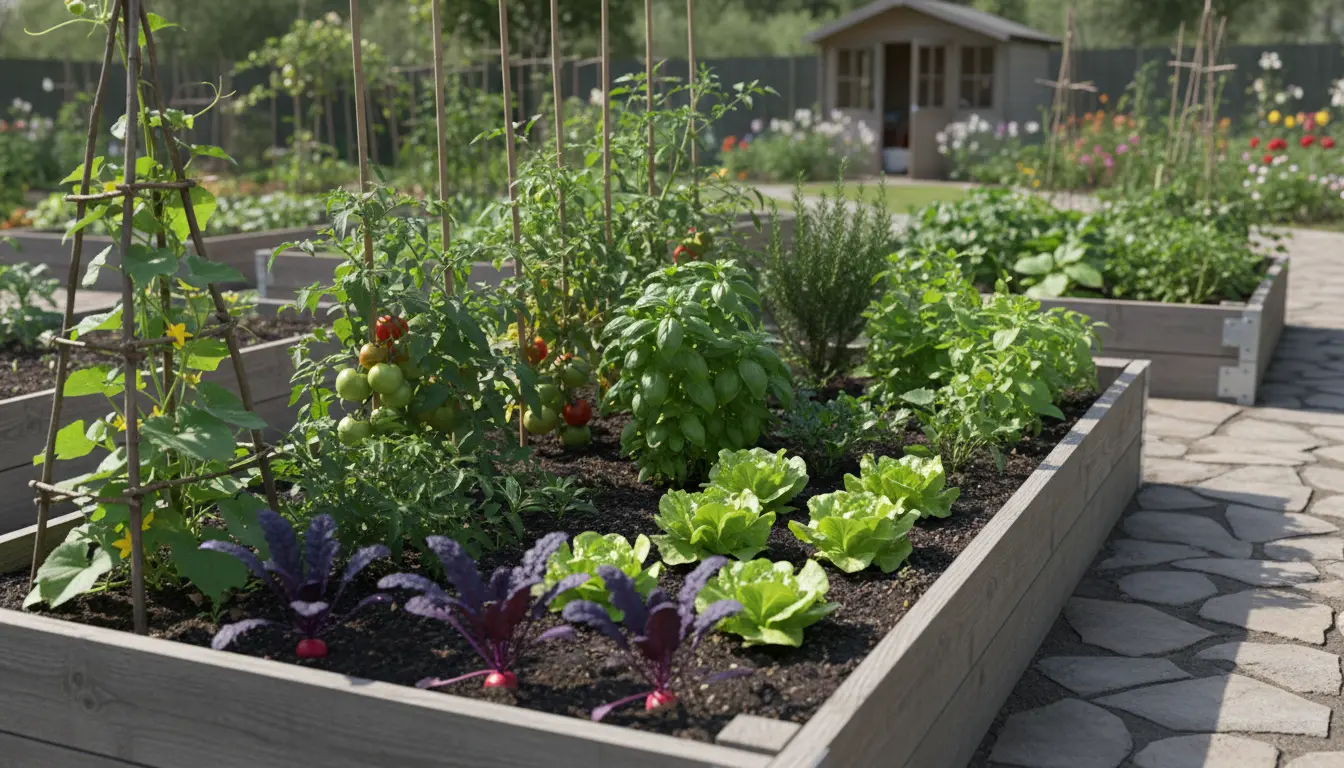
Begin with a clear plan for your small vegetable garden
Starting a small vegetable garden begins with a simple plan. Decide how much time you can spend each week and what vegetables you eat most often.
Pick a spot with at least 6 hours of sunlight and easy access to water. If the yard has limited space, consider containers or a single raised bed.
Choose the right site and layout for a small vegetable garden
Sun, water, and soil access are the three site essentials. Most vegetables prefer full sun and regular watering.
Keep paths narrow and beds compact to make maintenance easier. A common size is a 4×8 foot raised bed because it provides enough space while keeping reach central.
Design options for small vegetable garden spaces
- Raised beds: Good drainage, easy soil control, ergonomic for planting and weeding.
- Containers: Ideal for patios, balconies, or uneven ground.
- Vertical gardens: Use trellises or wall systems for vining crops like beans and cucumbers.
Select soil and prepare planting areas for a small vegetable garden
Vegetables need loose, nutrient-rich soil. If using native soil, add compost and a light till to loosen compacted areas.
For raised beds, a common mix is 50% topsoil, 25% compost, and 25% aeration material like perlite or coarse sand. This improves drainage and fertility.
Soil testing and amendments
- Test pH with a home kit or local extension service. Most vegetables prefer pH 6.0 to 7.0.
- Add lime if soil is too acidic or sulfur if too alkaline, following test recommendations.
- Work in 2–4 inches of compost each season to maintain fertility.
Pick vegetables suited to a small vegetable garden
Choose high-value, space-efficient crops to maximize yields from a small area. Leafy greens, herbs, compact tomatoes, peppers, bush beans, and radishes grow well in small plots.
Use succession planting to get continuous harvests. Sow fast crops like radishes between slower ones like tomatoes to use space efficiently.
Example planting list for a 4×8 small vegetable garden
- 2 compact determinate tomatoes
- 4 pepper plants
- Several rows of lettuce or spinach for successive harvests
- 1 trellis side for pole beans or cucumbers
- Herb corner: basil, parsley, chives
Planting schedule and seedling care for a small vegetable garden
Start with seeds indoors for long-season crops or buy quality transplants from a local nursery. Follow seed packet dates for your climate zone.
Harden off seedlings by exposing them to outdoor conditions for a week before planting. This reduces transplant shock and improves survival.
Watering and fertilizing basics
- Water deeply once or twice a week rather than shallow daily watering. Adjust for hot or windy weather.
- Use a balanced organic fertilizer every 3–4 weeks or side-dress with compost midseason.
- Mulch with straw or shredded leaves to retain moisture and suppress weeds.
Pest and disease management in a small vegetable garden
Monitor plants weekly for early signs of pests or disease. Address problems quickly to prevent spread in a small area.
Use physical controls first: hand-pick pests, use row covers, and encourage beneficial insects like ladybugs and lacewings.
Simple organic controls
- Neem oil or insecticidal soap for soft-bodied pests.
- Copper or sulfur sprays for common fungal issues, applied according to label instructions.
- Crop rotation: avoid planting same families in the same bed year after year.
Harvesting and record keeping for a small vegetable garden
Harvest often to encourage productivity. Many vegetables taste best when picked young and used quickly.
Keep a small garden journal with planting dates, varieties, and yields. Notes help you refine timing and crop choices each season.
Interplanting fast and slow crops can increase yield: you can harvest a crop like radishes within 30 days while tomatoes mature over months in the same bed.
Real-world example: a start-to-harvest mini case study
Case study: A homeowner converted a 4×8 unused lawn strip into a raised bed. They filled it with a 50/25/25 soil mix and planted two determinate tomatoes, four peppers, three rows of lettuce, and pole beans on a trellis.
In the first season they spent about 2 hours per week on watering and weeding. The garden produced fresh salad greens weekly and 12 pounds of tomatoes by late summer, covering several weeks of household consumption.
Maintenance tips to keep your small vegetable garden productive
- Stay consistent: short weekly tasks beat long monthly chores.
- Replace soil amendments each season with compost and a light organic fertilizer.
- Rotate plant families to reduce pest and disease buildup.
Final checklist to start your small vegetable garden
- Choose a sunny 4×8 or equivalent area.
- Prepare soil with compost and test pH.
- Select compact, high-value vegetables and plan succession plantings.
- Install irrigation or a simple watering schedule and mulch to conserve moisture.
- Monitor pests and keep a garden journal for improvements.
Follow these steps and you can establish a productive small vegetable garden in a single season. Keep records, start small, and expand as you gain experience.