
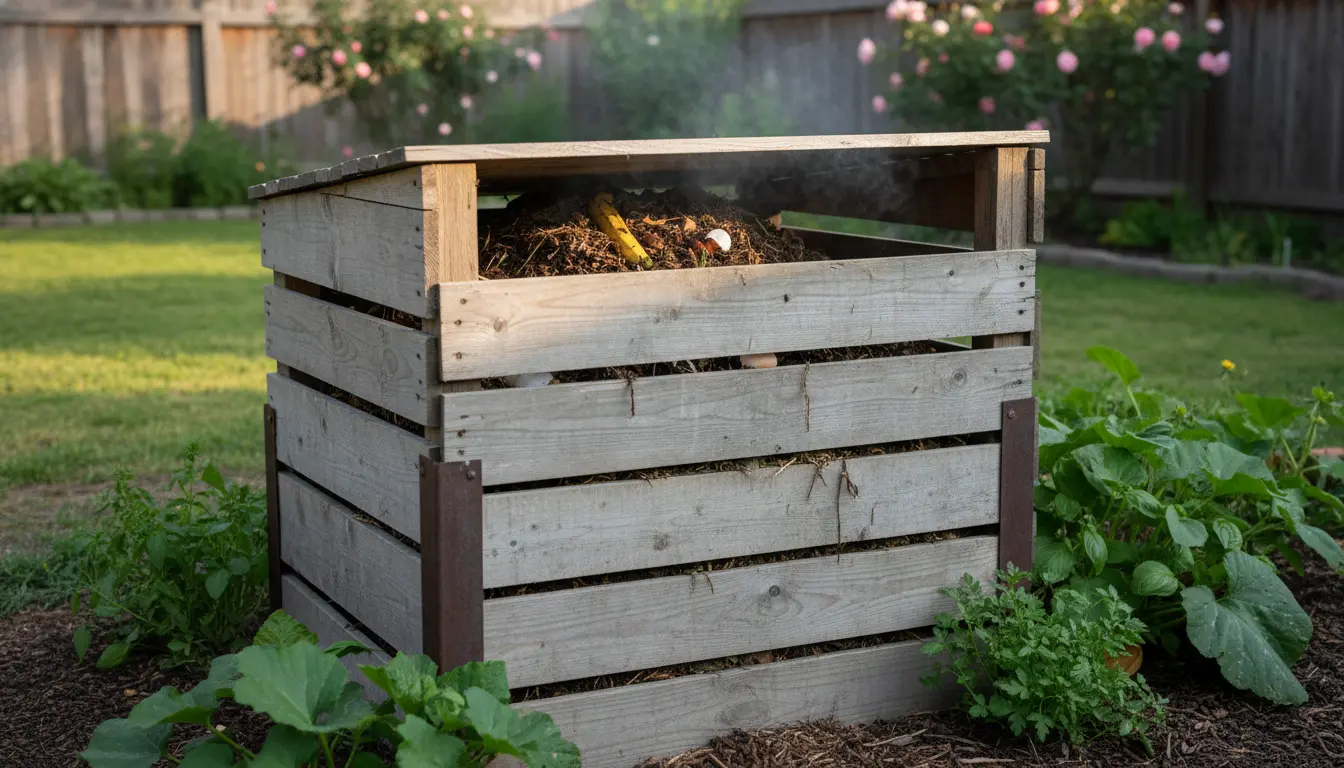
Composting at home converts kitchen and yard waste into nutrient-rich soil. This guide explains simple, practical steps to set up and maintain a home compost system that works for small households.
Why Home Composting Matters
Home composting reduces landfill waste and returns organic matter to the garden. It improves soil structure and feeds plants naturally without chemical fertilizers.
Home Composting Basics
There are a few core ideas to understand before you start: balance, aeration, moisture, and time. Getting these right makes composting reliable and low-effort.
What to Compost
Use a mix of “greens” and “browns”. Greens are nitrogen-rich and decompose quickly, while browns add carbon and structure.
- Greens: fruit and vegetable scraps, coffee grounds, fresh grass clippings.
- Browns: dry leaves, shredded cardboard, paper, small wood chips.
- Do not compost: meat, dairy, oils, diseased plants, pet waste.
Choosing a Compost Method
Select a method that fits your space and schedule. Popular options include a simple pile, a tumbler, and a bin with a lid.
- Compost pile: low cost, good for yards with space.
- Compost bin: tidy and contained, suitable for small yards.
- Tumbler: faster results, low odor, needs occasional turning.
Step-by-Step Setup for Home Composting
Follow these steps to start a functional compost system in a small backyard or on a balcony.
1. Pick a Location
Choose a semi-shaded spot with good drainage. Close access makes it easier to add materials regularly and retrieve finished compost.
2. Build a Base Layer
Start with coarse browns like twigs or straw to help air flow. A good base prevents compaction and improves decomposition.
3. Add Materials in Layers
Alternate greens and browns in layers about 2–4 inches thick. Aim for roughly a 2:1 or 3:1 ratio of browns to greens by volume for stable composting.
4. Keep It Moist and Aerated
Compost should feel like a wrung-out sponge. Add water during dry spells and turn the pile every 1–2 weeks to supply oxygen.
Troubleshooting Common Issues
Problems are easy to fix if you understand the signs. Odor, slow decomposition, and pests indicate specific imbalances.
Smelly Compost
Bad odors usually mean too much moisture or too many greens. Add dry browns and turn the pile to introduce air.
Slow Decomposition
If material breaks down slowly, check moisture and particle size. Shred large items and increase surface area by chopping scraps.
Pests and Fruit Flies
Avoid meats and oils. Bury food scraps under a layer of brown material and use a closed bin if pests are a problem.
How to Tell When Compost Is Ready
Finished compost is dark, crumbly, and earthy-smelling. Most backyard systems produce usable compost in 3–12 months depending on method and care.
Using Finished Compost
Apply finished compost as a soil amendment, mulch, or potting mix component. Use a 1–3 inch top dressing around plants or mix 10–25% compost into potting soil for container plants.
About 30 percent of household waste is compostable. Composting at home can cut organic waste sent to landfills and reduce methane emissions.
Small Case Study: Urban Apartment Composting
Sam, a city dweller with limited outdoor space, used a 20-liter indoor Bokashi bin followed by a small outdoor tumbling bin. Within six months Sam had enough compost to refresh two balcony planters.
The Bokashi system fermented kitchen scraps without odor, and the tumbling bin finished the material into usable compost. This combination suited limited space and a busy schedule.
Practical Tips for Success
Keep these simple practices in mind to maintain an effective compost system.
- Save kitchen scraps in a sealed container and empty them to the bin regularly.
- Chop or shred large items to speed decomposition.
- Rotate or turn the pile on a schedule to keep microbes active.
- Store a supply of dry browns like shredded paper for balance.
Quick Start Checklist
- Choose your method: pile, bin, or tumbler.
- Gather greens and browns before you begin.
- Set up a base layer and start layering materials.
- Monitor moisture and turn regularly.
- Harvest finished compost and use it in your garden.
Home composting is a practical, low-cost way to reduce waste and improve soil health. Start small, learn from your system, and adjust materials and care until it fits your routine.