
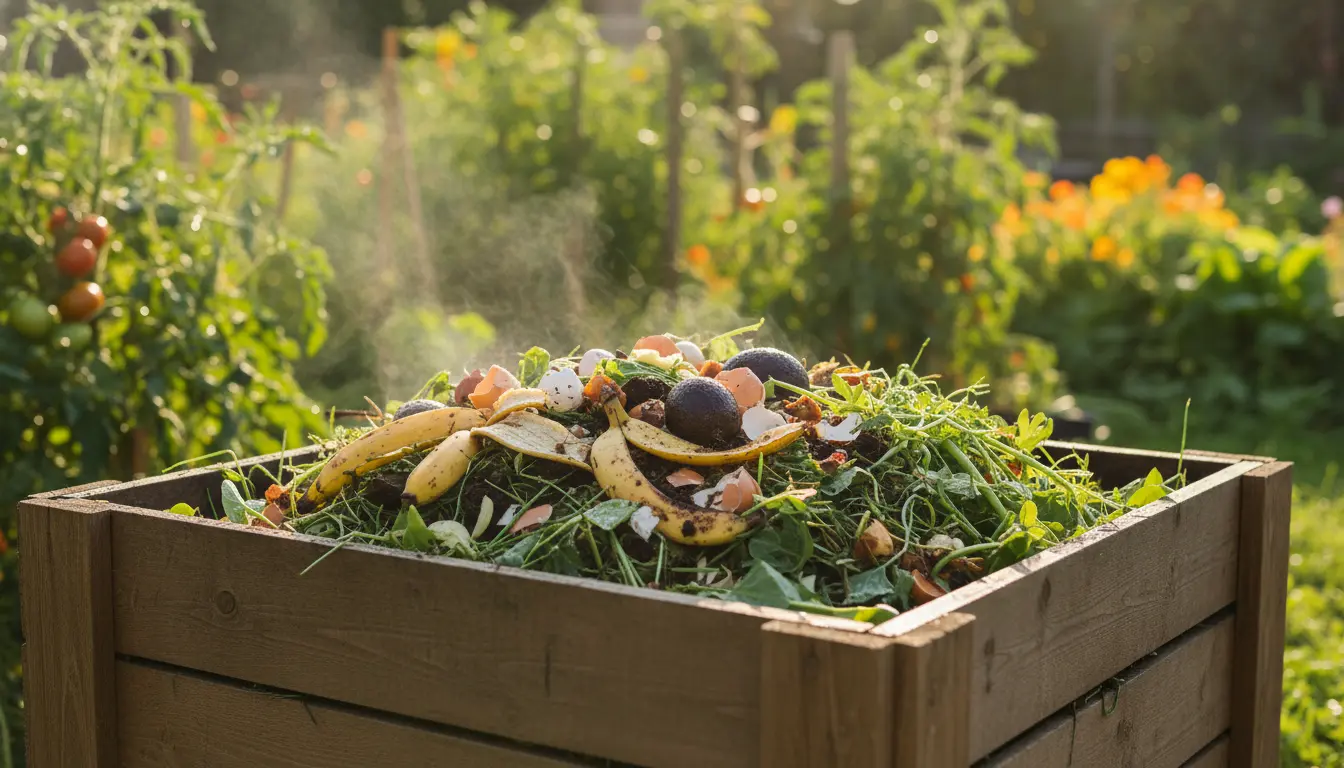
Why Start Home Composting
Composting at home turns kitchen and yard waste into valuable soil. It reduces trash volume and feeds your garden naturally.
This guide gives clear, practical steps for home composting for beginners. Follow these instructions to build a reliable system in a small space.
Home Composting for Beginners: Getting Started
Choose the right container for your space. Options include a simple plastic bin, a wooden tumbler, or a worm composting tray for indoor use.
Place the bin in a partially shaded spot with good drainage. A flat, firm surface makes maintenance easier.
What to Add to Your Compost
Balance is key. Compost needs carbon rich and nitrogen rich materials to decompose well.
- Carbon (brown): dry leaves, shredded paper, cardboard, straw.
- Nitrogen (green): vegetable scraps, coffee grounds, fresh grass clippings.
- Avoid: meat, dairy, oils, diseased plants, and pet waste.
How to Layer and Maintain
Start with a layer of coarse material for airflow, like small twigs. Alternate brown and green layers about 2 to 4 inches thick.
Keep the pile moist like a wrung-out sponge. Too dry slows decomposition; too wet causes odors and compaction.
Key Steps for Home Composting for Beginners
Follow these basic steps to keep your compost active and healthy.
- Chop or shred larger items to speed decomposition.
- Turn the pile every 1 to 2 weeks to add oxygen.
- Monitor temperature; a well-working pile warms to 120 to 150°F, but this is optional for small backyard piles.
- Add water during dry periods and dry browns if it becomes soggy.
Tools and Materials You Need
You do not need expensive equipment. Basic tools keep the process tidy and effective.
- Compost bin or tumbler
- Pitchfork or garden fork
- Kitchen scrap container with a lid
- Garden scissors or shears for chopping
Common Problems and How to Fix Them
Beginner composters often face the same issues. Quick fixes keep the pile working efficiently.
- Smell: Add dry browns and turn the pile to introduce air.
- Slow breakdown: Chop materials smaller and add nitrogen rich greens.
- Pests: Avoid meat and pet waste, secure the bin, and bury kitchen scraps within the pile.
Using Finished Compost
Compost is ready when it is dark, crumbly, and smells earthy. This usually takes 2 to 6 months depending on conditions.
Use finished compost as a top dressing, mix it into potting soil, or blend with garden beds to improve soil structure and nutrient content.
Adding a thin layer of finished compost to your garden each year can increase soil carbon and reduce the need for chemical fertilizers. A single household can divert hundreds of pounds of organic waste from landfill annually by composting.
Real-World Example: A Small Backyard Success
Case study: In a two-person household in Portland, a simple 80-gallon tumbler was used. They collected kitchen scraps in a counter container and added yard waste weekly.
After six months, they reduced weekly trash from one 30-gallon bag to one 15-gallon bag. Their veggie beds gained vigor and yielded larger tomatoes the following season.
Key actions were consistent turning, chopping larger scraps, and keeping a 2:1 ratio of browns to greens by volume.
Tips to Stay Consistent
Make composting routine by keeping a small, sealed container in the kitchen. Empty it into your outdoor bin every few days.
Label a jar or bag for shredded paper and keep a yard waste bucket near your work area. Small habits prevent pile imbalances.
Advanced Options for Beginners Who Want More
Consider vermicomposting if you want indoor composting or faster results in small spaces. Worm bins work well for apartments and produce rich worm castings.
Another option is a hot composting method that reaches higher temperatures for faster breakdown and pathogen kill, but it requires more active management.
Final Checklist for Home Composting for Beginners
- Choose an appropriate bin and location
- Collect and balance browns and greens
- Maintain moisture and aeration by turning regularly
- Monitor for pests and odors and adjust inputs
- Harvest finished compost when dark and crumbly
Start small and learn by doing. Composting for beginners is about steady habits, simple tools, and small adjustments. In time, the process becomes an easy part of daily life and a major benefit to your garden and the environment.