
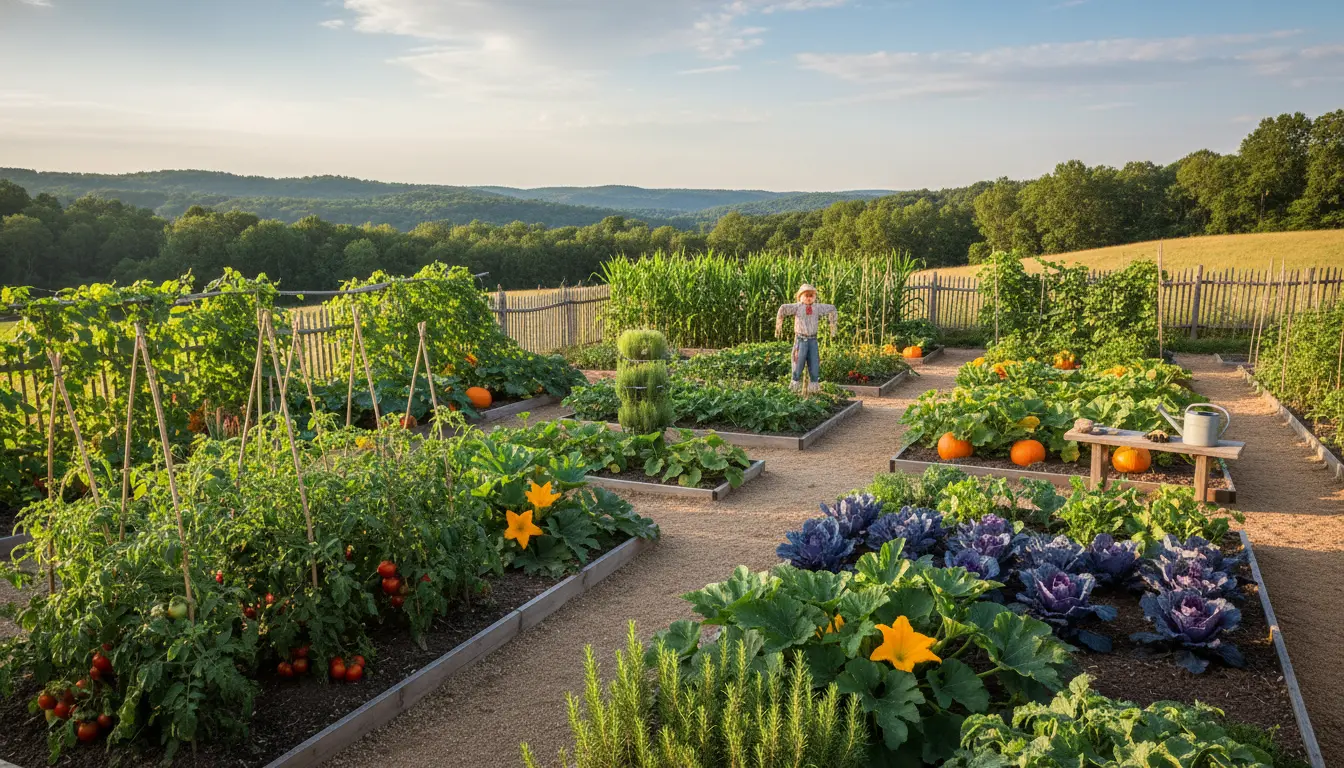
Why start a vegetable garden
Starting a vegetable garden at home gives you fresh produce, lower grocery bills, and a healthy outdoor activity. It also helps you control what goes on your food, from soil to watering and pest control.
Even a small patch or a few containers on a balcony can supply herbs and salad greens through the season. This guide explains how to start a vegetable garden with practical steps you can use now.
Planning your vegetable garden
Good planning reduces wasted time and increases yield. Begin by assessing space, sunlight, and how much time you can commit.
Choose location and soil
Select a spot with at least 6 hours of direct sunlight for most vegetables. Avoid low areas that collect water, and consider proximity to a water source.
Test the soil by feeling it and checking drainage. Loamy soil rich in organic matter is best. If your ground soil is poor, use raised beds or large containers with a good soil mix.
Pick vegetables for your climate
Choose plants suited to your local climate and growing season. Cool-season crops include lettuce, spinach, and peas. Warm-season crops include tomatoes, peppers, and beans.
Start with easy plants: radishes, lettuce, bush beans, and cherry tomatoes often succeed for beginners and teach basic care.
Step-by-step: How to start a vegetable garden
Follow these steps to establish a productive garden. Each step is practical and can be scaled to small or larger spaces.
- Measure and map your space. Draw a simple plan showing bed sizes, paths, and sun patterns. A 4×8 foot raised bed is a manageable standard.
- Prepare the soil or beds. Remove grass and weeds. For in-ground beds, loosen the top 8–12 inches and mix in compost. For raised beds, fill with a mix of topsoil, compost, and coarse material for drainage.
- Choose planting method. Start from seed for many crops to save money, or buy seedlings for faster results. Read seed packets for depth and spacing guidelines.
- Plant at the right time. Use your local last frost date to schedule planting. Cool-season crops go out earlier; warm-season crops wait until after frost risk passes.
- Mulch and water properly. Apply 2–3 inches of organic mulch around plants to retain moisture and reduce weeds. Water deeply at the base rather than frequent shallow sprays.
Essential tools and supplies
You don’t need fancy gear. Basic tools help you work efficiently and comfortably.
- Hand trowel and garden fork
- Pruning shears and gloves
- Watering can or hose with a gentle nozzle
- Compost or well-rotted manure
- Mulch (straw, wood chips, or shredded leaves)
Maintenance and common problems
Routine care keeps plants healthy and productive. Check the garden every few days to catch issues early.
Watering
Water in the morning when possible to reduce evaporation and disease risk. Most vegetables need about 1 inch of water per week, more in hot weather.
Use a simple rain gauge or stick to monitor soil moisture. Adjust frequency based on weather and plant type.
Pests and diseases
Prevent problems by encouraging biodiversity and using physical barriers like row covers. Remove diseased leaves and avoid overhead watering to reduce fungal diseases.
For common pests, try hand-picking, introducing beneficial insects, or using organic controls like insecticidal soap when needed.
Harvesting and rotation
Harvest regularly to encourage more production. Pick vegetables at peak ripeness for the best flavor and nutrition.
Practice crop rotation each season to reduce soil-borne diseases and nutrient depletion. Move families of plants (solanaceae, brassicas, legumes) to different beds year to year.
Interplanting fast-growing crops like radishes between slower crops like carrots can increase efficiency and reduce weed pressure.
Small real-world example: Maria’s raised bed
Maria had a sunny 10-foot balcony and wanted fresh salad greens and tomatoes. She built two 4×2 foot raised beds filled with equal parts topsoil, compost, and coconut coir for drainage.
She planted lettuce and radishes in one bed and two determinate tomato plants with basil in the other. Using drip watering and weekly compost tea, Maria harvested salad greens within four weeks and tomatoes by mid-summer.
Her keys to success were consistent watering, regular harvest, and adding compost every eight weeks to keep soil fertile.
Final tips to keep growing
Start small and expand as you learn. Keep a simple garden journal with planting dates, varieties, and notes on what worked.
Join a local gardening group or extension service for regional advice. With planning and regular care, you can reliably harvest vegetables and enjoy the rewards of growing your own food.