
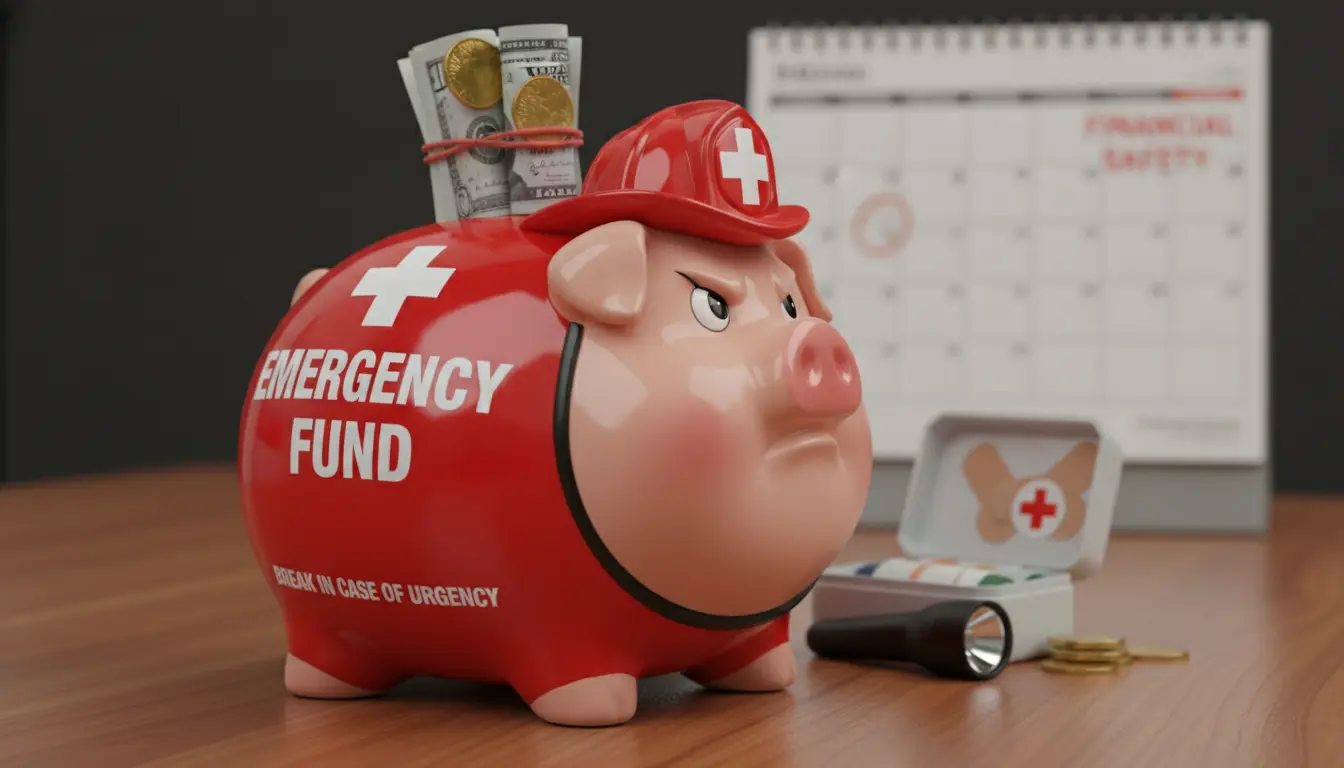
An emergency fund gives you a financial cushion for unexpected costs like car repairs, medical bills, or job loss. This article explains how to set a target, save consistently, and protect your fund so it’s available when you need it most.
What is an emergency fund?
An emergency fund is a reserve of liquid cash reserved for unplanned expenses. It is different from investments because accessibility and capital preservation matter more than high returns.
Keeping money separate from your checking account helps avoid accidental spending and preserves the fund’s purpose.
How much to save in an emergency fund
There is no one-size-fits-all number, but common guidance provides a practical starting point. Your target should reflect your monthly living costs and job security.
Rule of thumb and factors
Follow these guidelines when choosing your target:
- 3 months of essential expenses: good for single-income households with stable jobs.
- 6 months of essential expenses: safer for freelancers, contractors, or households with a single earner.
- 9–12 months: consider this if you work in a volatile industry or have irregular income.
Factors to adjust the target include job stability, number of earners in the household, debt obligations, and local cost of living.
Steps to build an emergency fund
Follow a step-by-step plan to make saving consistent and achievable. Small actions repeated over time add up to a substantial fund.
- Calculate essentials: List monthly rent or mortgage, utilities, food, insurance, and debt minimums. This gives you the monthly baseline to multiply.
- Set a target: Choose 3, 6, or 9 months based on your situation. Write the dollar target down to make it concrete.
- Create a timeline: Decide how quickly you want to reach the target. For example, saving 3 months in 6 months means dividing the target into monthly goals.
- Automate savings: Use automatic transfers to move money into your fund each payday. Automation reduces the temptation to spend.
- Cut nonessential spending: Temporarily reduce subscriptions, dining out, or discretionary purchases and funnel that money into savings.
Automate your emergency fund contributions
Set a recurring transfer from checking to savings on payday. Treat the transfer like a fixed bill so you pay yourself first.
If you earn irregular income, set a percentage target (for example, 10% of each payment) to contribute whenever you receive money.
Where to keep your emergency fund
Choose a safe, liquid account that preserves capital and allows quick access. Avoid long-term investments or accounts with withdrawal penalties.
Good options include:
- High-yield savings accounts for a small interest boost with instant access.
- Online savings or money market accounts that offer competitive rates and transfers to checking.
- Short-term certificates or Treasury bills only if you ladder them and ensure access when needed.
Avoid tying the fund up in stocks, retirement accounts, or long-term CDs where liquidity is restricted or penalties apply.
Using your emergency fund the right way
Define what counts as an emergency before you spend the fund. Typical qualified expenses include:
- Unexpected medical bills not covered by insurance.
- Major car repairs needed for work or daily life.
- Temporary loss of income or unexpected housing costs.
Non-emergencies like vacations, gadgets, or routine maintenance should come from separate savings buckets to keep your emergency fund intact.
About 1 in 3 U.S. households reported they could not cover a $400 emergency expense without selling something or borrowing money. An emergency fund reduces reliance on credit.
Small real-world example
Case study: Maria, a freelance graphic designer, decided to build a 6-month emergency fund equal to $12,000. Her monthly essentials were $2,000, so she set a six-month timeline and automated $2,000 a month into a high-yield savings account.
To reach the goal faster, Maria canceled one streaming subscription and reduced dining out. After six months she had the full $12,000. When a client delayed payment, she used the fund to cover rent without taking on debt and later replenished the fund over three months.
Maintain and replenish your emergency fund
Review your target annually, especially after life changes like a new job, a move, or a new baby. Adjust the target and automation amounts accordingly.
If you use the fund, start rebuilding immediately. Treat the rebuild like a new savings goal with a clear timeline.
Action plan you can start today
- Calculate one month of essentials to set a baseline.
- Choose a target (3–6 months) and write the dollar goal.
- Set an automatic transfer for each payday, even a small amount.
- Open a separate high-yield savings account and label it Emergency Fund.
Building an emergency fund is a straightforward process that reduces stress and protects your finances. Start small, automate, and keep the money accessible so you have a true safety net when the unexpected happens.