
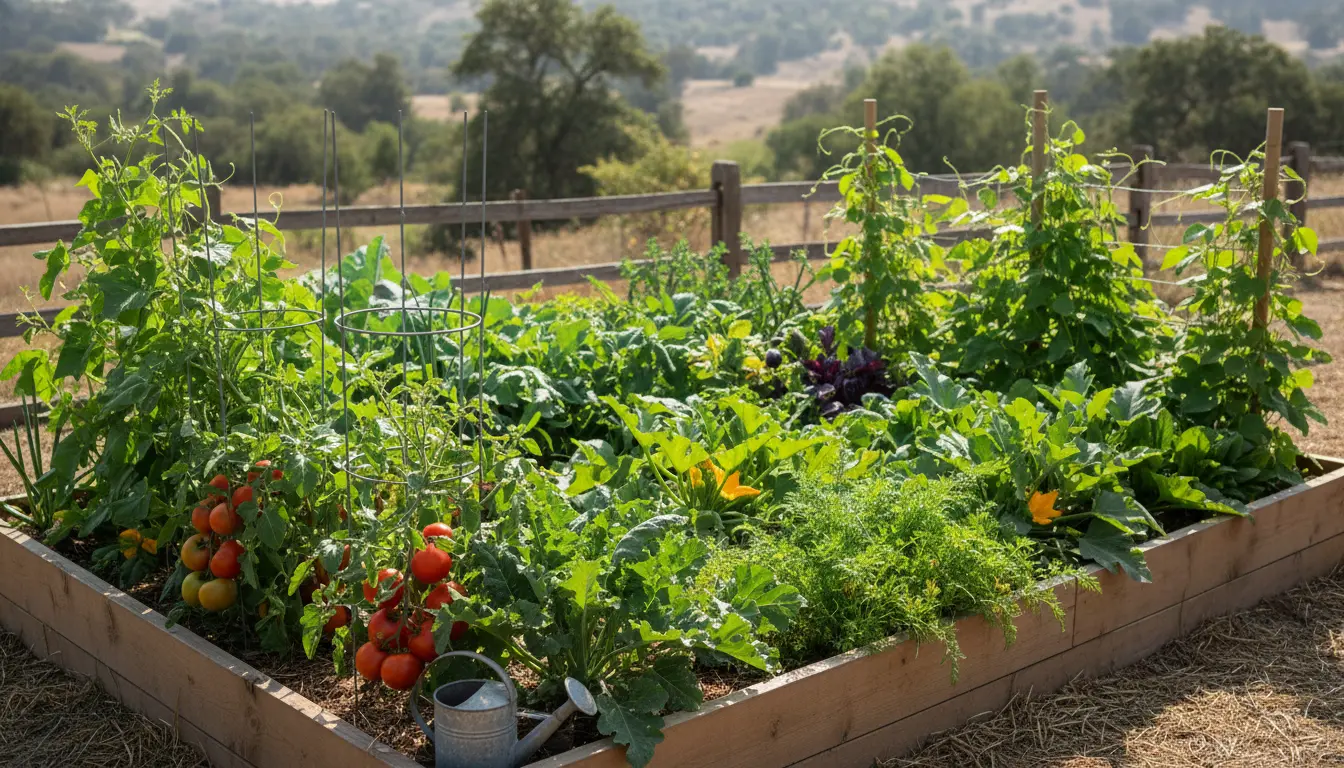
Overview: Why start a small vegetable garden
Starting a small vegetable garden adds fresh food, saves money, and teaches growing basics without a large space. This guide gives practical steps you can follow, whether you have a backyard, balcony, or a few containers.
Choose the right site to start a small vegetable garden
Successful gardens begin with the right location. Most vegetables need at least 6 hours of direct sunlight daily. Inspect your space through the day to note shaded areas.
Consider access to water, wind exposure, and foot traffic. If ground space is limited, use raised beds, containers, or vertical supports to maximize yield in small areas.
Site checklist
- Sunlight: 6+ hours of direct sun for most crops
- Water access: hose, rain barrel, or close tap
- Soil depth: 12+ inches for most roots in beds
- Protection: fencing or netting if wildlife is an issue
Prepare soil and containers
Good soil is the foundation of a productive small vegetable garden. If using the ground, loosen soil and add organic matter to improve structure and fertility.
For containers or raised beds, use a quality mix of compost, topsoil, and a light aerating material like perlite or coarse sand. Containers should have drainage holes to prevent waterlogging.
Soil mix recipe for small gardens
- 40% high-quality topsoil
- 40% compost or well-rotted manure
- 20% aeration material (perlite, coarse sand, or coconut coir)
Plan what to plant in a small vegetable garden
Choose vegetables that match your climate, space, and taste. For small gardens, prioritize high-yield, high-value crops and fast growers.
Good choices for small spaces include lettuce, spinach, radishes, cherry tomatoes, peppers, bush beans, and herbs like basil and parsley.
Planting tips for limited space
- Successive planting: sow seeds every 2–3 weeks for a constant harvest
- Companion planting: pair plants that benefit each other, like basil with tomatoes
- Vertical growing: use trellises for peas, cucumbers, and indeterminate tomatoes
Planting and early care
Follow seed packet or plant tag instructions for spacing and depth. Water newly planted seeds and transplants gently and consistently until established.
Mulch around plants to conserve moisture, suppress weeds, and moderate soil temperature. Use organic mulch like straw, leaves, or shredded bark.
Watering schedule for small vegetable gardens
- Seedlings: keep soil consistently moist but not waterlogged
- Established plants: water deeply 1–2 times weekly depending on heat and rainfall
- Containers dry faster: check moisture every day during hot periods
Maintain health and manage pests
Regular observation is the best defense. Walk your garden every few days and look for signs of nutrient deficiency, pests, or disease.
Use integrated pest management (IPM): start with cultural controls, remove affected leaves, use row covers, and introduce beneficial insects when possible.
Common small garden issues and fixes
- Yellow leaves: check for overwatering, poor drainage, or nutrient shortage
- Holes in leaves: inspect for caterpillars, slugs, or beetles and remove by hand or use safe traps
- Blossom drop on tomatoes/peppers: ensure consistent moisture and proper pollination
Harvesting and seasonal care
Harvest vegetables when they are ripe for best flavor and to encourage continued production. Leafy greens and herbs often benefit from frequent harvesting.
Prepare your small vegetable garden for season changes by adding compost, rotating crops, and covering beds in winter if needed.
Storage tips
- Leafy greens: store wrapped in a damp paper towel in the refrigerator
- Tomatoes: keep at room temperature away from direct sun for best taste
- Root vegetables: trim tops and store in a cool, dark place
Real-world example: Sarah’s balcony vegetable garden
Sarah converted a sunny 6-foot balcony into a productive garden using three 12-inch-deep containers and a vertical trellis. She planted cherry tomatoes, basil, lettuce, and dwarf beans.
In her first season she harvested weekly salads, several pints of cherry tomatoes, and enough herbs to keep her kitchen stocked. Key actions were consistent watering, weekly feeding with diluted compost tea, and pinching tomato suckers to focus growth.
Quick checklist to start a small vegetable garden
- Select a sunny site or choose containers for a balcony
- Prepare or buy a good soil mix with compost
- Choose 4–6 crops suited to your space and season
- Plant, mulch, and set a simple watering routine
- Inspect, manage pests with low-toxicity methods, and harvest regularly
Final tips for beginners
Start small and expand after one season. Keep a simple journal of planting dates, varieties, and harvest amounts to learn what works.
Gardening is a practical skill improved by observation and small adjustments. With the right location, soil, and simple maintenance, a small vegetable garden can be productive and rewarding.